Factory-direct OEM and private label manufacturing for brands, importers and wholesale teams. Our own factory handles glove production, brand application, every-pair inspection and packing around your approved specification.
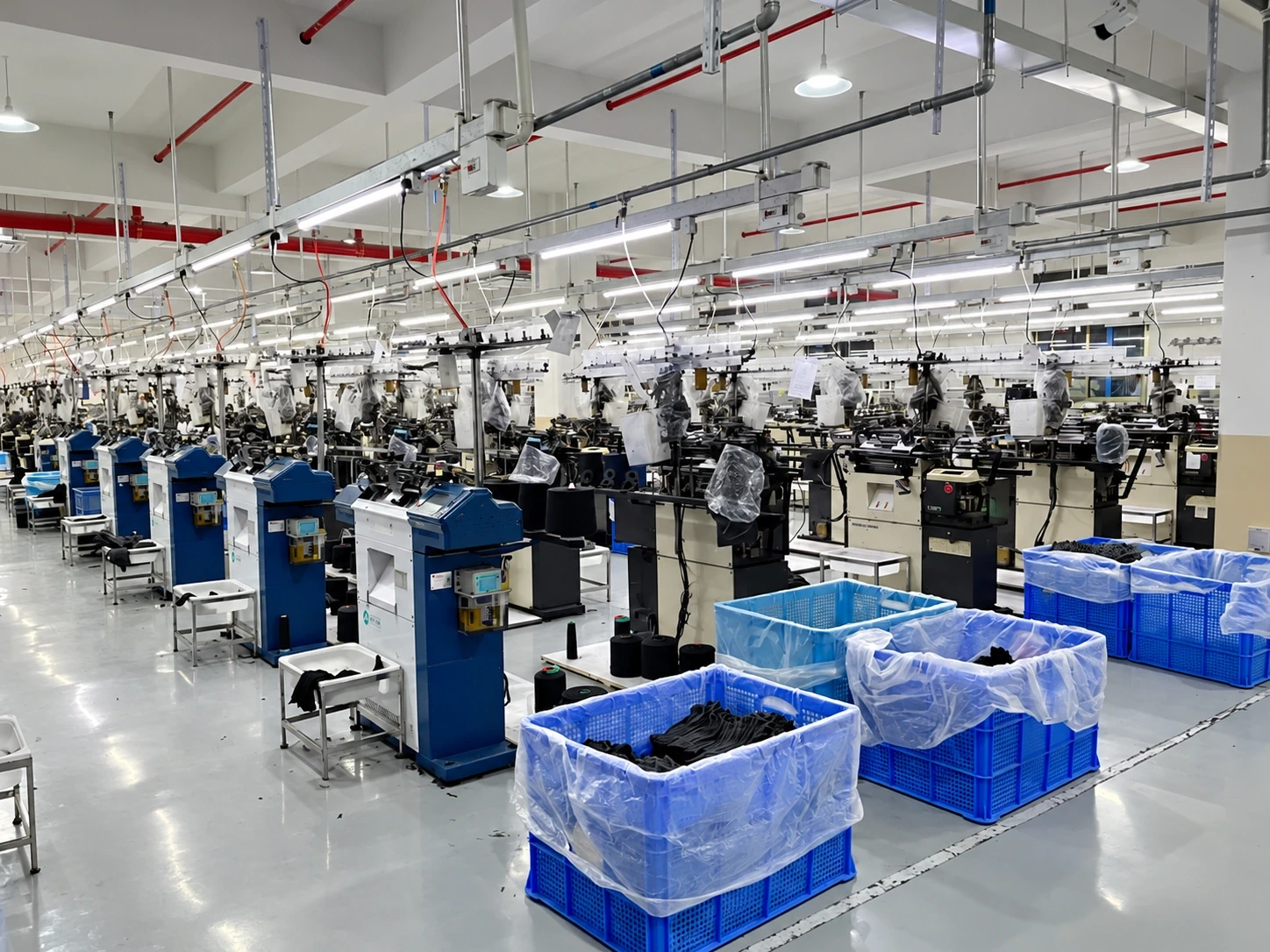
VORLAN operates its own glove factory. Knitting, cutting, sewing, finishing, inspection and packing are carried out in-house. Embroidery, printing and leather debossing are also completed in our own factory.
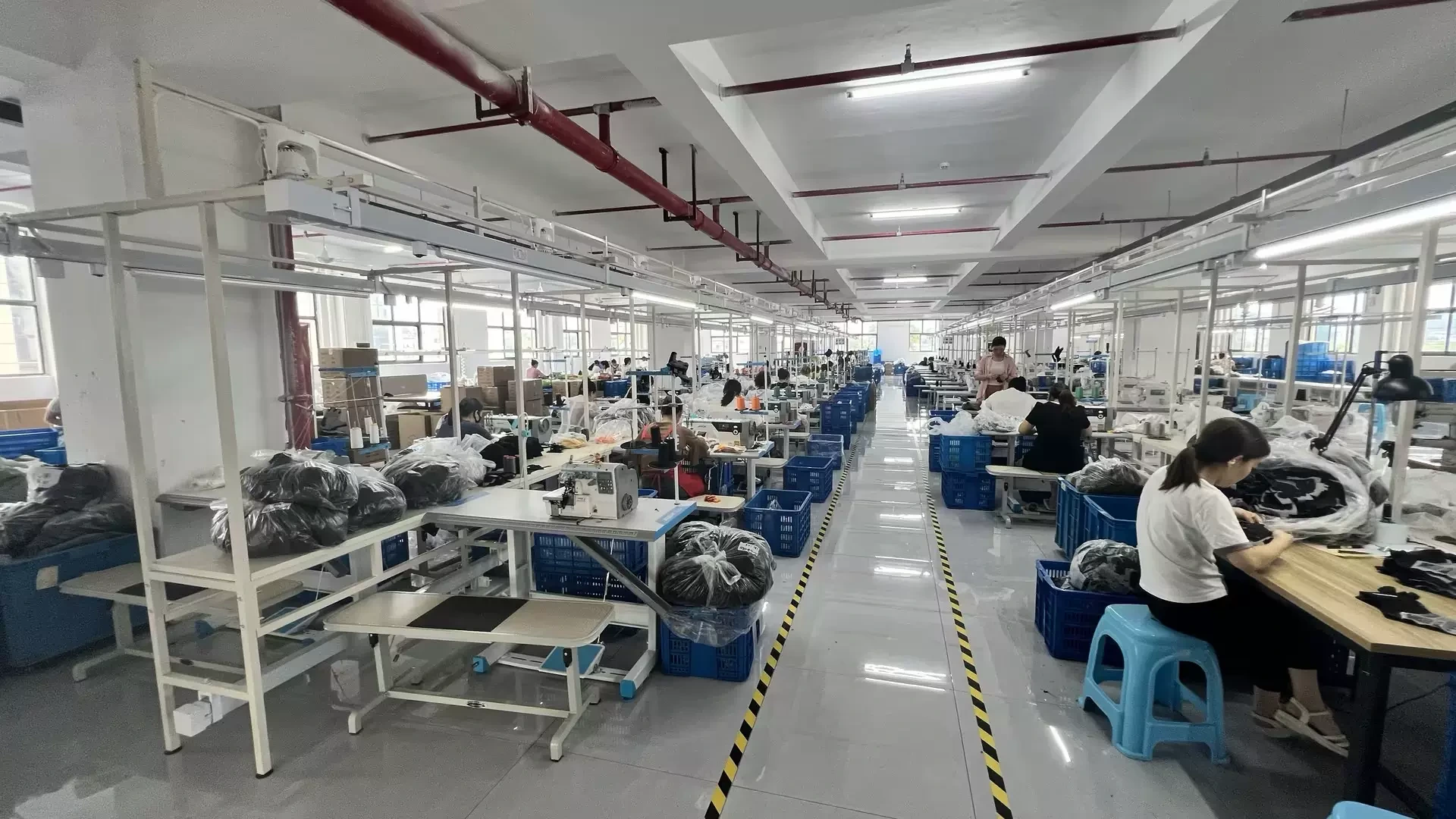
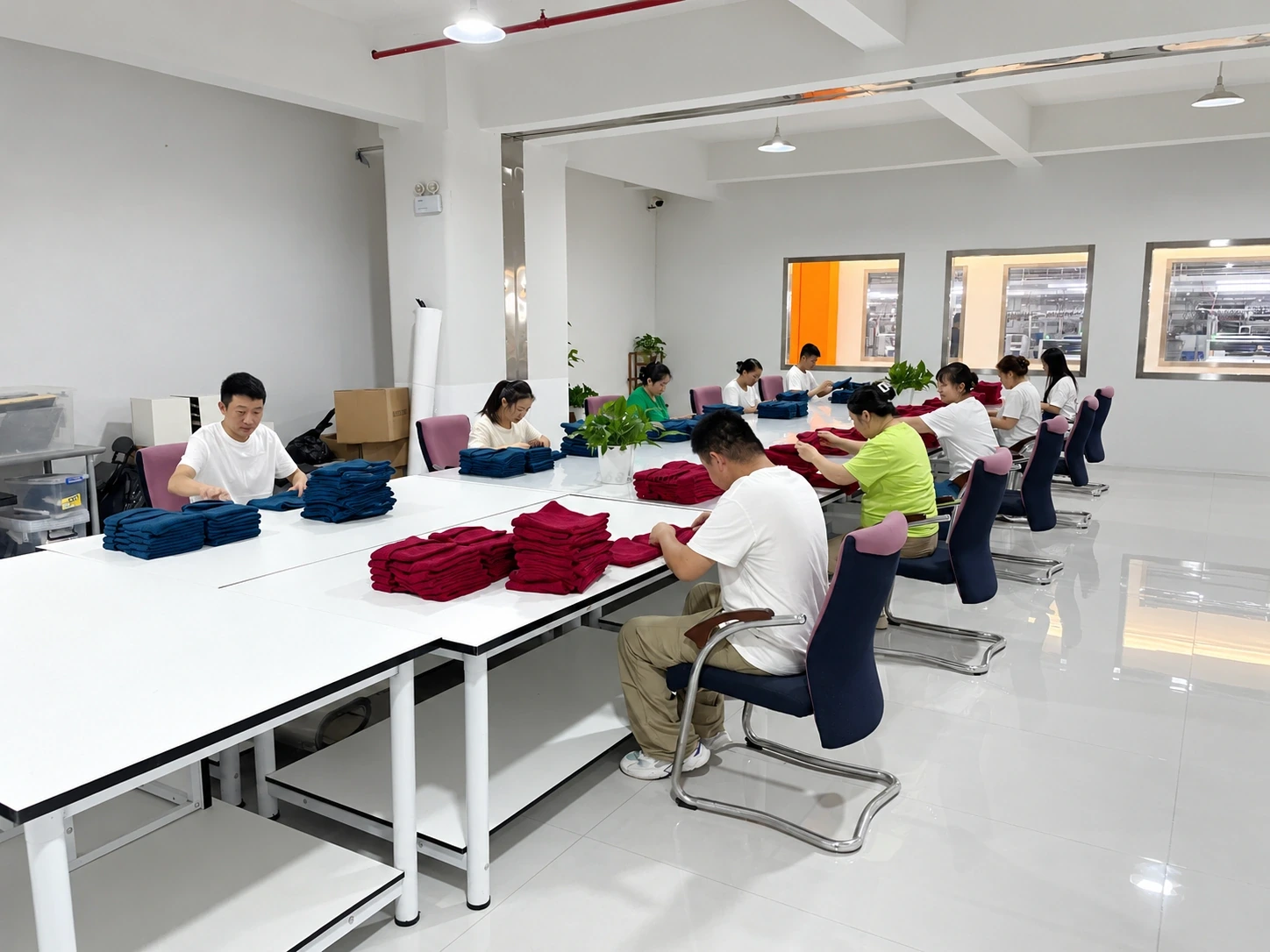
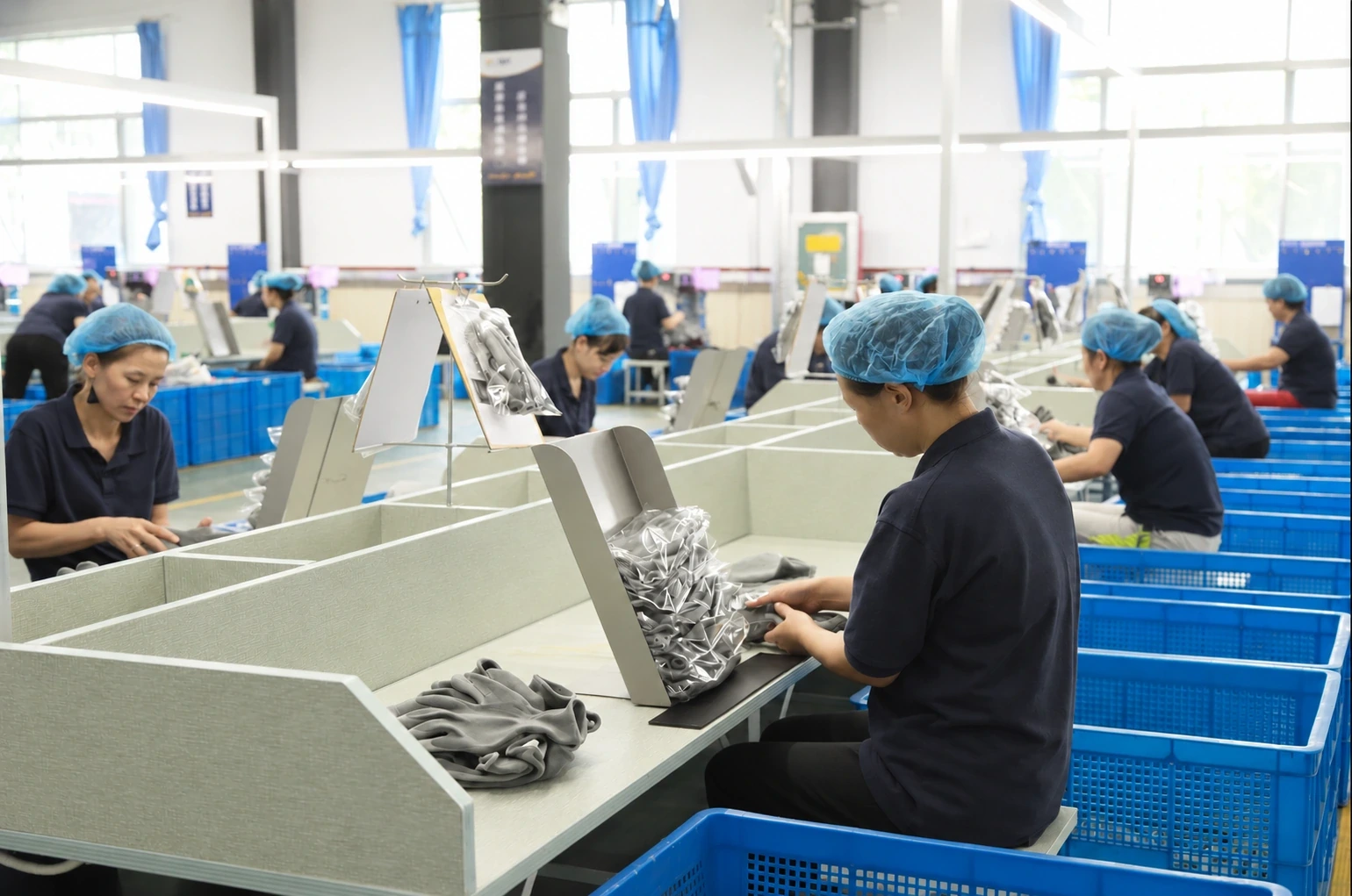
Our sewing workshop: people, equipment and work in progress on the production floor.Factory photograph
01Make the glove
Our knitting, cutting and sewing operations follow the selected construction. The approved yarn or material, pattern, lining and cuff define the route; not every style uses every operation.
02Apply your identity
Our in-house embroidery, printing and leather debossing are developed around the actual substrate. Approve the artwork, placement and applied finish before the order is released.
03Inspect and pack
Our factory checks every finished pair, including dimensions. Nonconforming gloves are isolated, reworked and reinspected; accepted pairs move into the agreed assortment and packing.
For your supplier review
Connect the operations to your actual glove brief. Request the current workshop, sample and inspection information relevant to that construction, together with the requirements your purchasing team needs to approve.
These are our own working spaces. See where prepared materials are assembled, finished and packed, and connect each operation with the requirements in your glove brief.
01
Prepare the fabric.
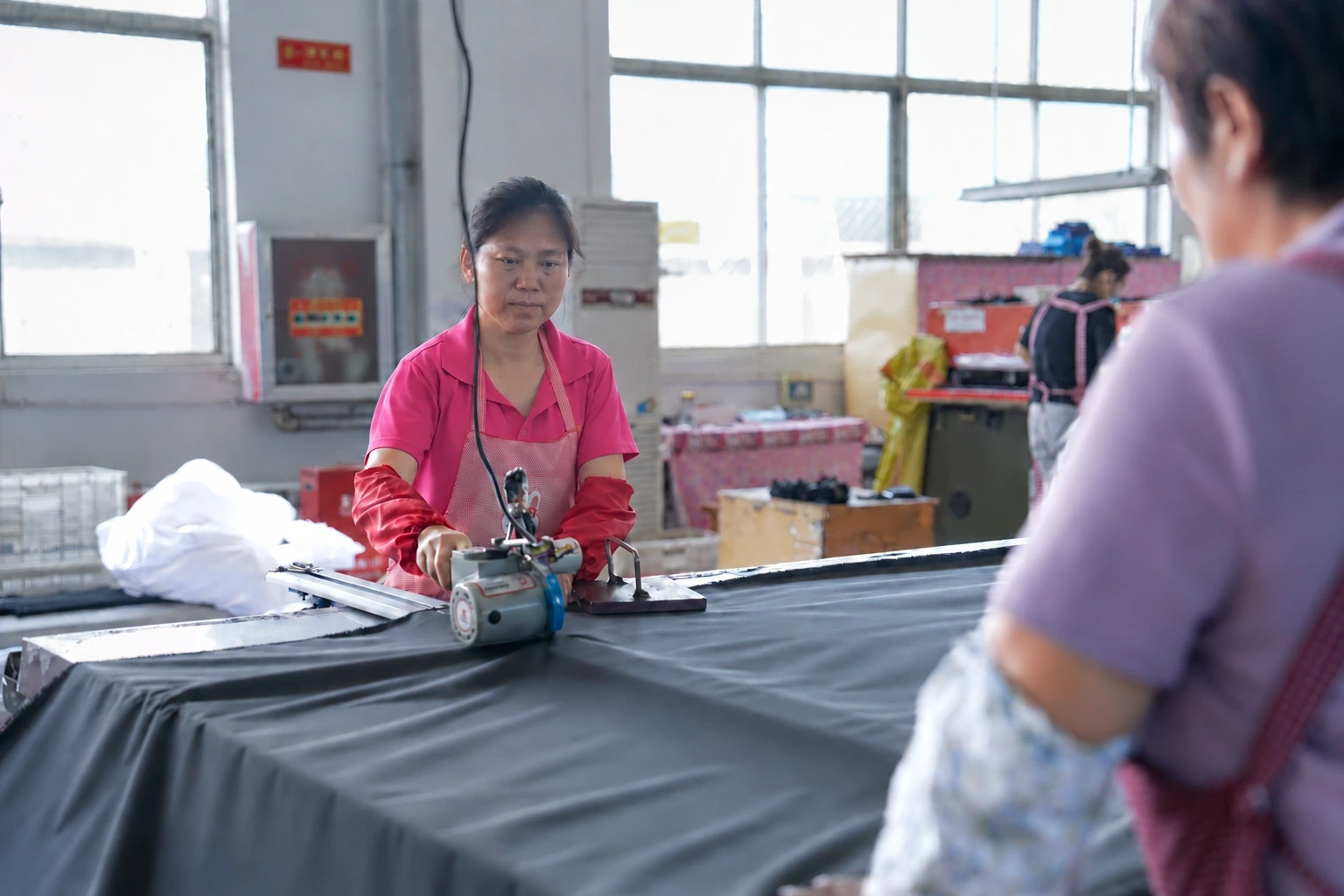
Fabric spreading prepares the material for the cutting stage. The material specification and approved pattern belong together before panels move into assembly.
02
The work between the panels.
Operators guide prepared components through sewing stations. Panel alignment, seam construction and the inside finish are defined through the approved glove sample.
03
Shape the finished glove.
Gloves are handled on metal hand forms at finishing stations. The finishing method follows the material and construction; dimensions are checked separately against the agreed specification.
04
Bring the assortment together.
Packing workstations and sorting bins organize the work before dispatch. Confirm pair quantities, style, color, size and the required label and packing versions for your order.
Factory photographs. Selected images retouched for presentation. Discuss the relevant production route and project records with our team for your supplier review.
Private label / In-house applications
Approve the brand detail where the glove is made.
Embroidery, printing and leather debossing are handled in our own factory. The development decision is which method, placement and finish suit your chosen glove material.
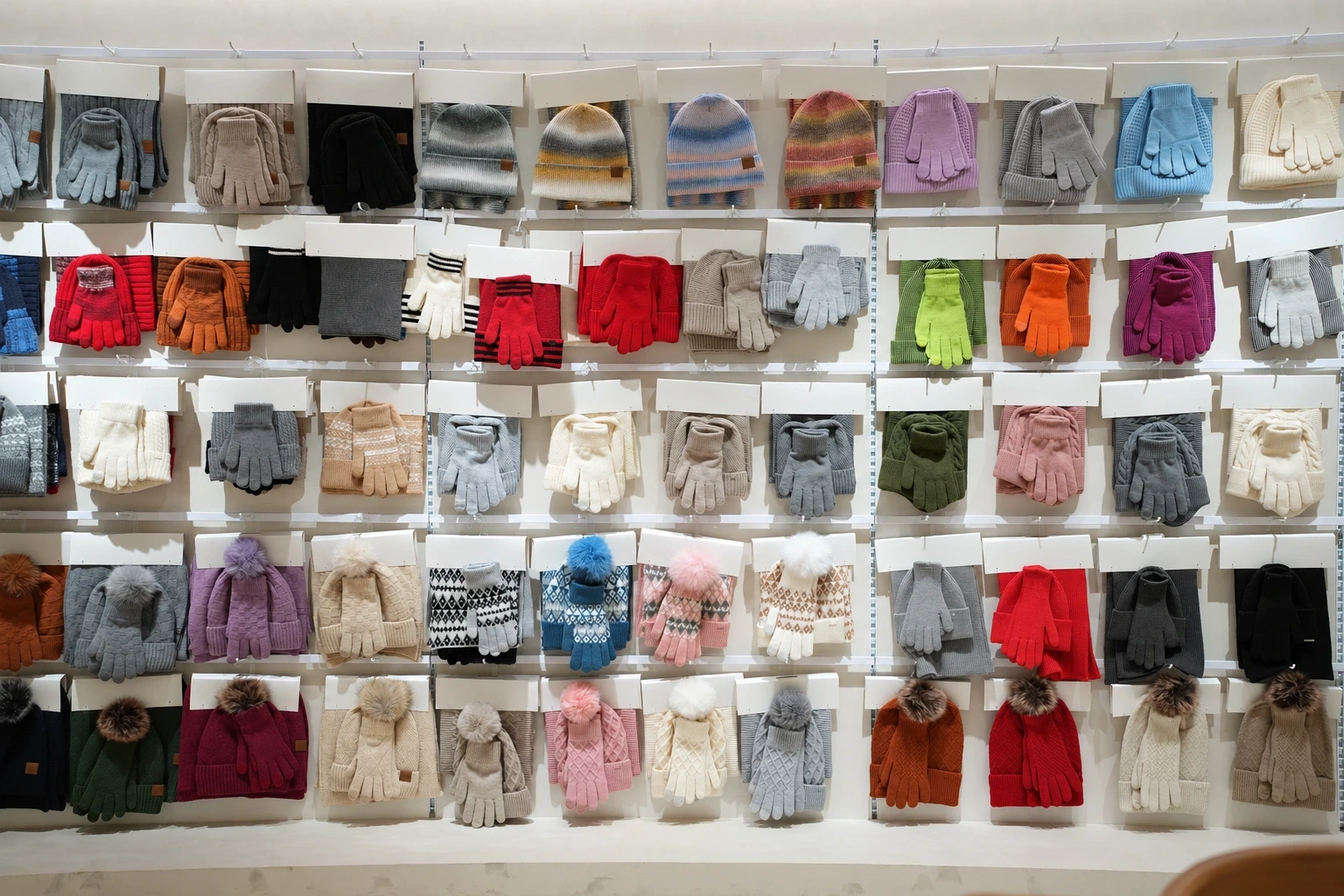
Gloves and coordinated accessories in our factory sample display.Retouched factory photograph
Bring the full collection direction, then define the artwork application on each selected construction.
Provide artwork, finished dimensions, thread-color references and placement. Review the stitched face, backing and inside feel on the selected knit or fabric.
Approval fileApplied artwork, material identifier, position and inside-finish reference.
02 / Surface
Printing
Identify the exact panel or material to be printed, along with artwork and color references. Review appearance on the actual substrate and agree any application-specific testing.
Approval fileSubstrate, artwork version, printed appearance and agreed assessment requirements.
03 / Leather
Leather debossing
Confirm the leather and finish before reviewing the impression. Locate the mark against panel seams, wrist tabs or cuff edges and approve it on the selected material.
Approval fileLeather reference, artwork size, impression appearance and placement.
A material change also needs an application review.
When yarn, fabric, leather finish or artwork changes, identify the affected style and review the applied detail again as required. Keep the current approval with the glove specification and packing files.
Sampling & approval
Agree the detail. Then make the order.
Link the yarn or material swatch to the first glove sample, then record each revision and buyer decision. The approved sample, specification and artwork versions become the production handoff; confirm the order assortment and start date against that same file.
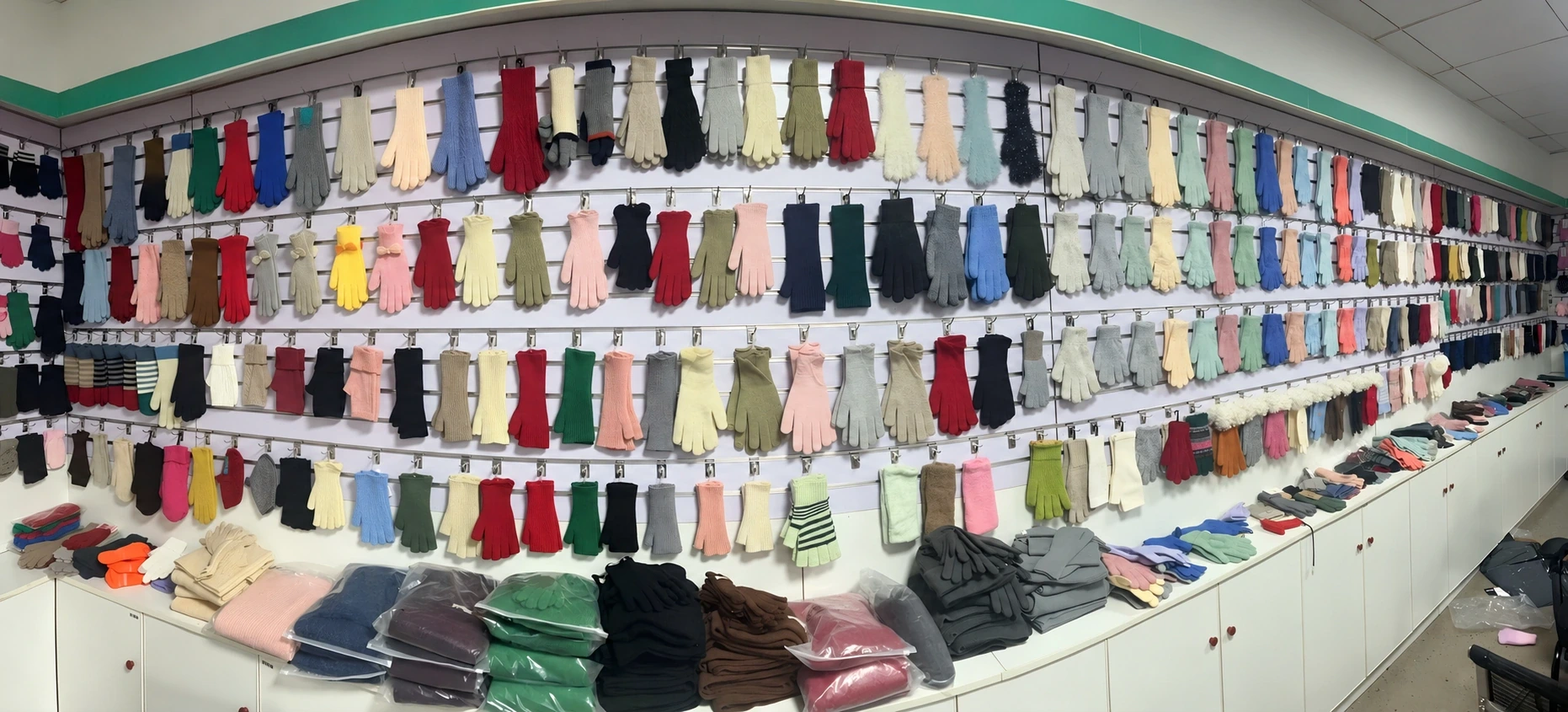
The sample display provides construction and material starting points for your own development.Retouched factory photograph
Sample file
VORLAN / Development
Sample review.
Style reference
To confirm
Sample / revision
To confirm
01Material & colour
Physical references
Colour A
Colour B
Colour C
Outer materialLining & trimsTo confirm
02Fit & construction
Measurement record
Hand width
To confirm
Overall length
To confirm
Cuff opening
To confirm
Agree the size range, method and tolerances.
03Brand & presentation
Artwork placement
Your brandBrand label
Position & dimensions
To confirm
Label / pack version
To confirm
Keep this record with the physical sample.
Specification / sample / artwork
Mark the topics for your review.
Review aid only. These selections do not submit an order or approve a sample.
Full inspection runs through incoming materials, production, finished gloves and packing. Every finished pair is checked in our own factory, including dimensions against the agreed sample and specification.
Manual review at the factory inspection tables.Retouched factory photograph
Every pair / Full inspection
See the work. Define the acceptance.
Appearance, construction, pair consistency and order identification belong in the finished-glove review. Keep the size specification, measurement method and allowed variation with the approved sample.
Nonconforming gloves are isolated, reworked and reinspected before acceptance. Specialist testing, where required, is defined separately for the actual material or product.
Carry the same style, colour and size information from the glove to its unit pack and carton. Confirm packing quantities and dispatch instructions before release.
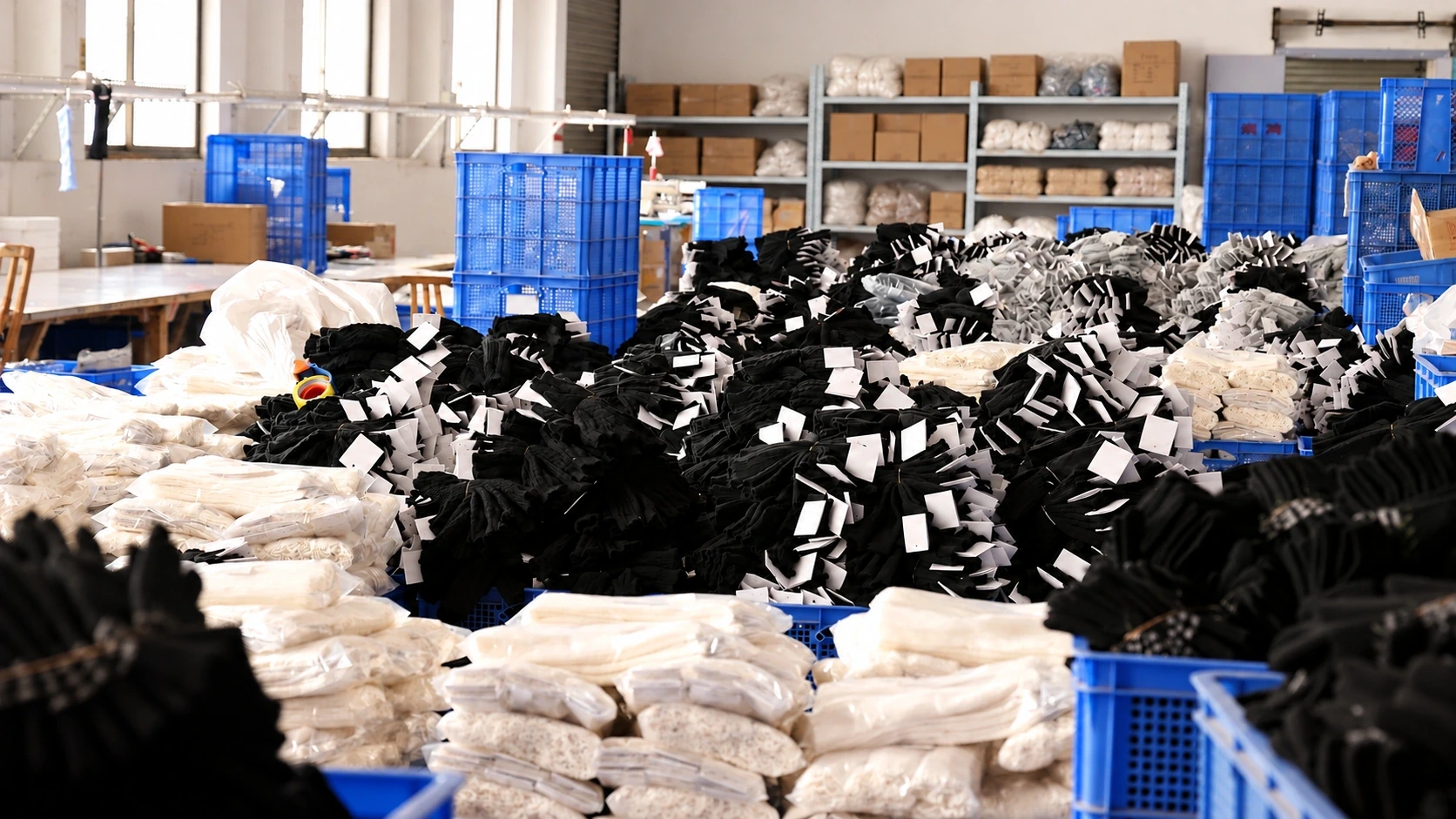
Tagged gloves ready for assortment.Retouched factory photograph
01
Glove identity
Style, colour, size and the approved label version.
Sorting and bagging workstations.Retouched factory photograph
02
Unit configuration
Confirm pairs per pack and packing configuration.
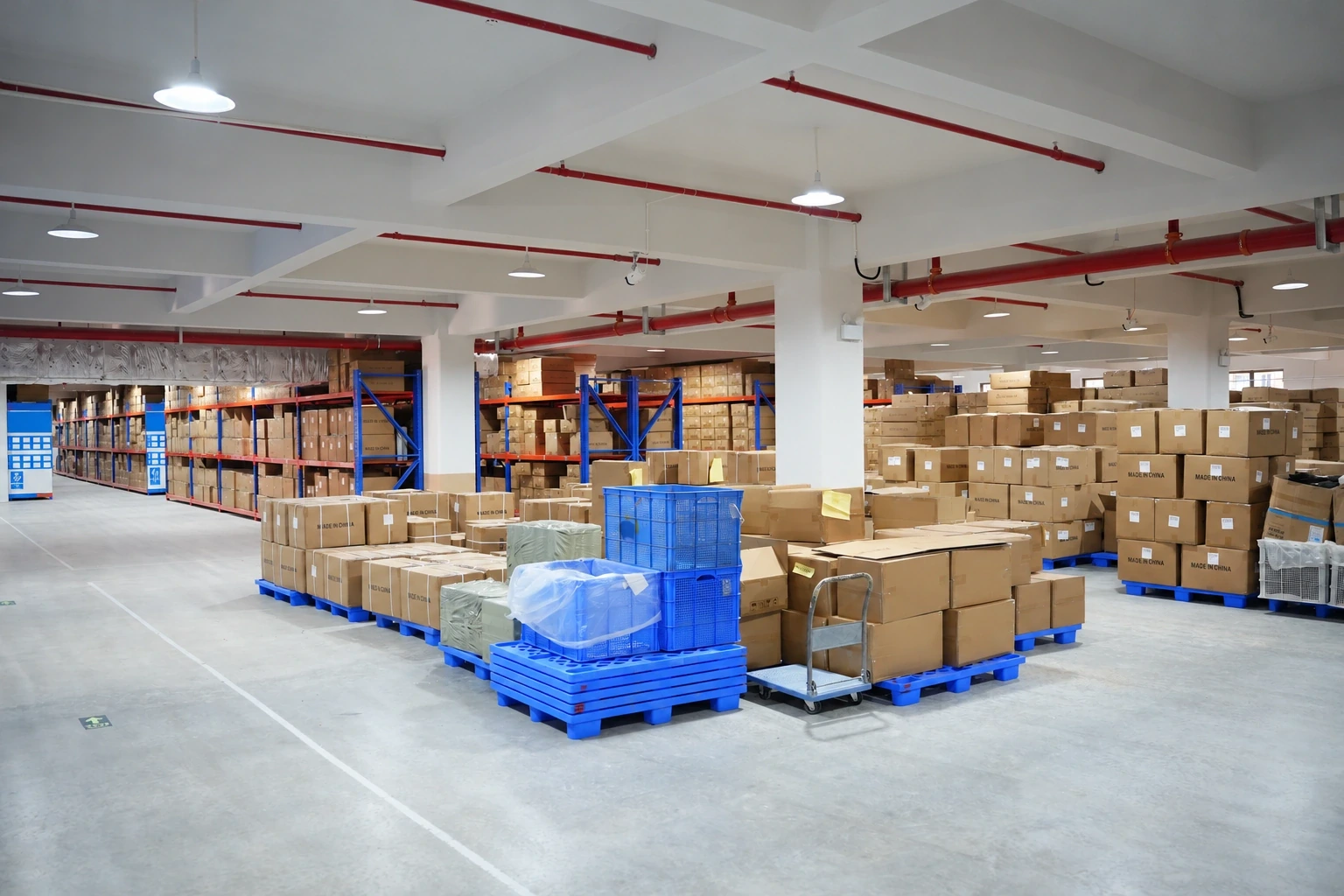
Cartons organized in the storage area.Retouched factory photograph
03
Carton & dispatch
Match the assortment, carton marks and destination.
Factory photographs connect the three packing stages. Order quantities are stated in pairs; unit-pack and carton configurations are confirmed separately.
Further factory capabilities
More constructions. A project-specific route.
The current online collections focus on ordinary fashion and winter gloves. Our factory photographs also show further glove production and checking facilities. Bring the actual product requirements to the discussion.
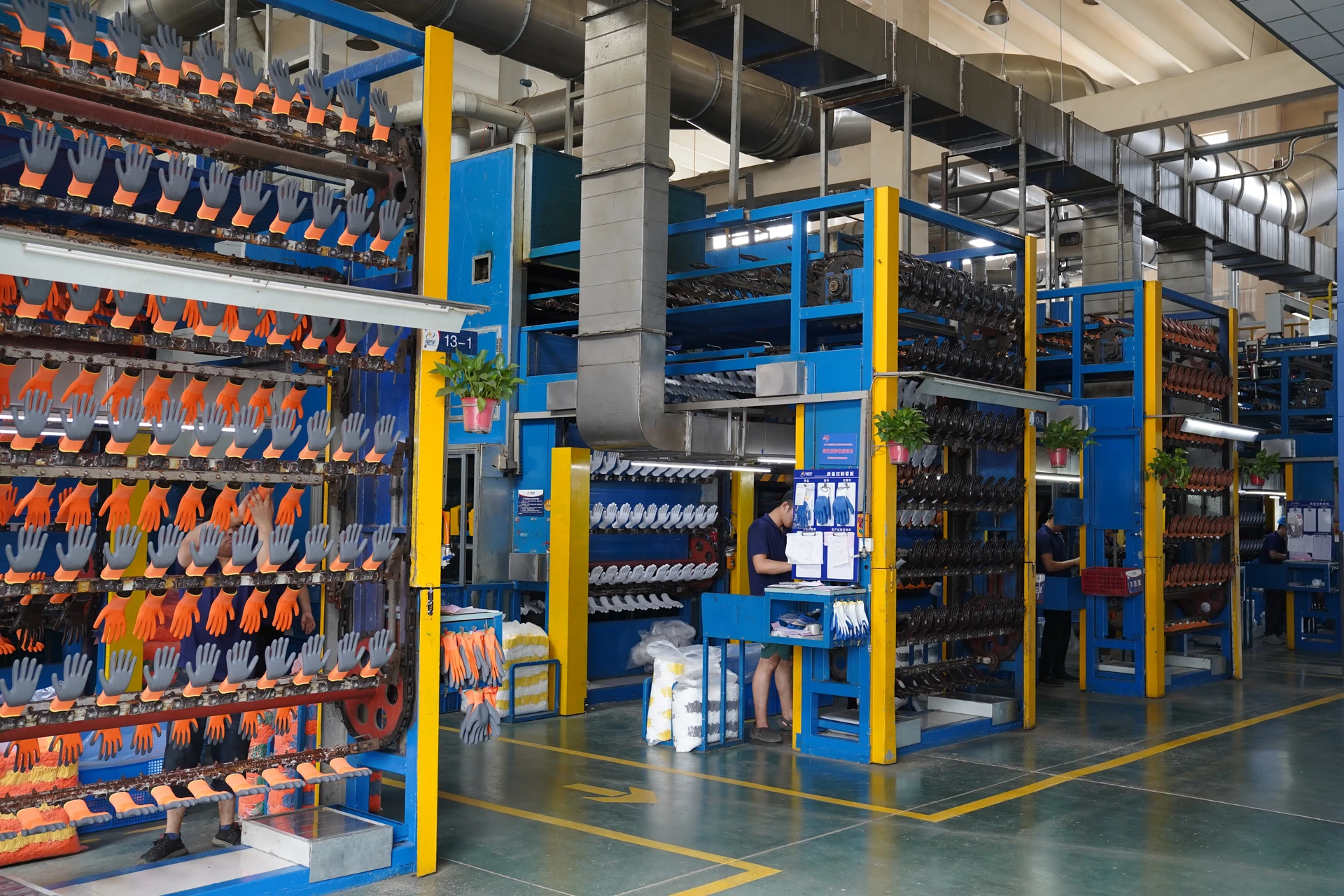
Gloves on a continuous coated-glove production line.Factory photograph
Coated-glove production.
The line shown here supports a different production route from the knit and cut-and-sewn fashion collections. Discuss the required glove substrate, coating coverage, material and intended use as one specification.
Bring the required coating formulation, processing details and performance criteria into the development brief. Confirm any product-specific testing and documentation before production.
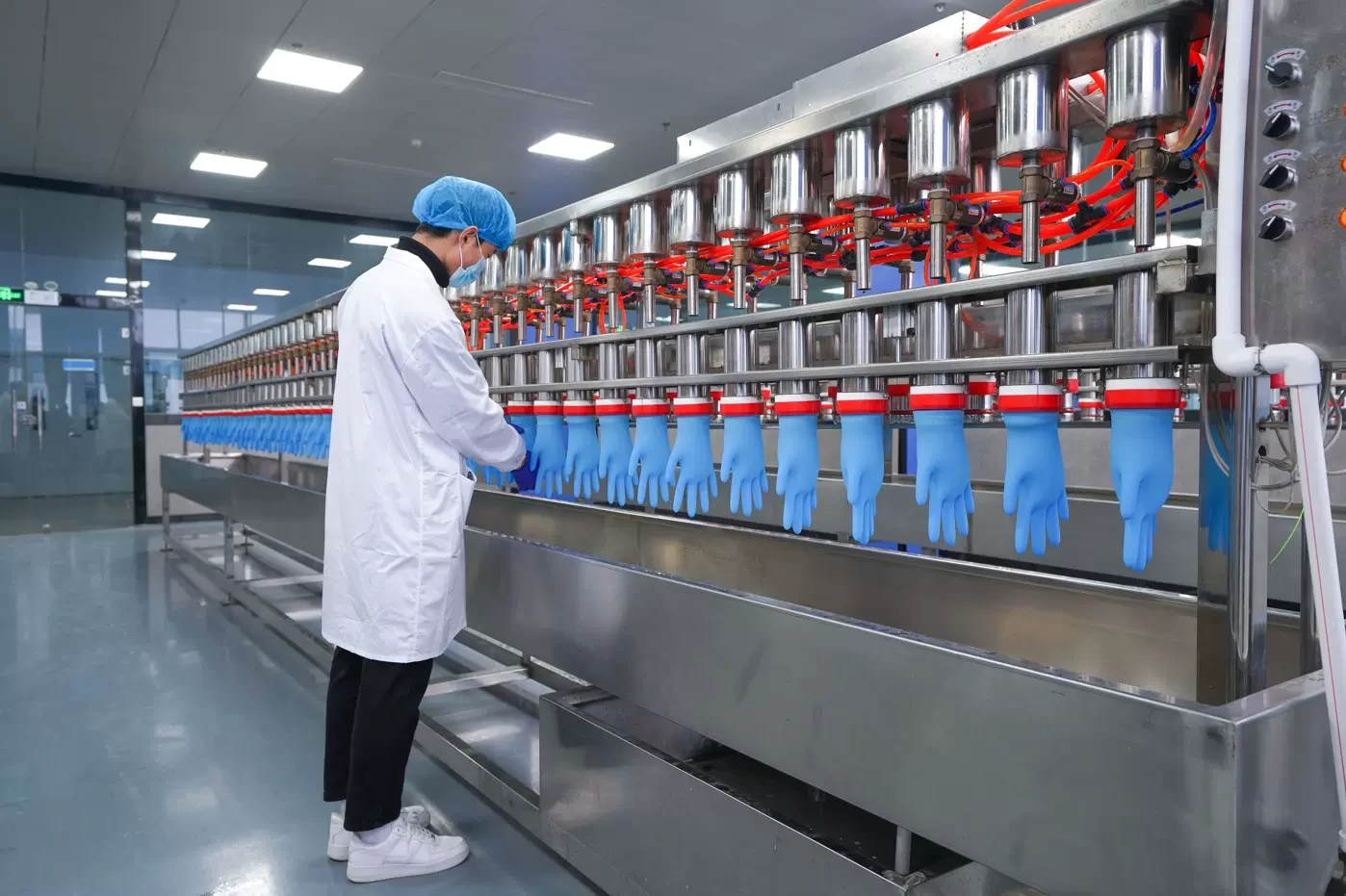
Gloves mounted along a dedicated checking line.Factory photograph
Dedicated glove checking.
Different glove constructions call for different checks and equipment. These facilities are part of the wider factory discussion, even where the corresponding glove category is not yet presented as an online collection.
State the product, inspection method and documentation your project requires. Keep any test result tied to its defined material and product scope.
Align the assortment, approvals and buying calendar from the first conversation. A clear brief gives every stage a shared starting point.
Minimum order quantity
300 pairs
Per style. Per color.
Apply the minimum to each style and color combination, then confirm the size breakdown within it.
Quantity by color
Style
Color
Quantity
Style A
Sand
300 pairs
Style A
Charcoal
300 pairs
2 colorways
600 pairs
State quantities in pairs. Confirm packing configuration separately in the purchase specification.
Make room for each decision.
All lead times in working days
01
Sample development
7–10 working days
From the agreed sample brief and development start.
02
Review & approval
One approved reference.
Allow time for consolidated feedback, revisions and written approval.
03
Bulk production
30–45 working days
From the agreed production start and confirmed order scope.
Start dates are confirmed for your project. Material decisions, revisions and approvals have their own place in the calendar; freight, customs and final delivery are planned separately.
Bring your sourcing team into the conversation.
Tell us which current facility photographs, supplier information and project-specific production details your team needs to review. Start with the manufacturing profile and an assortment breakdown.
The practical details behind a glove manufacturing program.
Equipment on our factory floor. Connect your construction brief with the relevant production route.Factory photograph
01
Do you operate your own glove factory?
Yes. VORLAN operates its own glove factory. Established in 2016, our manufacturing profile includes 8 production lines and 200+ employees. Knitting, cutting, sewing, finishing, inspection and packing are completed in our own factory. Embroidery, printing and leather debossing are also handled in-house.
02
Which glove types and production routes do you support?
We develop knit, leather, fleece, winter and touchscreen gloves. Knit programs begin with yarn and knit construction; leather and fleece follow material-specific cutting and sewing. Winter and touchscreen requirements are agreed within the selected construction.
03
Can we start with a reference sample or a concept?
Yes. Send your tech pack, reference sample or concept, with the intended materials, sizes and branding. We use the brief to agree the development scope and sample requirements before confirming the starting date.
04
What is the minimum order quantity?
The minimum is 300 pairs per style per color. Provide the size breakdown within each style and color. Quantities are stated in pairs; packing configuration is confirmed separately in the purchase specification.
05
How long do sampling and production take?
Sampling takes 7–10 working days and bulk production takes 30–45 working days. Starting dates are confirmed against the agreed specification, materials and approvals. Sample revisions, freight and destination clearance need separate allowances.
06
How are quality requirements agreed?
We carry out full inspection, including every finished pair and packing checks. Keep the approved sample, material references, measurements, artwork and packing instructions together. Agree inspection scope and acceptance criteria before production. Any testing or documentation must relate to the exact material or product supplied.
07
Can you coordinate our branding, labels and packaging?
Yes. Embroidery, printing and leather debossing are carried out in our own factory. Send artwork, finished dimensions, placement, label copy and packaging requirements. Approve the applied result on the chosen material and retain the correct version for each style and destination.
08
Are dimensions checked on every pair?
Yes. Every finished pair receives dimensional inspection against the agreed size specification, as well as workmanship and identification checks. Define the measurement points, condition, method and allowed variation before production.
09
How does your factory handle a failed pair?
Nonconforming gloves are isolated, reworked at the relevant in-house operation and reinspected. Only goods meeting the agreed requirements return to the accepted assortment. Agree any order-specific reporting needs with our team.
10
What factory information can our sourcing team request?
Tell us which current facility photographs, supplier details and project-specific production information your team needs. Confirm any inspection or testing arrangements for the proposed order. The downloadable manufacturing profile provides a starting point for that discussion.
A project for your brand
Let’s plan your production.
Share your glove category, quantities by style and color, and target timing. Add the manufacturing information your sourcing team needs to review.