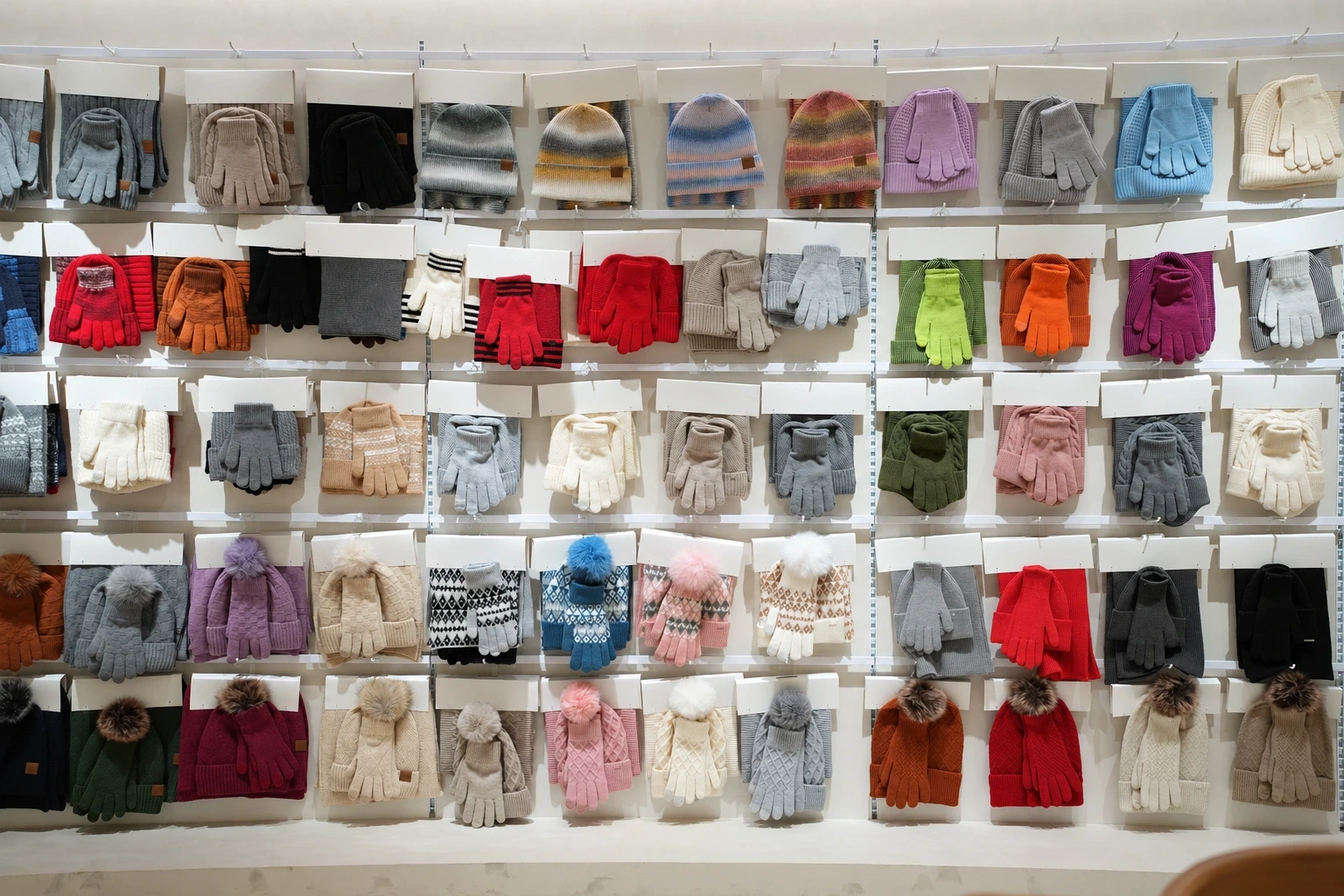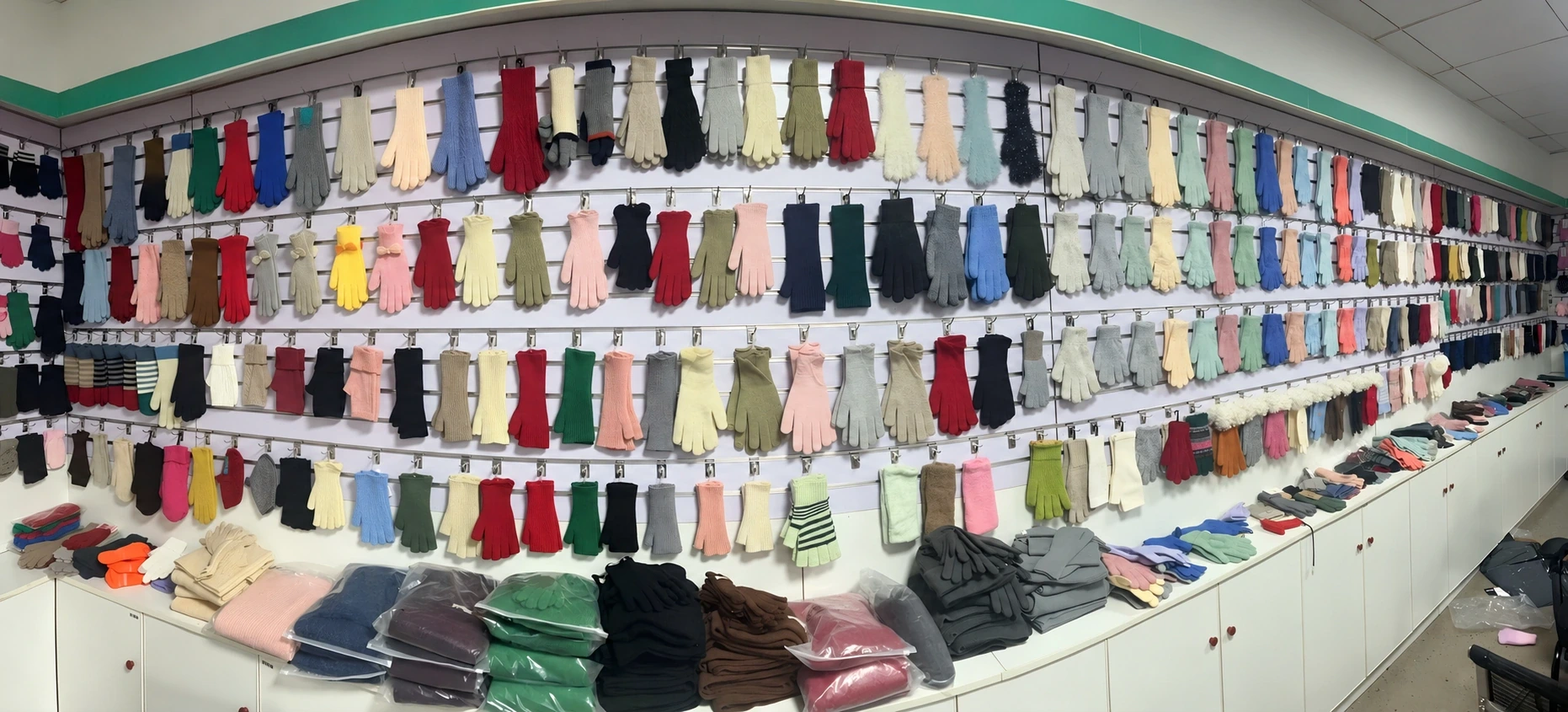
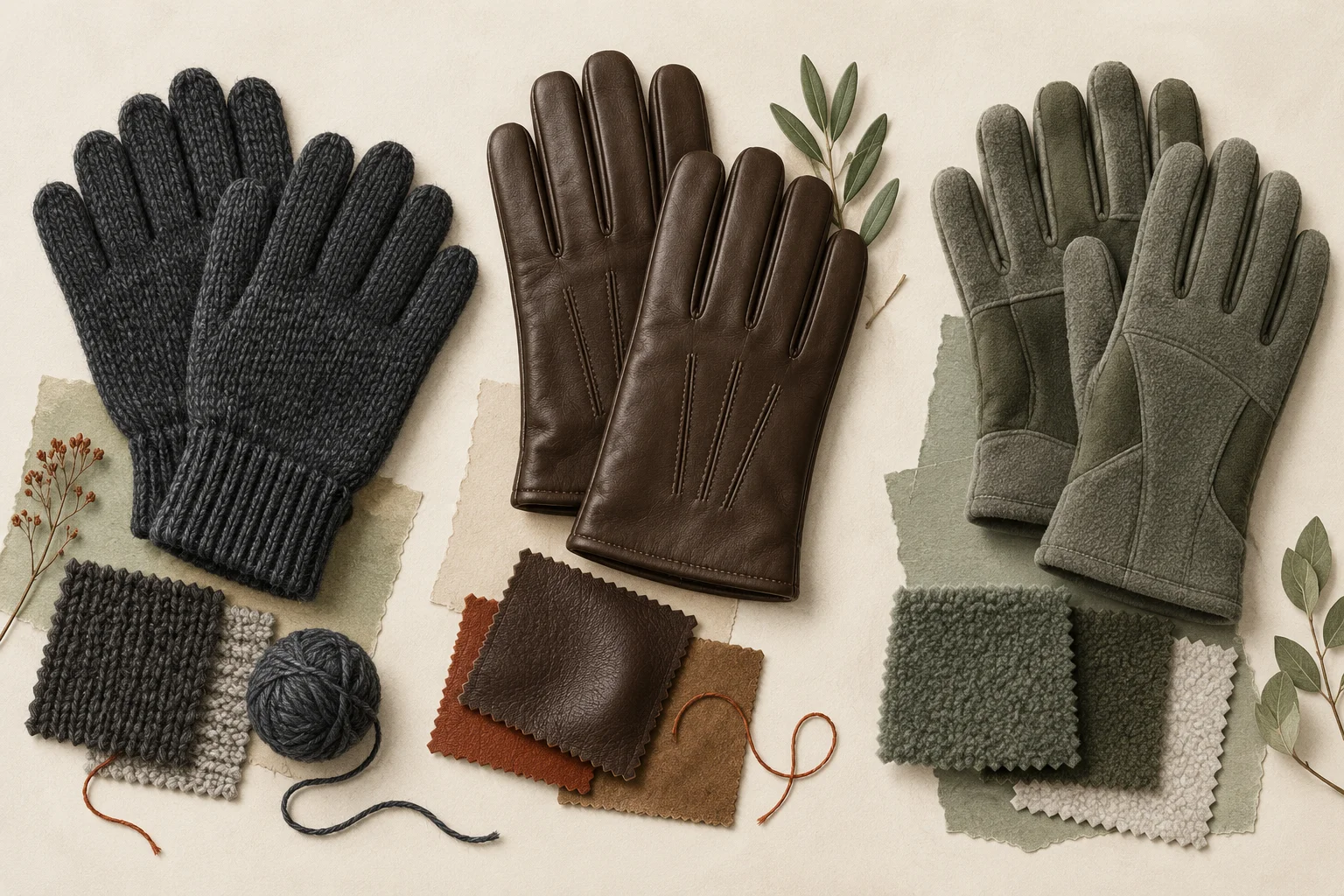
Choose a private label glove construction by the feature that must lead the range: knitted texture, leather surface, sewn fleece panels, contact detail or a layered winter assembly. Then compare the development decisions and component scope, rather than choosing from appearance alone.
Choose the role in your range first
A useful glove shortlist starts with the collection you are building. Is the priority a coordinated knit accessory, a leather-led style or a sewn textile glove? Identify the intended appearance, hand feel, size range and buying price target before choosing individual details. Send one preferred reference and explain why it works for the range. This gives our factory a starting direction and makes it easier to discuss an alternative without rebuilding the entire brief.
Use knit when the yarn and structure carry the design
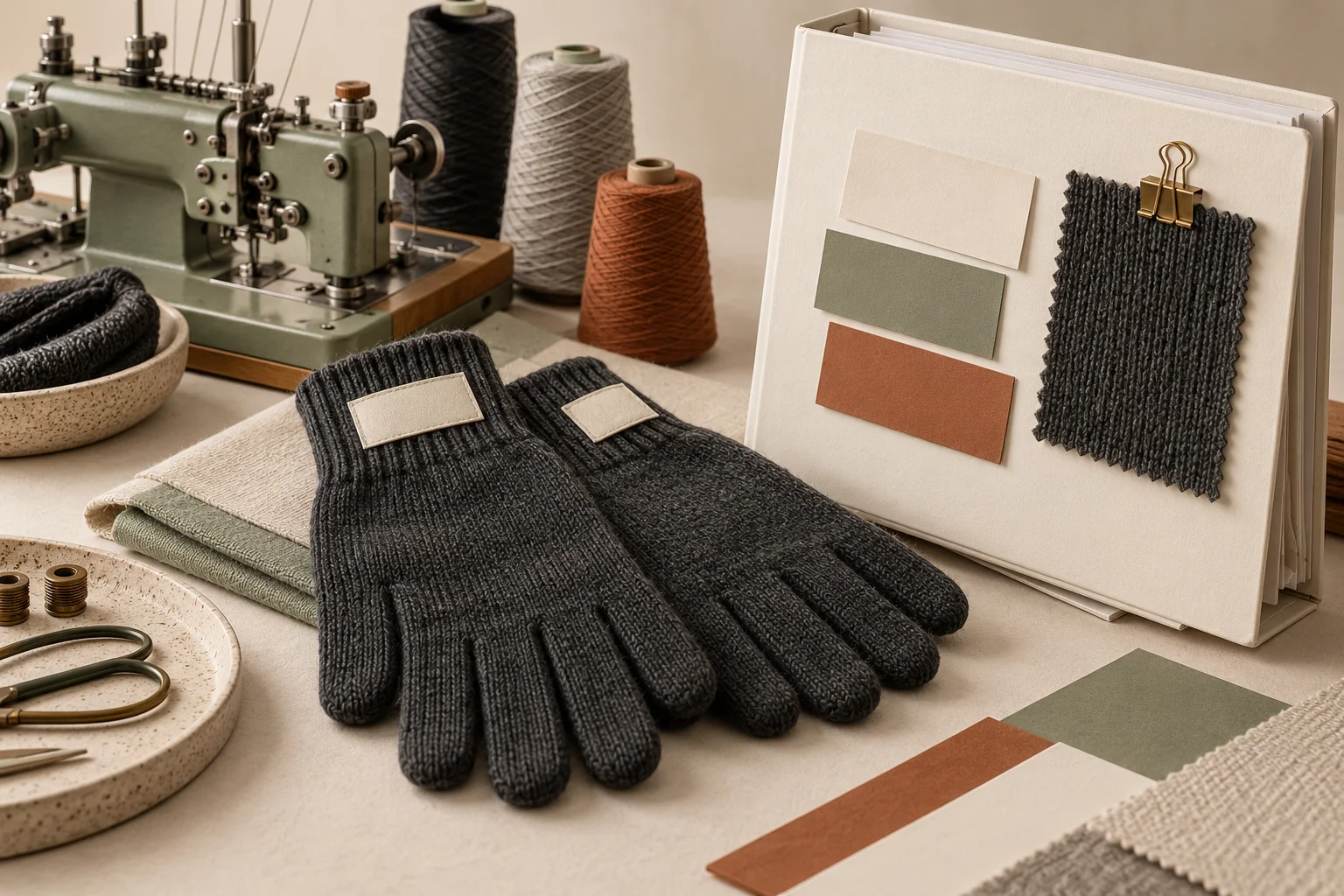
Start a knit program with the relationship between the glove body and cuff. A plain body, cable pattern, two-color arrangement and foldover cuff lead to different sample decisions even when they share a color palette. Choose the structure that earns its place in your collection, then develop the yarn and proportions around it. Review how a proposed label sits when the cuff is worn or folded. Approving the yarn alone leaves the complete shape, opening and brand placement unresolved.
| Direction | Choose first | Review on the glove |
|---|---|---|
| Knit | Yarn, body structure and cuff | Proportions, recovery and label position |
| Leather | Surface, panel pattern and lining | Pair appearance, seams and fit |
| Fleece | Fabric, panel arrangement and opening | Inside seams, thumb and cuff assembly |
| Touchscreen | Base glove plus contact zones | Agreed device interactions on the sample |
| Winter | Shell, lining, layers and closure | Inside space and the complete assembled fit |
Choose leather around the surface, seams and lining
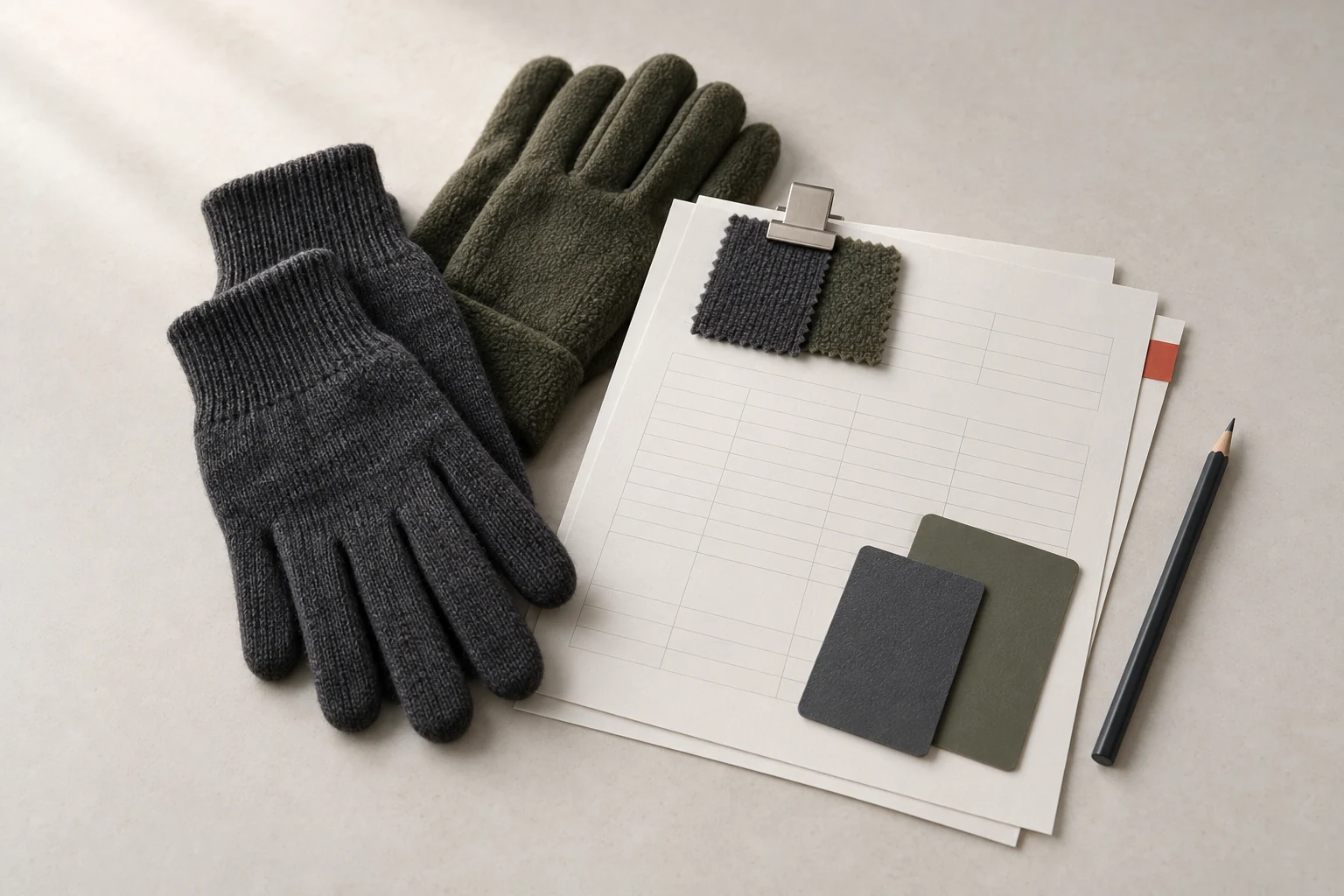
A leather direction puts the material surface and panel construction at the center of the product. Three-point stitching, contrast seams, a wrist tab or an extended cuff each create a different buying proposition. Shortlist the visible detail that matters most, then compare leather and lining references on the same pattern direction. Review the two gloves together for appearance and fit. If the material or lining changes during development, return to the assembled sample before treating the earlier approval as complete.
Choose fleece around the panels and inside finish
For a fleece program, make the cut-and-sewn construction part of the selection. A bound edge, gathered wrist, extended cuff or contrast panel changes the opening and the way the glove is assembled. Compare these details on complete gloves instead of selecting from fabric swatches alone. Ask our factory to show how the thumb, fingers and cuff meet on the chosen direction. Include the inside seam finish in the review so that the shortlist reflects the product your buyer will receive.
Treat touchscreen and winter as additional decisions
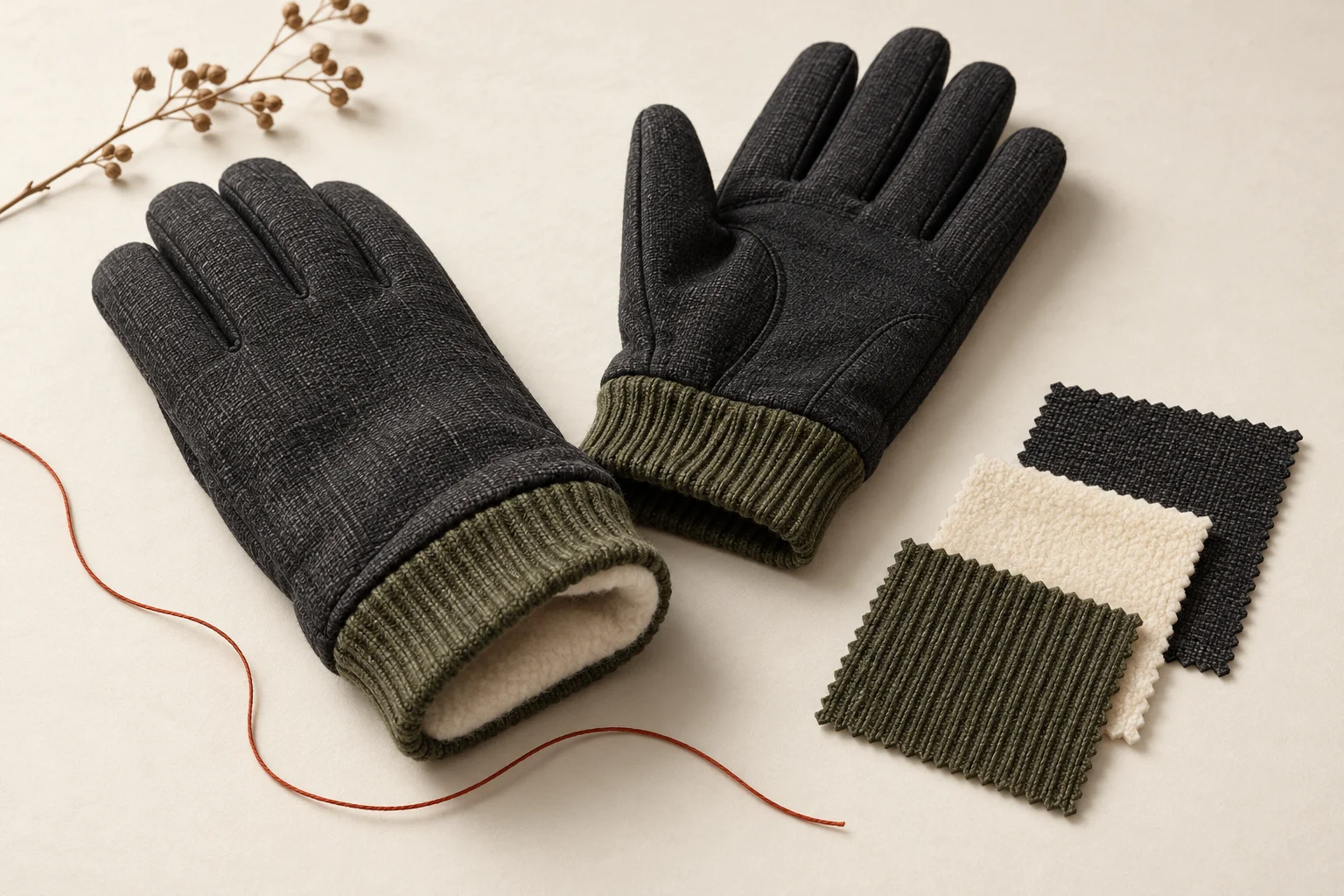
Touchscreen describes a proposed contact function; it does not identify the base construction. First decide whether your range needs knit or a sewn textile base, then define the contact zones and the device interactions to assess. For a winter direction, consider the shell, lining, any additional layer and cuff together. Adding a layer changes the combination that must be sampled. Avoid choosing a thermal rating or universal device claim from a photograph; agree the evaluation needed for the supplied construction.
Narrow the assortment before multiplying colors
Keep one main construction direction for each intended role in the range. VORLAN’s MOQ is 300 pairs per style per color, so three colors of one style require separate 300-pair groups. List the size split inside each group. If several shortlisted styles serve the same purpose, compare their distinguishing construction first and remove unnecessary overlap before developing all of them. Shared color or branding ideas can connect the collection while each style keeps its own material and sample approval.
A shortlist is most useful when each option answers the same buying brief. These comparisons show what changes between closely related routes; they do not rank one material as universally better or cheaper.
| Decision | What differs | Next useful comparison |
|---|---|---|
| Plain knit or cable back | The cable layout introduces a patterned surface and its relationship to the plain palm. | Compare motif placement and the yarn appearance on the complete sample. |
| Bound fleece edge or gathered wrist | Binding defines the edge; gathering defines a wrist opening and seam position. | Compare the desired cuff appearance and the entry/fit review. |
| Knitted contact zone or sewn insert | One is integrated in the knit; the other has a separate material and attachment edge. | Compare the intended device actions on each proposed base glove. |
| Quilted shell or a rib-cuff winter direction | One emphasizes the back surface; the other emphasizes the shell-to-knit wrist transition. | Keep the layer list and intended fit explicit for both options. |
- 01
Hold the fixed requirement constant
If the range needs a recognizable cuff, compare cuff treatments while keeping the intended hand construction identifiable. If the material itself is undecided, compare material routes first. Changing material, cuff, lining and branding simultaneously makes the reason for choosing a sample unclear.
- 02
Keep material names separate from claims
“Winter”, “fleece” and “layered” describe directions, not a measured warmth result. Add any required functional claim to the brief so its material, construction and evaluation scope can be discussed before approval.
Ask for an alternative against a clear priority
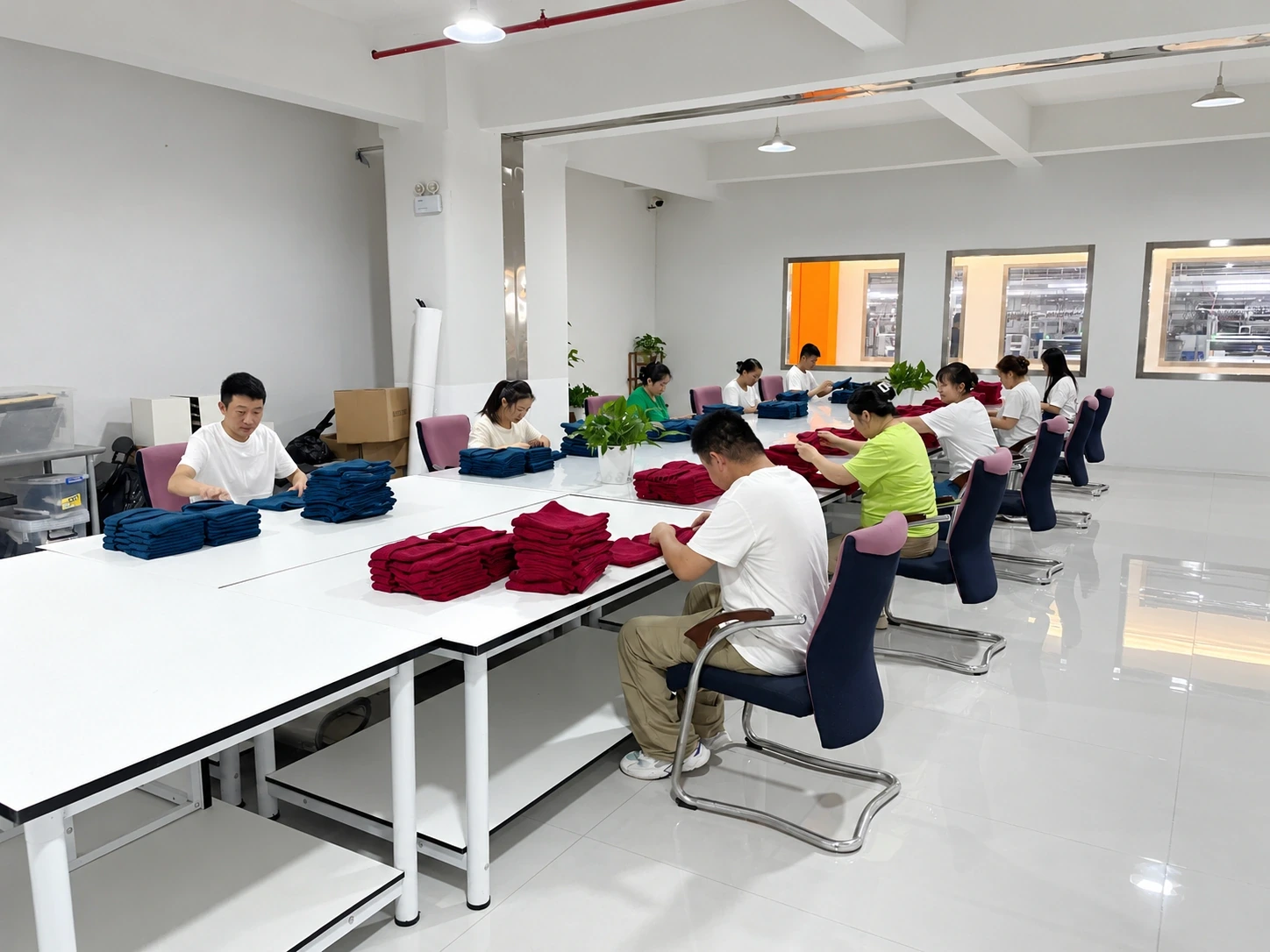
When a proposed material, trim or construction does not fit the buying plan, state what must be preserved: the appearance, cuff detail, lining direction or other essential feature. Ask us to discuss a revised option against that priority and your target budget. A changed material may require another fit or application review; compare the complete scope before choosing. Our own Hangzhou factory carries out knitting, cutting, sewing, finishing and private label applications, so the discussion can connect product choices with the relevant operations.
Move one direction into a defined sample
Send the selected reference, preferred material direction, intended colors, size range and quantity per style and color. Mark what you want to retain and what you want to change. VORLAN’s sample fee is US$80–100 including shipping; confirm the exact sample scope before starting. Sampling takes 7–10 working days from the agreed start, with delivery time planned separately. Use the physical glove to close the construction and fit decisions before expanding the assortment or releasing bulk production.
Buyer questions.
Should we develop every glove category for a first collection?
Choose categories that serve a distinct role in your assortment. Starting with fewer clearly differentiated constructions keeps material, fit and branding decisions easier to compare. The assortment remains your decision; the online range is a starting point for development.
Are touchscreen gloves a separate material category?
A touchscreen direction can use different base constructions. Specify the knit or sewn base, contact zones and required device interactions together, then assess the proposed sample within that agreed scope.
Can we keep one brand identity across different materials?
Yes. Share the identity and artwork, then review the application on each proposed material. Label placement, embroidery, printing or leather debossing should be approved with the relevant glove construction.
Can we combine colors to reach the 300-pair minimum?
The MOQ is 300 pairs per style per color. Plan the size split within each group, and keep separate style and color totals visible in the assortment.
Can VORLAN help if we have only a visual reference?
Yes. Send the reference, the details that matter to your range, target quantities and destination. We can discuss the development scope and the material or construction decisions still needed before sampling.
Should we select glove material or branding first?
Set the construction and material direction that carries the collection, while identifying any essential brand requirement. Then review the actual branding method on that selected material; a digital logo placement does not settle application or inside finish.
Can we compare options without committing to a complete collection?
Yes. Identify a focused shortlist and the decision each sample should resolve. Keep the intended quantities visible for quotation, and avoid treating several different constructions as one approved specification.
Sourcing brief
Bring your category, materials, quantities and development questions into one working brief.
Download the TXT template