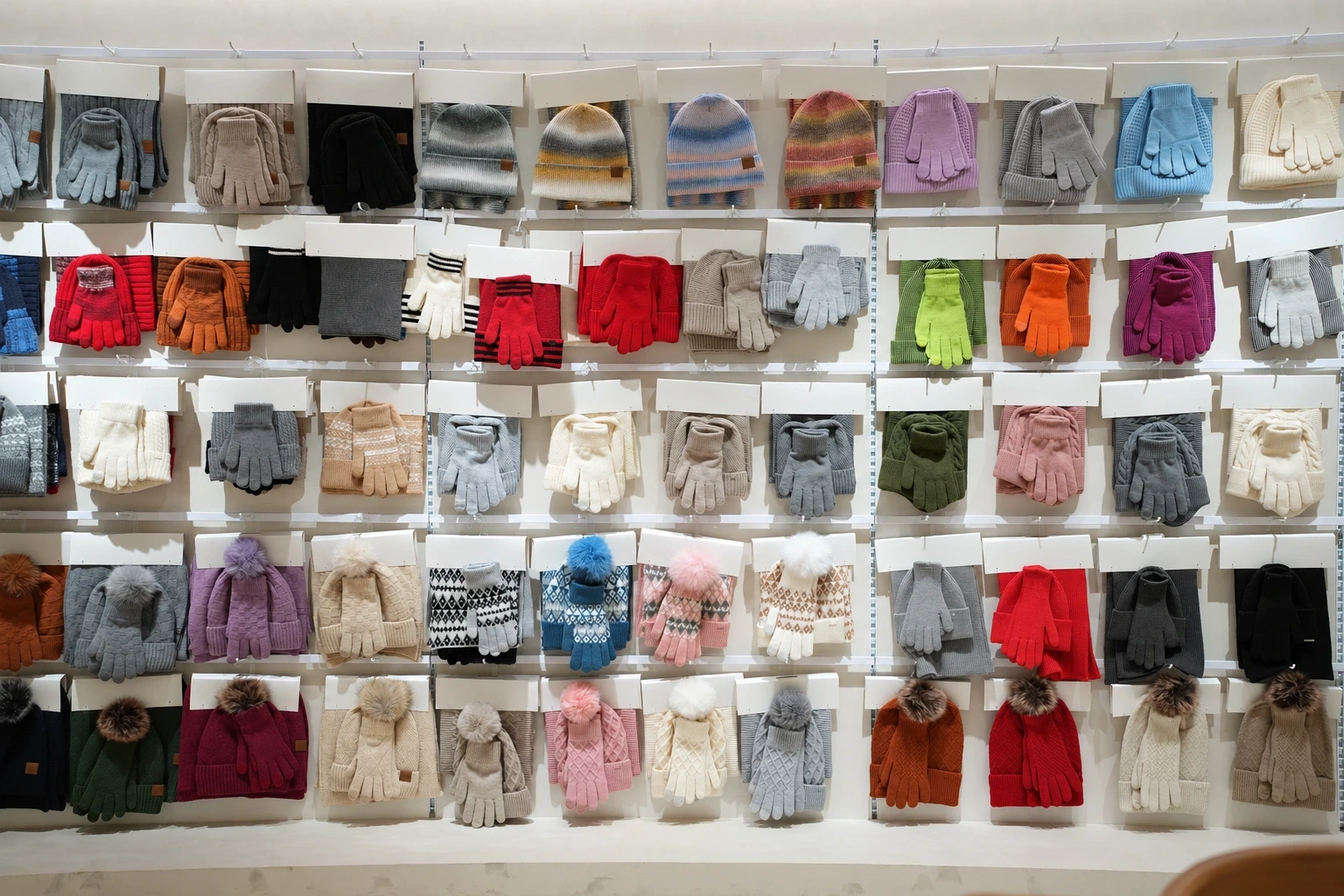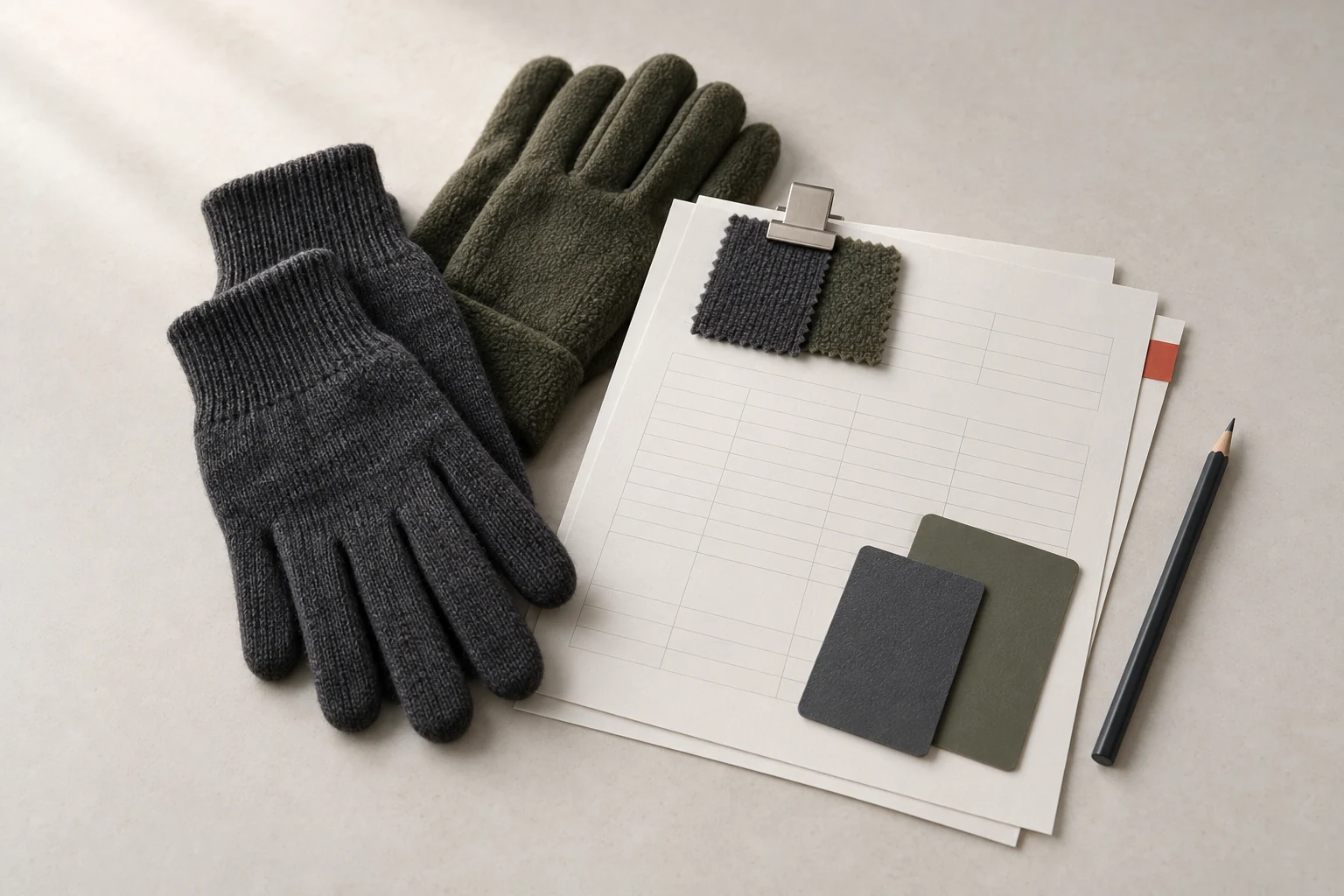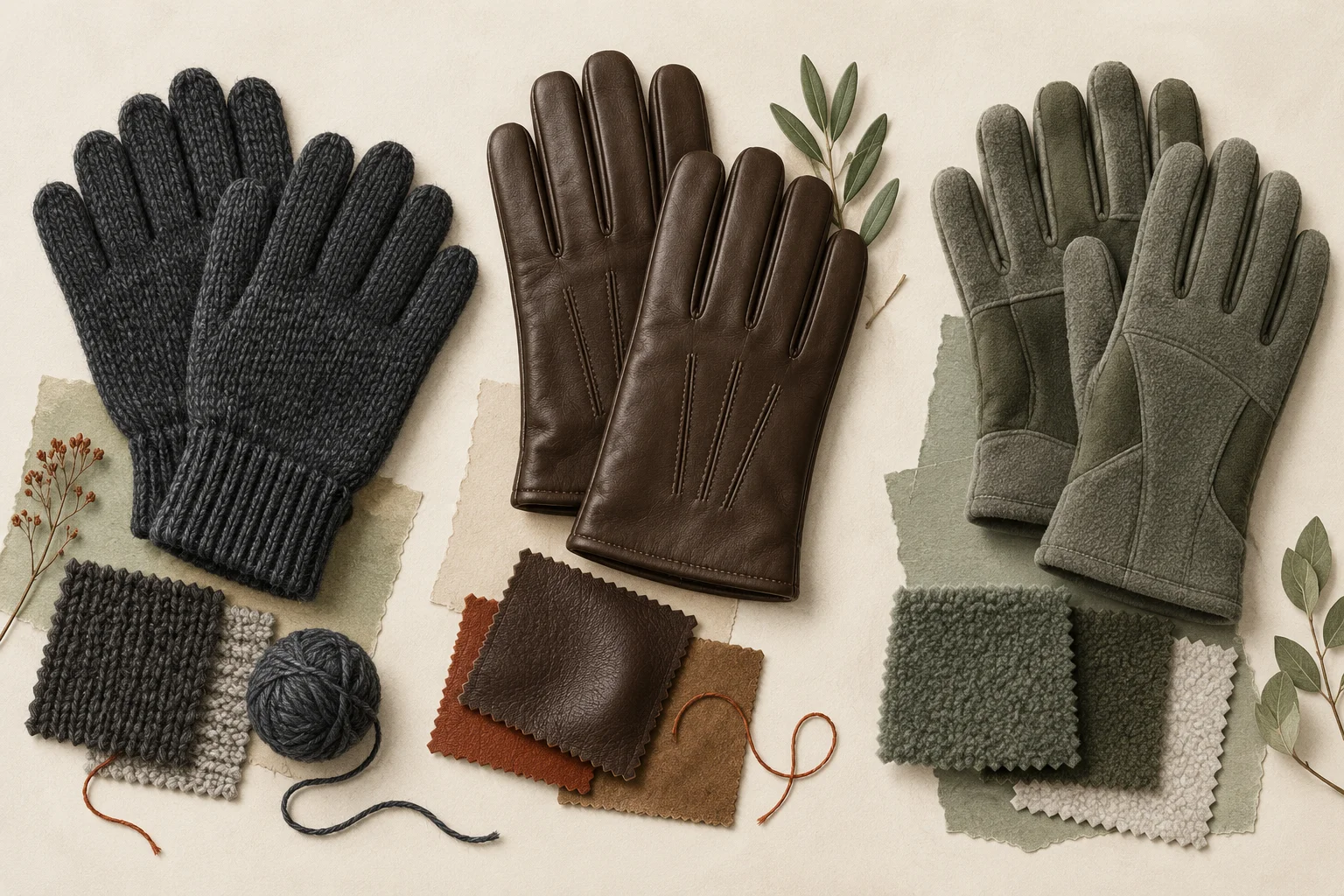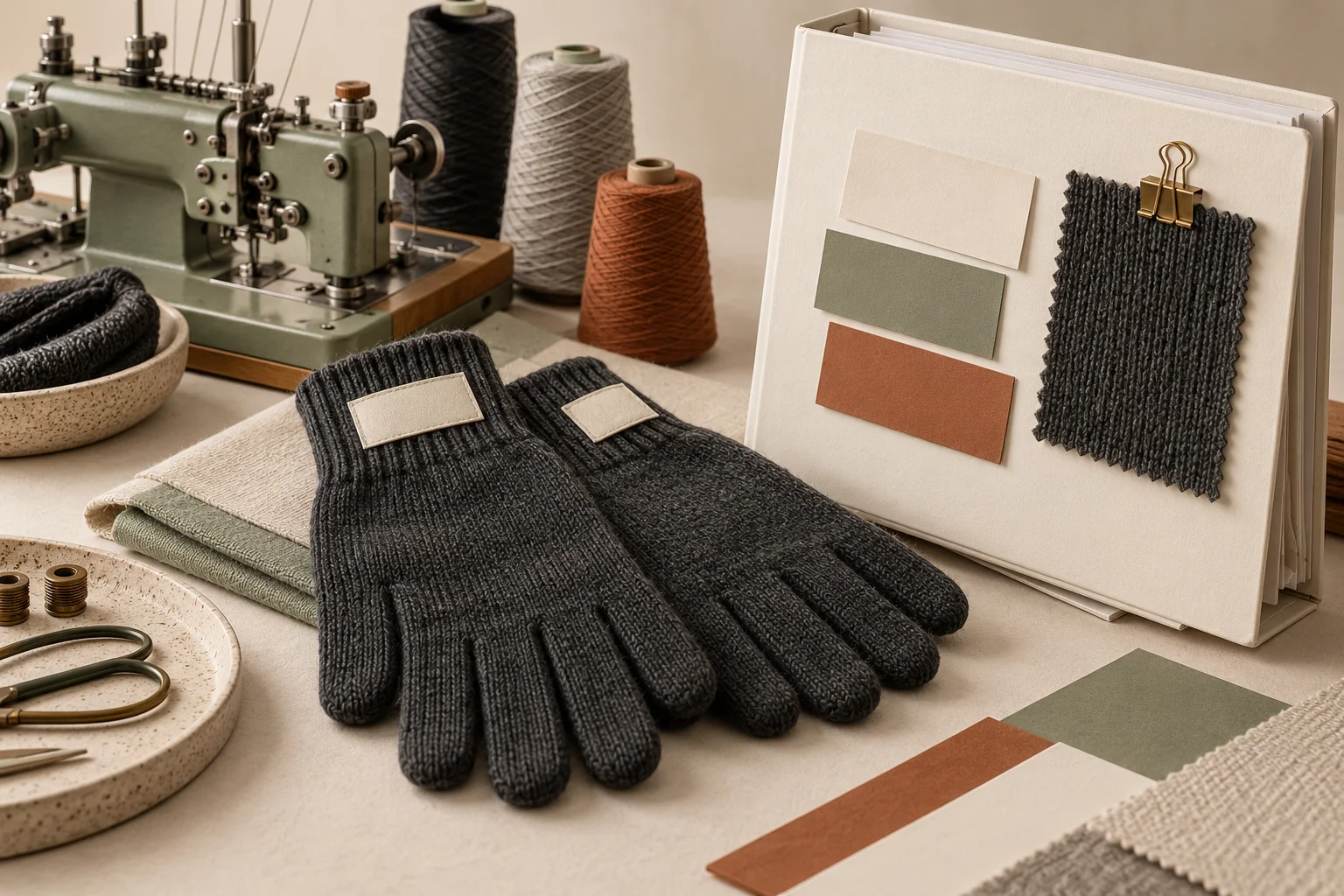
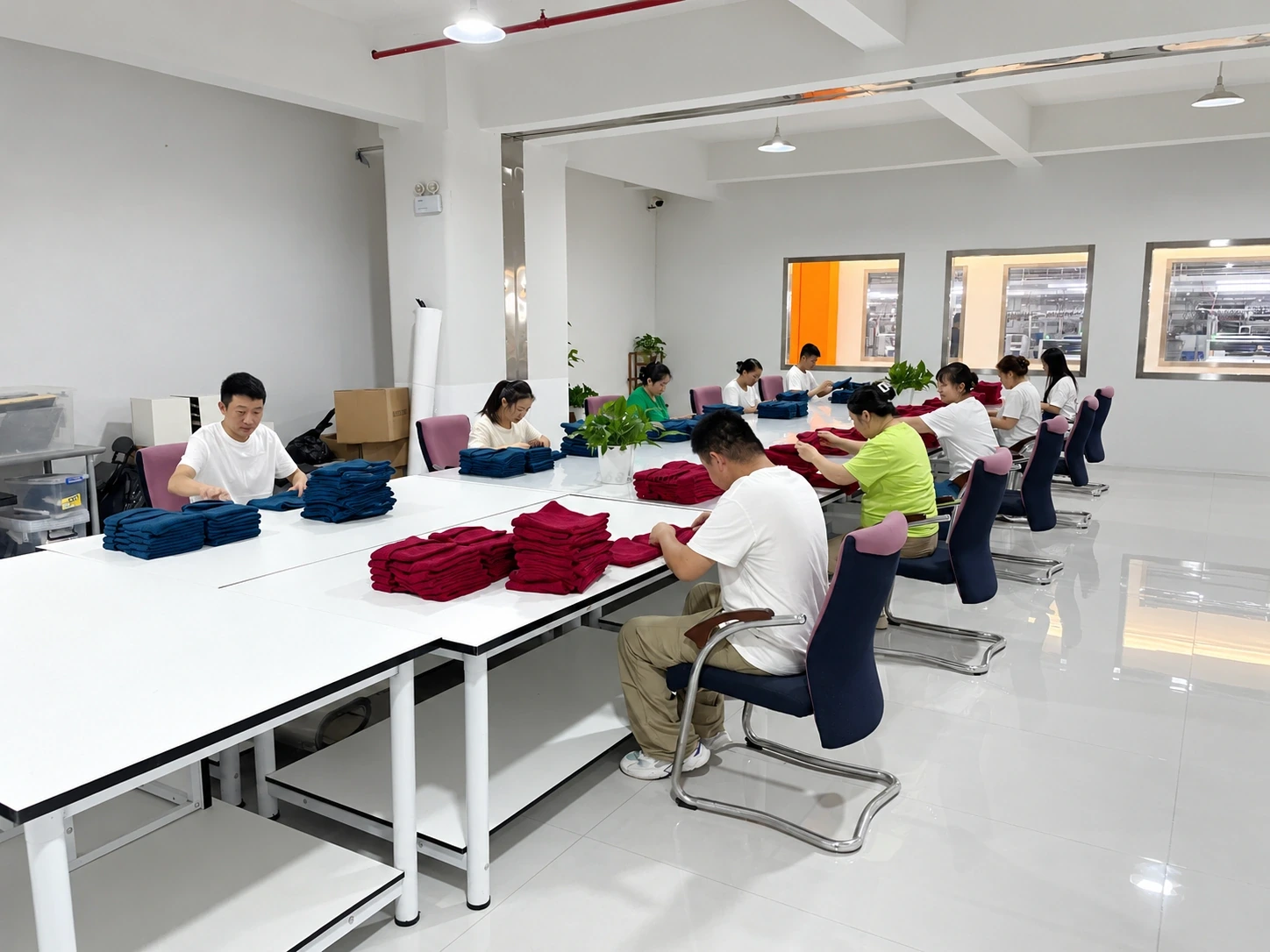
For an ordinary fashion-glove order, an inspection checklist should connect each requirement to the exact sample or order version, the observation and the release decision. VORLAN inspects every finished pair, including dimensions; nonconforming pairs are isolated, reworked and reinspected.
Identify the sample and the specification
Begin with the sample reference, date, style, color, size and revision. Identify the specification and artwork versions used for the review and record who is making the decision. If a sample is only intended to show a material or branding option, label that limited purpose clearly. A development sample should not become a blanket approval for fit, function and packaging that the buying team has not actually assessed.
Compare the material and visible finish
Check the proposed material against the agreed composition and physical reference. Compare color, surface appearance, fabric weight or leather finish as appropriate to the category. Discuss acceptable variation using clear written criteria and reference samples. Identify any material documentation your market or purchase specification requires. Keep the record tied to the actual supplied material; a photograph and a general category description do not establish composition or a test result.
Measure using one agreed method
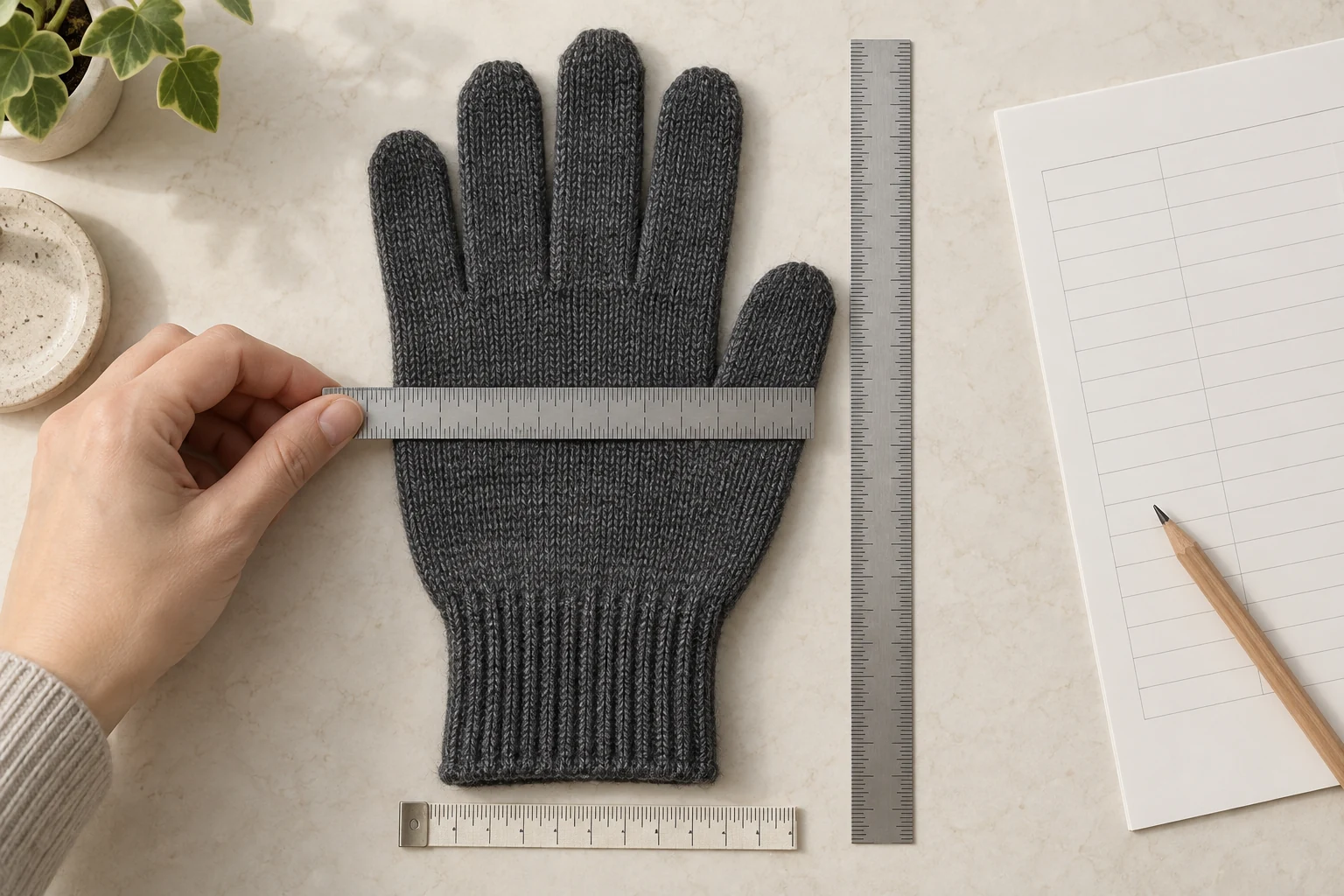
Check hand width, overall length, finger lengths, cuff dimensions and the other points defined in your size chart. Record actual measurements alongside the target and agreed tolerance. For a stretch construction, state the measurement condition so two reviewers are not measuring the same item differently. Inspect left and right consistency and review the planned size range. Resolve the method and any deviations before signing off the fit specification.
Review construction inside and outside
Inspect seams, lining attachment, panel alignment, cuff finish and visible thread ends against the agreed workmanship criteria. Check the internal finish as well as the exterior, particularly where branding or lining is added. Describe an issue with its location and an annotated image so the required change is clear. VORLAN checks the production order in full. If the buyer also requires third-party inspection or specialist testing, agree that additional scope and its acceptance rules separately.

Check artwork and label versions
Compare the logo with the approved file for size, placement, orientation and color. Read all material, size, care and packaging text rather than approving the layout alone. Confirm which artwork version belongs to each destination or assortment row. Have the person responsible for your destination requirements review the final information. Approval should cover the actual label or decorated sample, with any later file change identified as a new revision.
Assess functionality within its defined scope
For touchscreen details, use the agreed devices, sample fit and interactions, and record the result. If another functional requirement is part of the brief, define its assessment and acceptance criteria before testing. Do not generalize a successful visual or interaction check into an untested durability, temperature or care claim. Any performance wording used in product information needs appropriate support for the specific supplied construction.
Record what was checked, the conditions and the result. Keep conclusions within that agreed scope.
Record a decision and close the revisions
Classify the review as approved, approved with clearly identified actions, or requiring another sample, according to the process agreed for the project. List each unresolved point, the responsible contact and the next decision needed. Keep approval conditional where the reviewed sample does not yet represent the production specification. Retain the final sample and written record together and confirm that the artwork, material list and assortment have been updated to match.
Connect each inspection finding to the agreed requirement and a clear next action. Check the retained reference, identify the affected pairs and record the correction or decision needed before release.
| Finding | Reference to check | Action to record |
|---|---|---|
| A dimension differs from the target | The same point, method, size and agreed upper/lower limits. | Record the actual value and disposition against those limits; do not create a tolerance after measuring. |
| A visible seam differs from the approved layout | The marked seam route and retained construction sample. | Identify the location and required correction; isolate nonconforming production pairs for rework and reinspection. |
| The material is not clearly identified | The approved component list and physical material reference. | Resolve material identity before making an acceptance decision. A similar color is insufficient. |
| Touchscreen contact was checked on another device | The agreed device, fit, action and acceptance conditions. | Record the actual scope and repeat the required check; do not generalize the result. |
- 01
Separate a sample comment from a production nonconformity
A development comment may request a new design choice. A production finding concerns the agreed requirement for the order. Identify which situation applies before deciding whether to revise the specification or correct the goods.
- 02
Keep the reinspection tied to the original issue
Record the affected reference, correction and the condition being checked again. Full inspection needs a clear acceptance basis; it does not itself establish a laboratory result or an unrelated functional claim.
Confirm packing and shipment readiness
Check quantities by style, color and size, the agreed packing units, carton marks and any required order documents. Distinguish pairs ordered from presentation units and cartons. Agree inspection records, shipment arrangements and release responsibilities before dispatch. A development sample approval is one part of the process; it does not replace the agreed order inspection or the documentation needed for the destination and shipment.
Buyer questions.
Is a signed sample enough to define the order?
Keep the approved physical sample together with the written specification, measurements, material references, artwork and packing instructions. Identify their versions and resolve any disagreement between them. A signature alone does not explain a measurement tolerance, material composition or later artwork change.
Does VORLAN claim certification across all glove categories?
No blanket certification or performance rating is implied. Identify the documentation and testing required for your destination and order, then confirm that any report relates to the exact supplied material or finished product.
What happens when a sample needs changes?
Record each required revision against the sample and specification, consolidate feedback through the approval contact and agree whether another sample is needed. Confirm the effect on timing before setting the production start. Keep unresolved decisions visible until they are approved.
How do we turn a sample comment into a useful correction?
Identify the sample version and exact location, describe the observation and state the required change or question. Add a measurement or annotated image where helpful, and record who will confirm the correction and whether another sample is required.
Does full inspection remove the need for agreed acceptance criteria?
No. Every finished pair is inspected, but the specification still needs to define what is accepted: measurements, workmanship, material appearance, pairing and labels. Specialist testing and separate buyer inspection requirements need their own agreed scope.
How do we record an unresolved sample issue?
Keep the issue visible with the sample identifier, required action, responsible contact and next decision. Do not allow a general approval note to conceal an unapproved material, fit or artwork change. Update the final specification after the decision is made.
Is this a protective or electrical glove inspection checklist?
No. It addresses ordinary apparel-glove development and order review. Protective equipment needs product-specific requirements and qualified evaluation outside the scope of this guide.
Does full inspection mean an AQL sampling plan is used?
Our stated factory process checks every finished pair, including dimensions. If your buying process requires an additional independent sampling inspection, agree its scope and acceptance rules separately; this guide does not prescribe an AQL value or claim an existing third-party arrangement.
Sample review record
Record the agreed requirement, sample observation, decision and next action.
Download the CSV template