A procurement workspace for brands, importers and wholesale teams working with our own glove factory. Prepare the RFQ, compare the scope and close the decisions that release an OEM or private label order.
Use this sequence to prepare an ordinary glove OEM or private label order. Each stage connects the information you bring with the decisions to confirm, and a focused guide or working file for the next step.
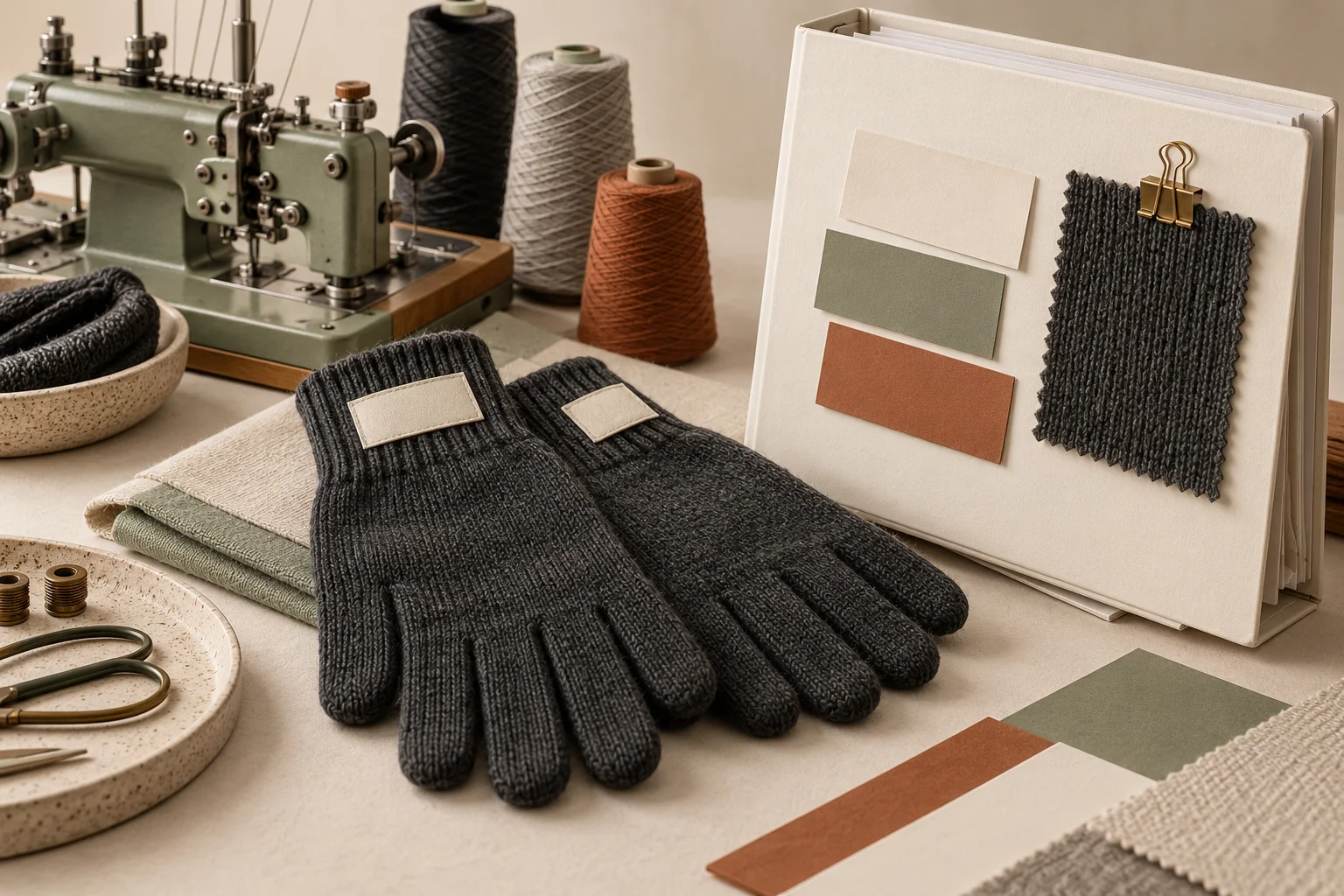
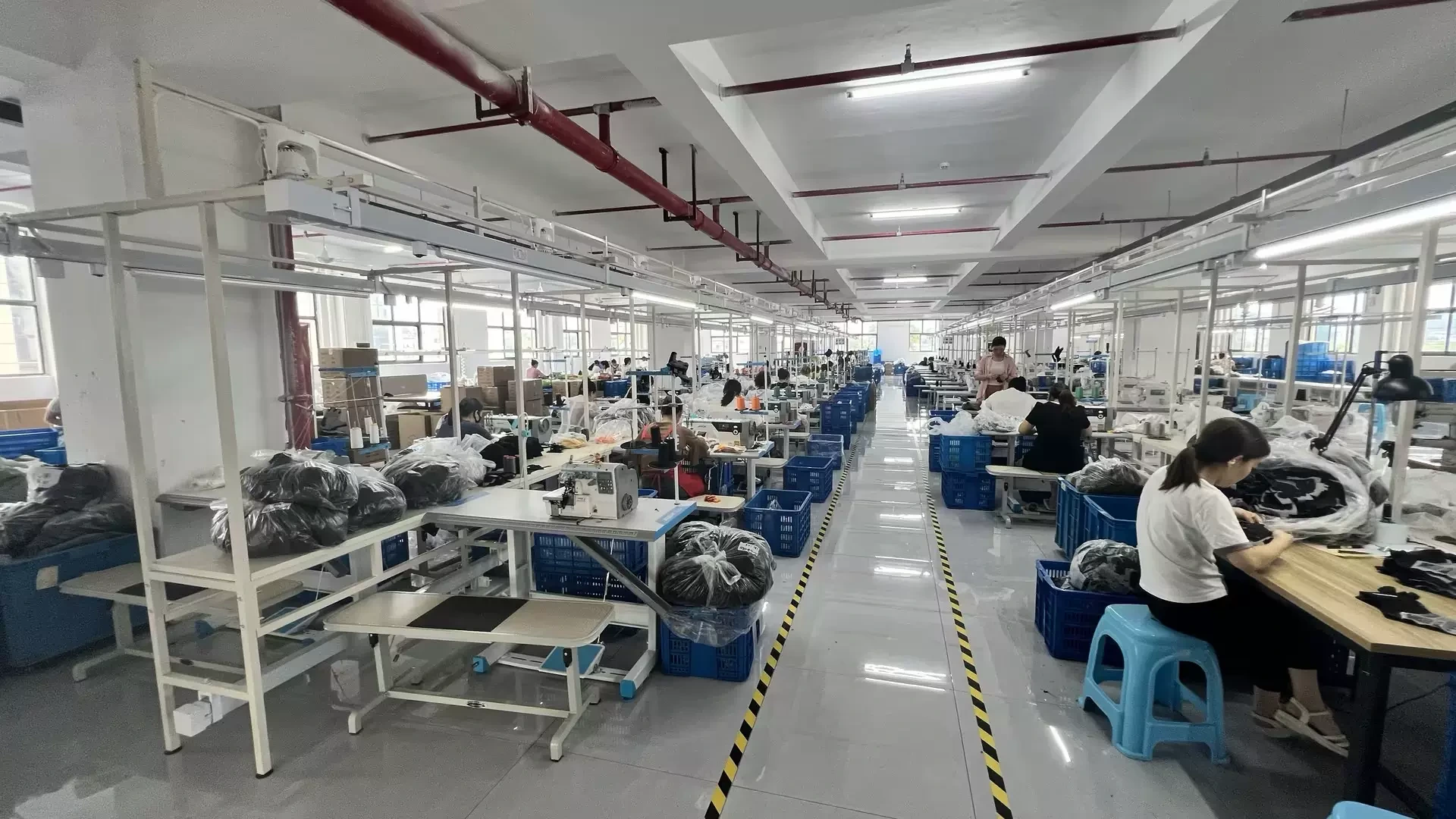
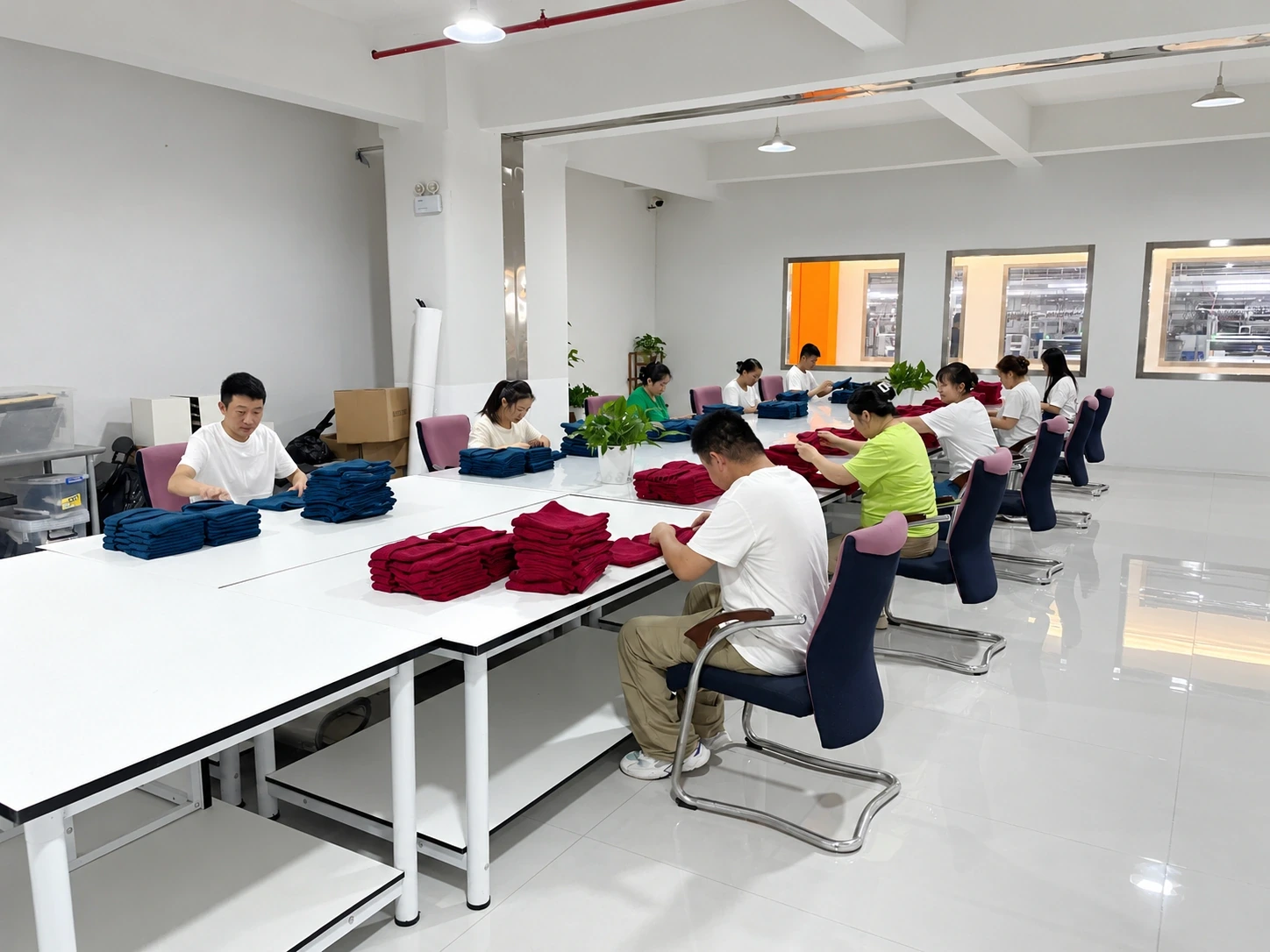
Own-factory sewing floor: match supplier review to the intended construction.Factory photograph
01 / Buyer decision
Evaluate the factory for your construction.
A supplier review is most useful when it is connected to a real glove brief. Start with the making route and the information needed to assess that particular order.
Prepare
Category, construction reference, expected quantities and supplier-review requirements.
Confirm
Which operations the glove needs, which current factory information to review, and who will approve the sample.
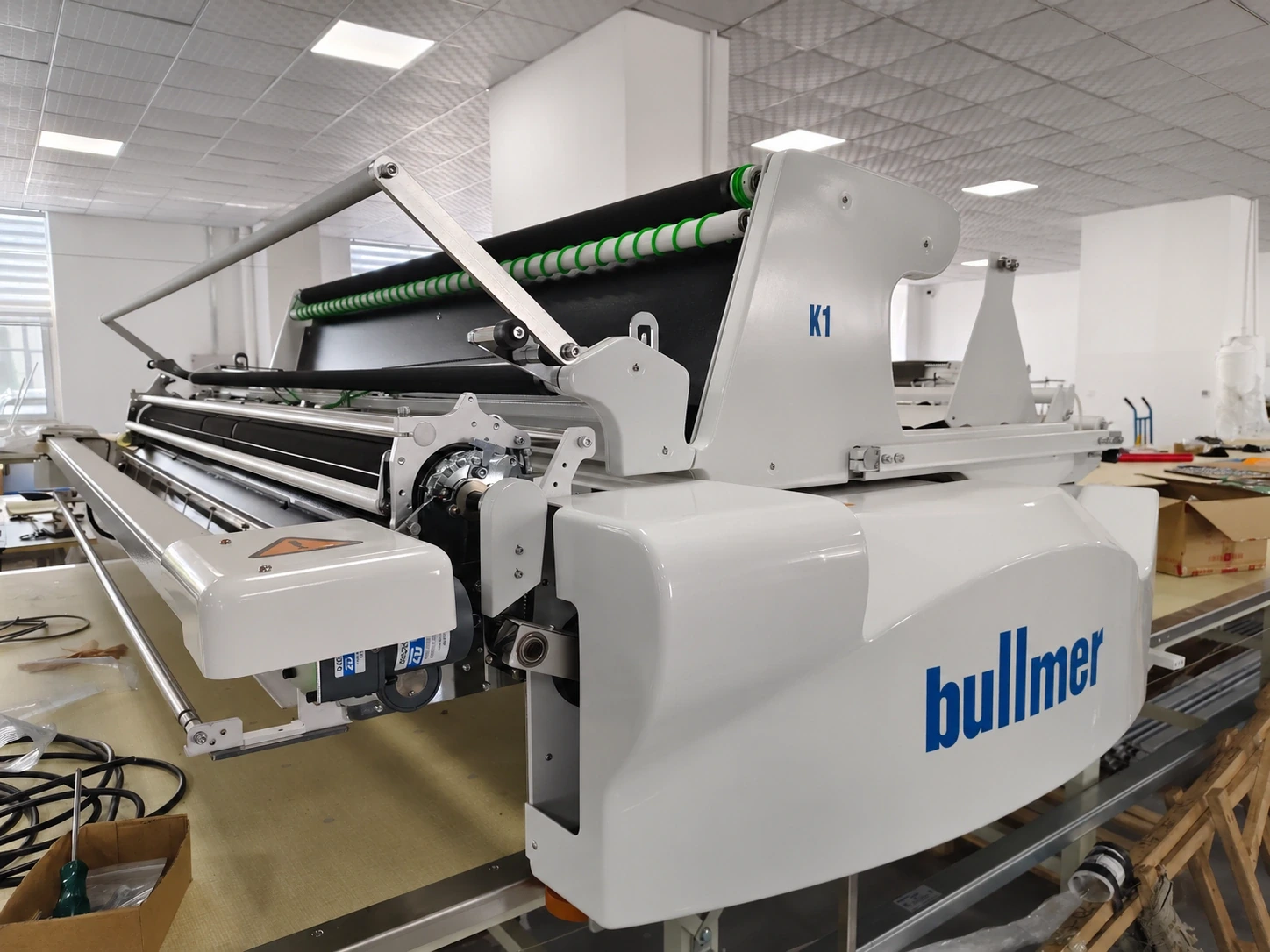
Fabric preparation equipment: specify the material route in the RFQ.Retouched factory photograph
02 / Buyer decision
Prepare an RFQ that can be compared.
Give each quotation the same product and commercial scope. A price without a material, size breakdown or packing basis is difficult to compare with another offer.
Prepare
Material and lining direction, style references, quantities by color and size, artwork, packing, destination and target timing.
Confirm
What the quotation includes, what remains open, the basis for freight and any development or testing costs.
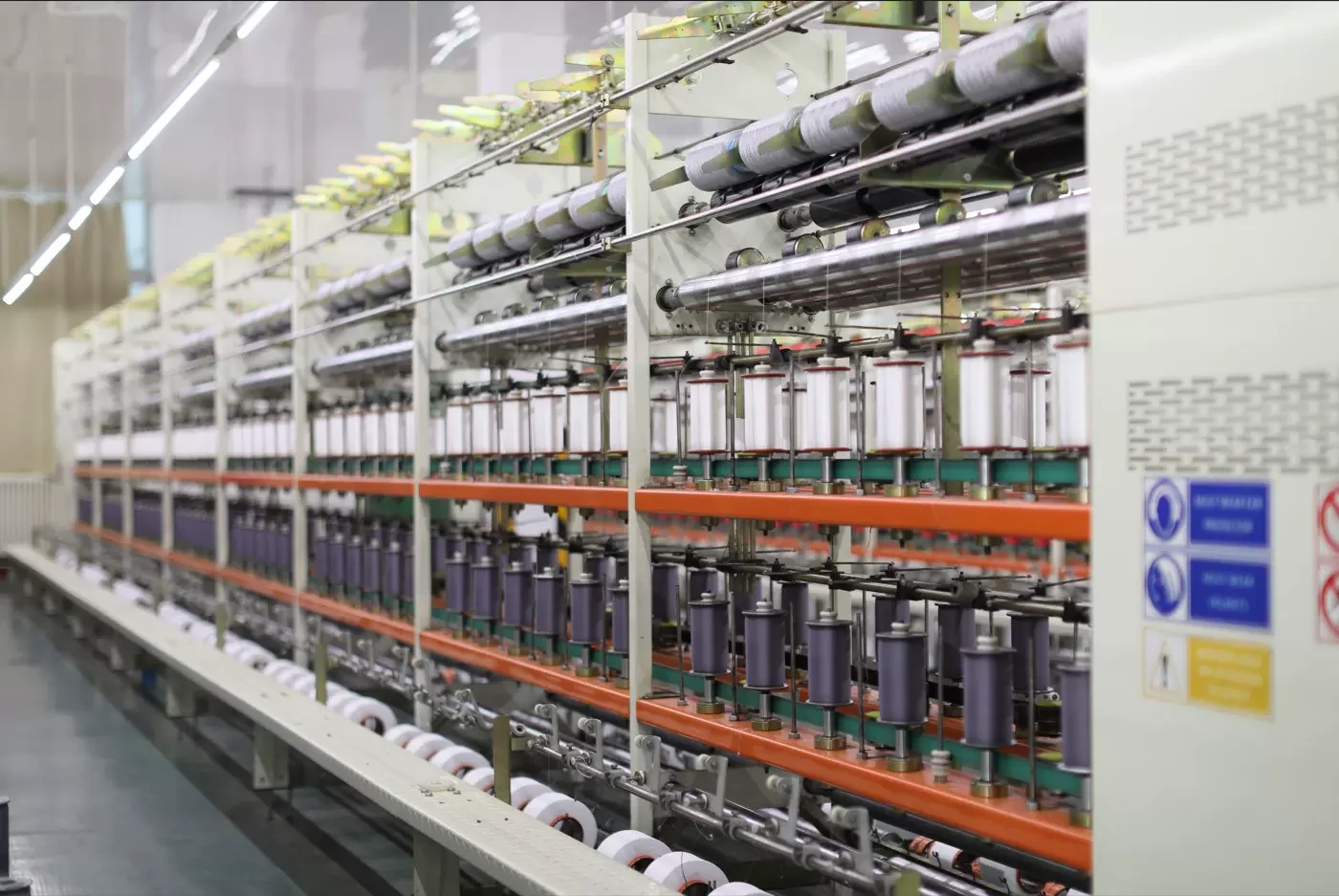
Yarn winding: define the yarn and color references for the order.Factory photograph
03 / Buyer decision
Resolve materials before the sample is approved.
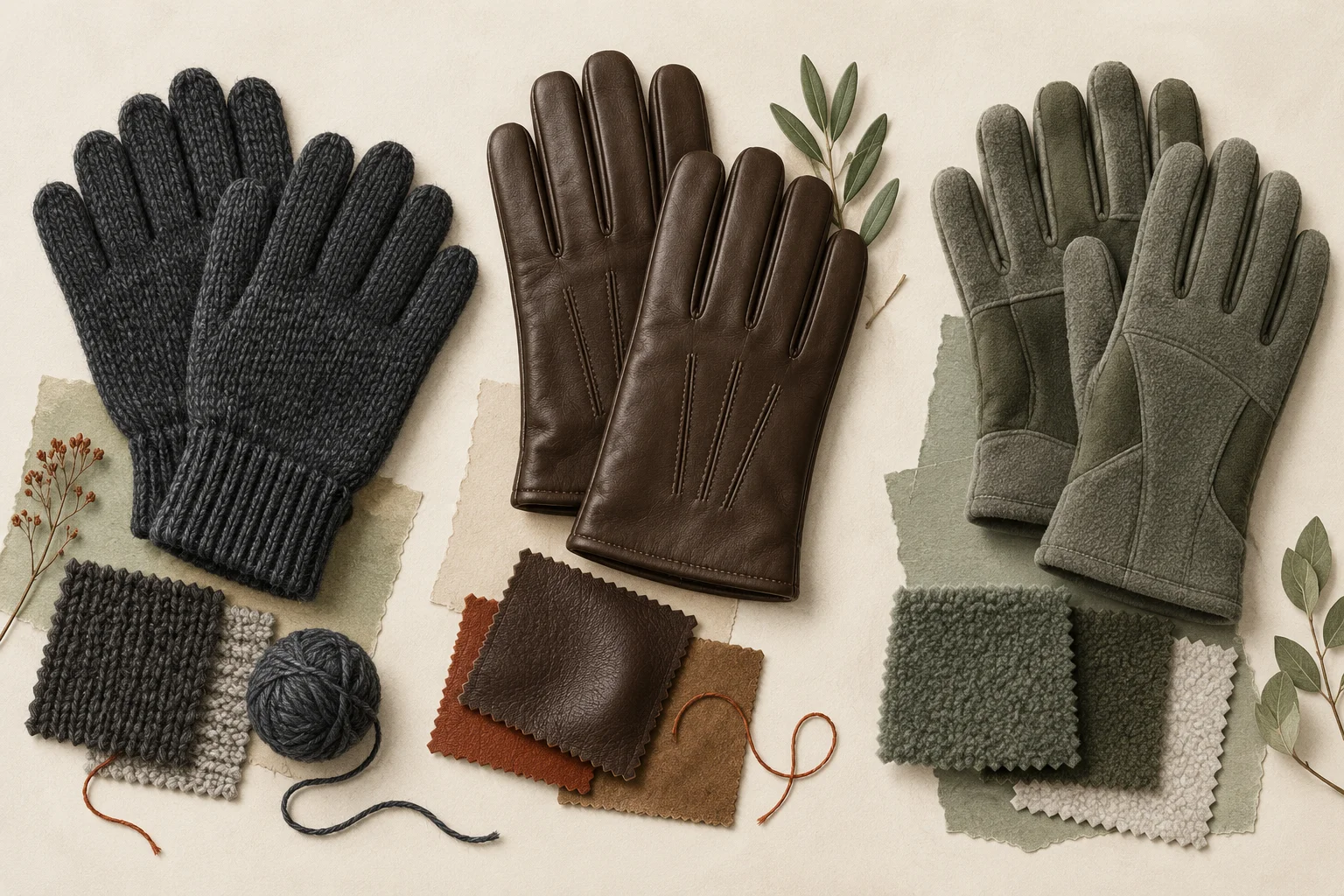
A photograph can communicate a direction; the actual yarn, fabric, leather, lining and trims define the material combination. Keep the color reference and hand-feel discussion with the complete glove.
Prepare
Requested composition, finish and color, physical references where available, and any material documentation requirements.
Confirm
The chosen material references, acceptable appearance variation and the changes that would require another sample review.
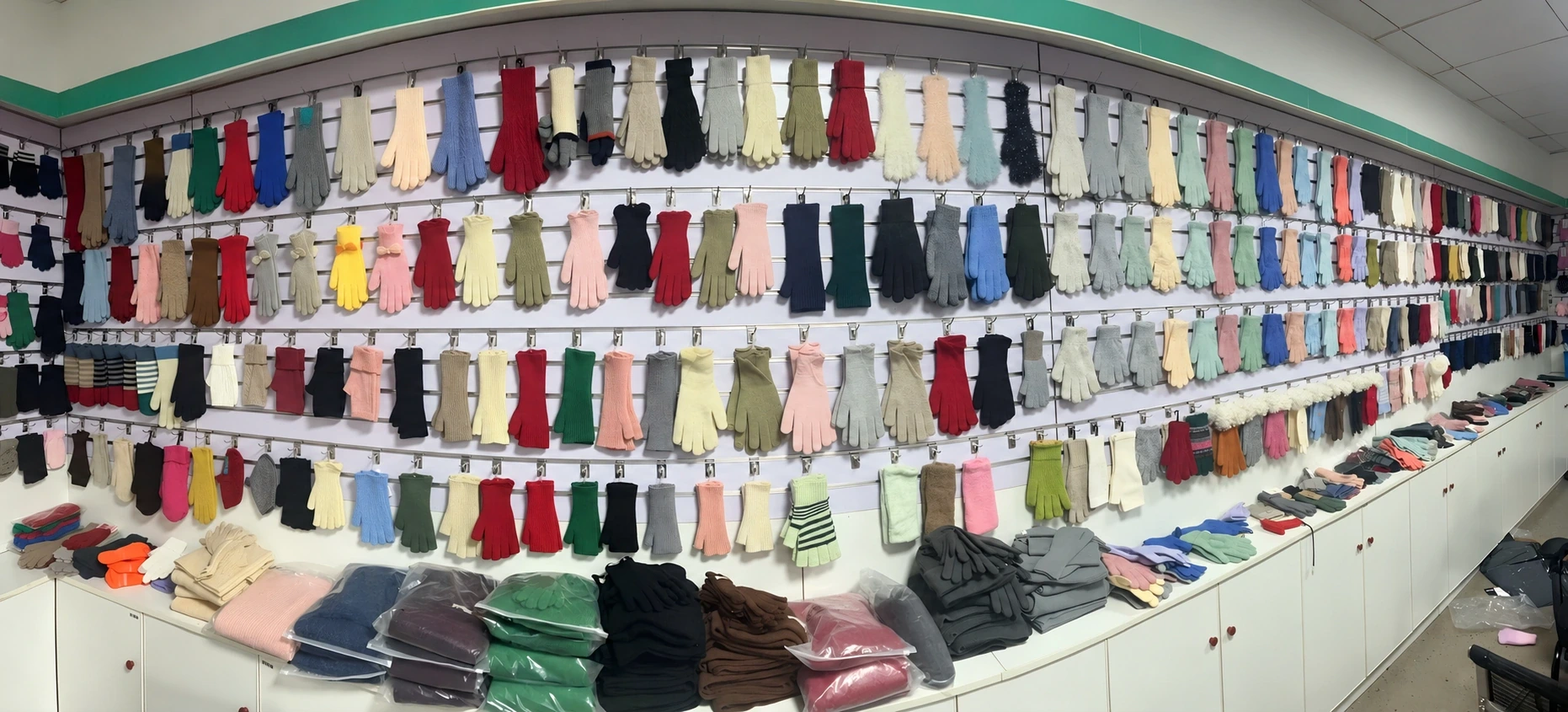
Factory sample display: discuss structure and fit using a physical reference.Retouched factory photograph
04 / Buyer decision
Approve fit, construction and brand details together.
Review the sample as one product. A change in lining or seam construction can change fit; a label or embroidery application needs to be reviewed on the selected material.
Prepare
The measurement method, proposed size range, artwork files, label placement and consolidated sample comments.
Confirm
The approved sample and specification versions, unresolved changes, and who gives the written production approval.
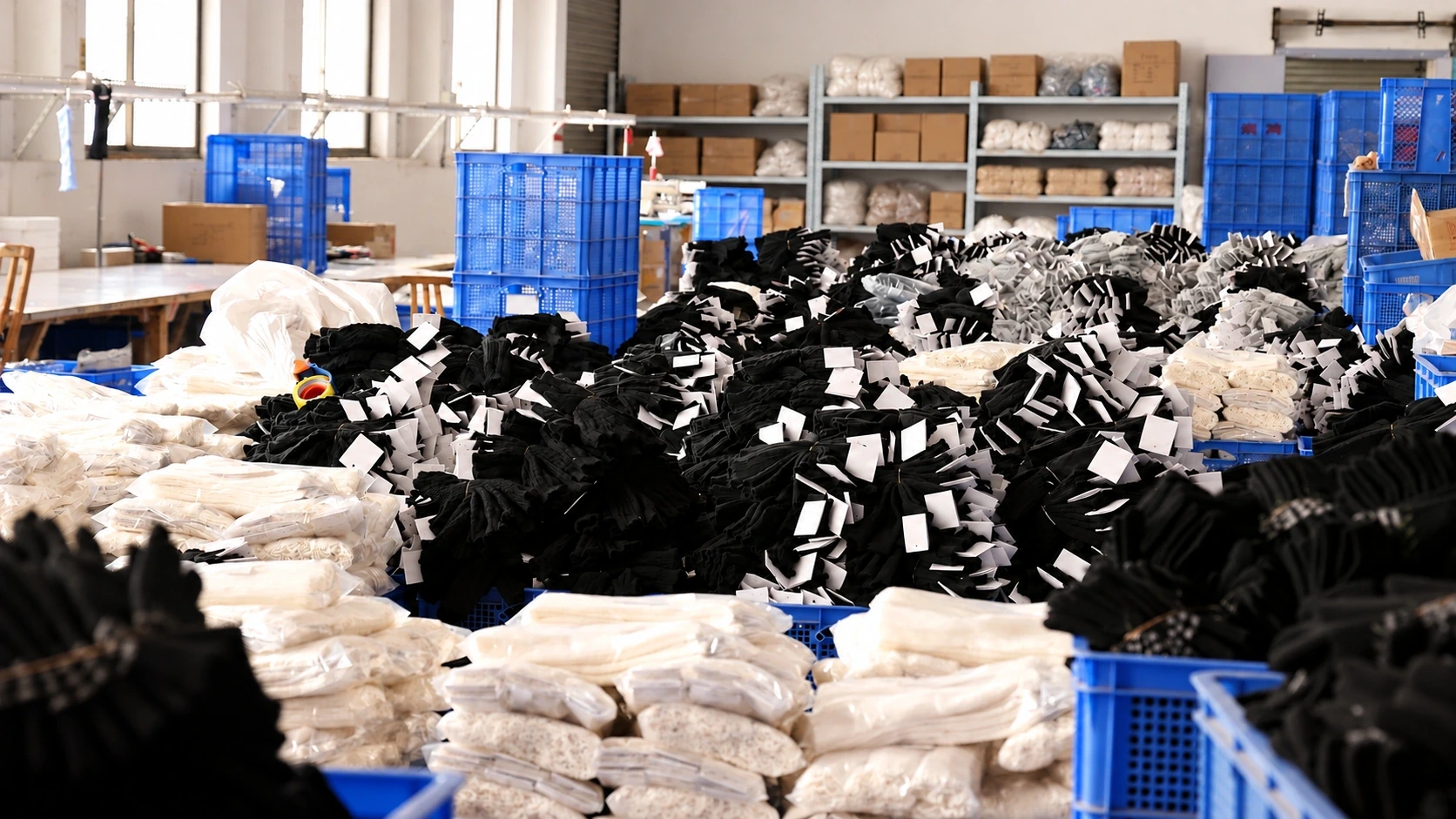
Glove assortments in factory bins: identify style, color and size combinations.Retouched factory photograph
05 / Buyer decision
Build the assortment and a workable calendar.
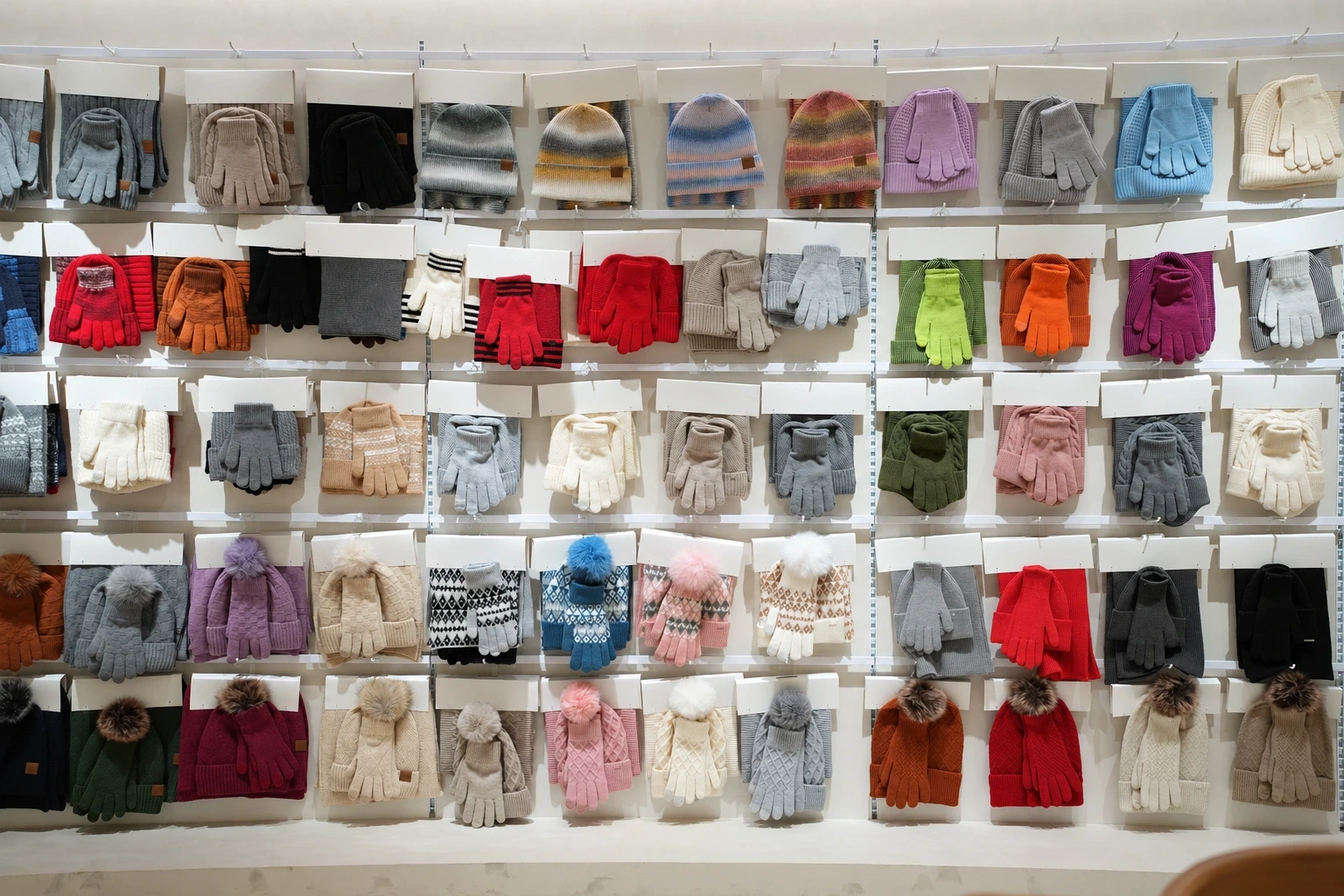
For ordinary glove programs, plan from 300 pairs per style per color, then allocate the sizes within that combination. Keep product approval, production and transport as distinct parts of the schedule.
Prepare
A style/color/size matrix, target arrival date and approval availability. Samples take 7–10 working days; bulk production takes 30–45 working days from the agreed start.
Confirm
The production start, review milestones and packing quantities. Account for revisions and transit separately.
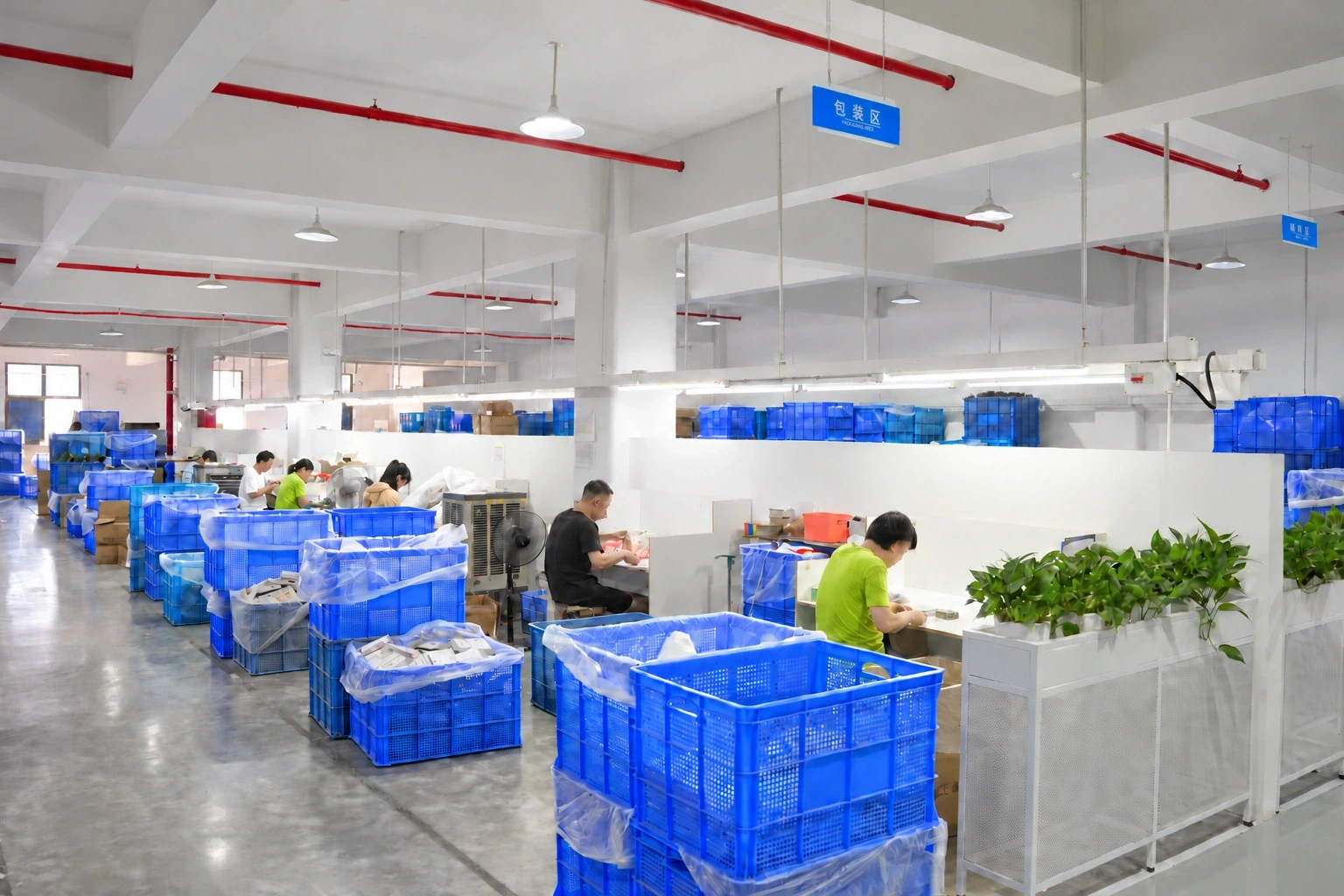
Factory packing workstations: connect the pack plan with the approved assortment.Retouched factory photograph
06 / Buyer decision
Confirm packing, inspection and the order handoff.
Carry the same style, color and size information through the glove label, unit pack and carton. VORLAN uses full inspection, including finished pairs and packing; agree any additional project testing separately.
Prepare
The approved sample file, inspection requirements, label/artwork versions, pack configuration, carton marks and required documentation.
Confirm
The release requirements, final assortment and dispatch instructions. For a reorder, identify the retained reference and any changed requirements.
Use the same buying brief when evaluating an ordinary glove manufacturer. VORLAN’s own-factory scope includes making, brand application, full inspection and packing; confirm the exact requirements for your project.
01
Product basis
Material composition and reference, construction, lining and finish.
A cheaper quote may assume a different fabric, lining or making route.
02
Quantity basis
Pairs per style and color, with the size breakdown stated separately.
Do not compare a combined collection total with a price for one colorway.
03
Development scope
Sample work, revisions, artwork preparation and any required tooling.
Clarify which costs are included, separate or still awaiting review.
04
Quality & testing
Every-pair checks, acceptance criteria and any additional assessment.
A general inspection statement does not define the scope of a specific test.
05
Packing & delivery
Unit pack, carton assortment, marks, destination and delivery scope.
Product price, packing configuration and transport assumptions must match.
Three decisions to close before release.
Product approval
A physical sample, measurement method and agreed targets, material and artwork versions.
Order approval
Style/color/size quantities, unit packing, carton instructions and the agreed start.
Verification scope
Every-pair inspection requirements, correction handling and any separately agreed testing or reporting.
Develop / Review
The details behind the collection.
Focused guides to collection development, measurement and sample approval.
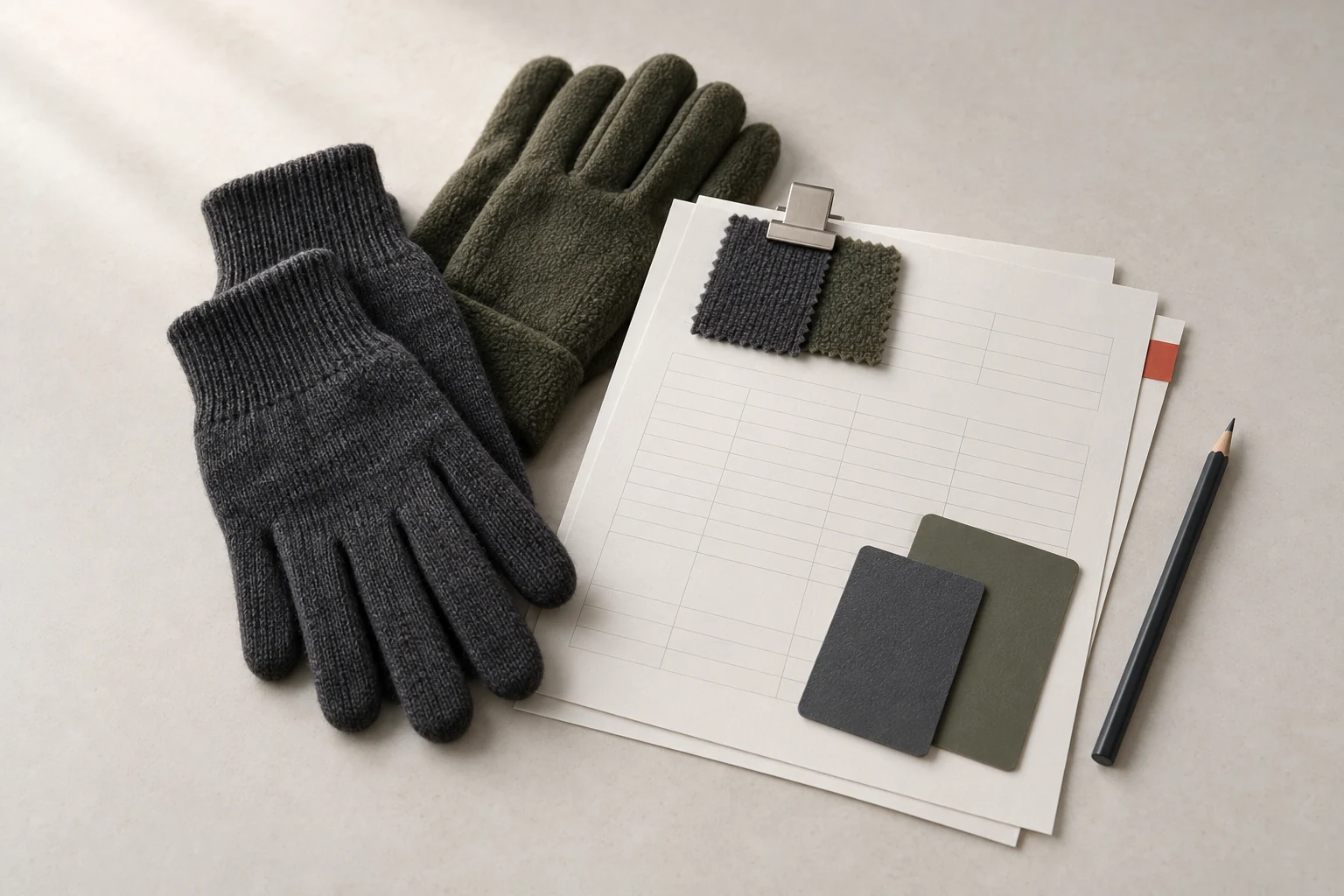
Use the worksheet for your construction alongside the size specification, sample review and assortment files. Complete it with the actual references and decisions for your order.
Knit / TXT
Knit material & sample record
Record the main and cuff yarn references, stated composition and its source, color references and knit revision. Give the physical swatch its own identifier.
Record the fabric identifier, composition, weight in g/m² and the source of each value. If a value is checked, keep the method, specimen and result with it; a photograph does not establish the specification.
Record the base material, contact material or method, finger zones, sample revision and size. Keep a close-up of each contact area with the full-glove photographs.
List the leather and lining identifiers, finish, cuff and closure, size range and quantities by color. Link the size sheet and note unresolved choices so quotations use the same basis.
Answers to the first questions about a VORLAN glove manufacturing program.
How much does a development sample cost?
Our sample fee is US$80–100 including shipping. Confirm the exact sample construction, materials and scope with our team before starting. Sampling takes 7–10 working days from the agreed start; allow separately for transit.
Can we source directly from your own glove factory?
Yes. VORLAN operates its own factory, including knitting, cutting, sewing, finishing, embroidery, printing, leather debossing, inspection and packing. Send the glove brief alongside your factory-evaluation questions so the discussion follows the actual production scope.
What should we send for a comparable OEM quotation?
Include the material and construction references, lining, sizes, quantities in pairs by style and color, brand files, packing, destination and target timing. Mark open decisions and ask for inclusions and separate costs to be identified against that same version.
How do we compare quotes with different materials or packing?
First align the specification. Record the proposed composition, material reference, lining, construction and packing configuration for each offer. Ask for a revised quote on the common scope before treating a price difference as a direct comparison.
Can we begin without final artwork or a size chart?
Yes. Identify the decisions that remain open and who will supply or approve them. The first discussion can define the development scope; final materials, measurements, artwork and packing need agreement before production release.
How does the 300-pair minimum apply to an assortment?
Plan at least 300 pairs for each style and color combination, then state the size split within that group. Keep pack and carton quantities separate from the product minimum. Confirm the actual assortment in the quotation.
Does the production lead time include approvals and transport?
Sampling is 7–10 working days and bulk production is 30–45 working days from the agreed start. Material decisions, revisions, approvals and transport are planned separately. Share the required arrival date so the full calendar can be discussed.
What should we verify during supplier evaluation?
Connect the company and facility review to the operations your glove needs. Ask about the relevant manufacturing route, sample responsibilities, full inspection and packing. Identify any current supporting information or project-specific documentation your buying team requires.
What needs to be closed before we approve bulk production?
Identify the approved sample version, material references, construction, measurement method and tolerances, artwork, style/color/size assortment and packing instructions. Resolve outstanding revisions and agree the production start.
How should inspection and additional tests appear in the RFQ?
Our factory inspects every pair, including dimensions, and isolates, reworks and reinspects nonconforming goods. State the acceptance criteria and reporting requirements. Name any additional test, device assessment or buyer inspection separately so its scope can be agreed.
What changes should we flag on a reorder?
Identify the previous approved style and version, then flag material, lining, fit, artwork, quantity, packing or destination changes. Reconfirm availability, quotation and timing, and agree which changes need another sample review.
A project for your brand
Turn the next question into a clear brief.
Send your glove category, quantity, destination and open development questions. We can start from there.