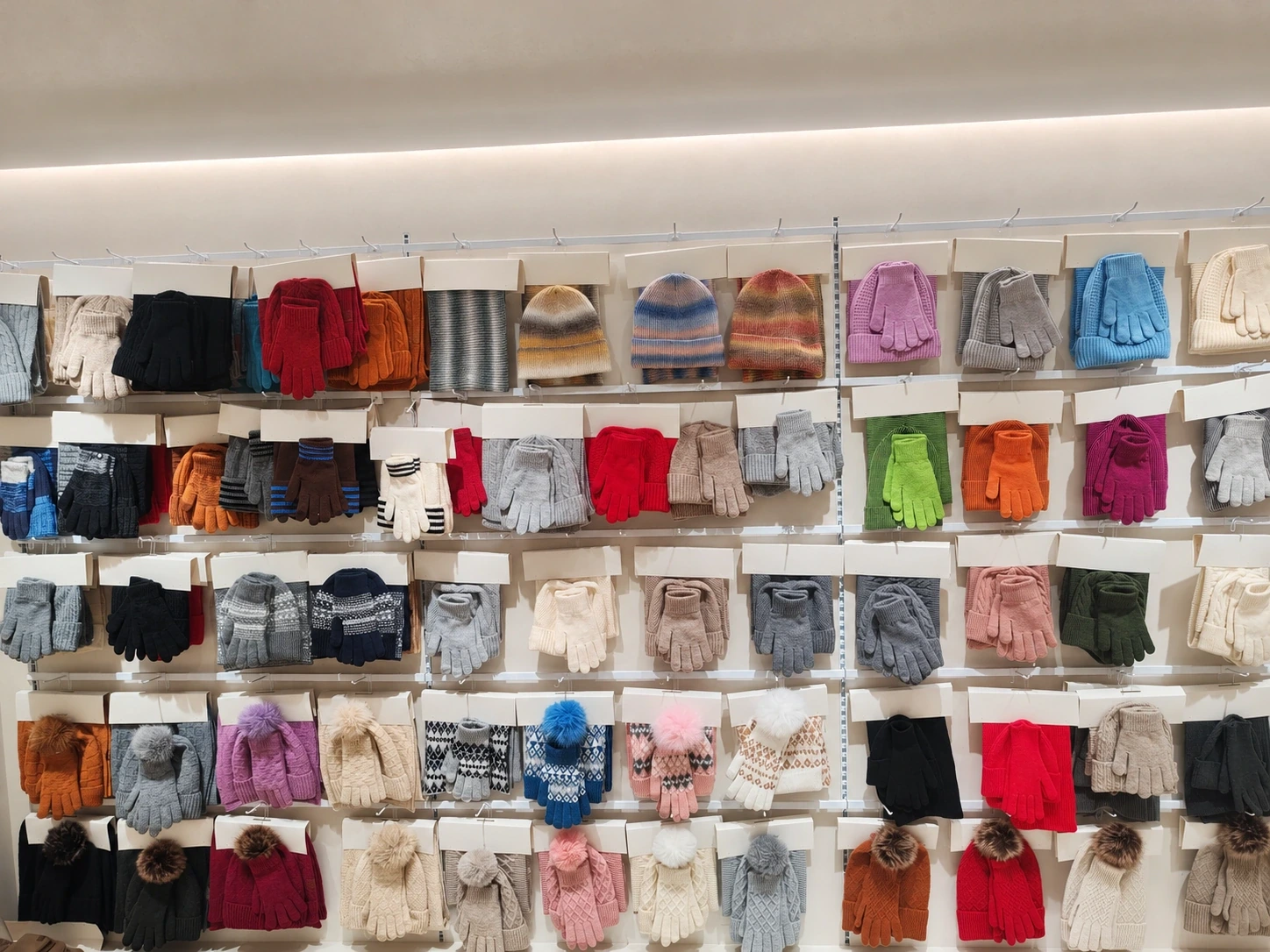
Develop ordinary fashion and winter gloves directly with VORLAN’s own factory. Our in-house service connects construction, fit, embroidery, printing, leather debossing and packing for brands, importers and wholesale teams.
300 pairs / style / color7–10 working days / samples
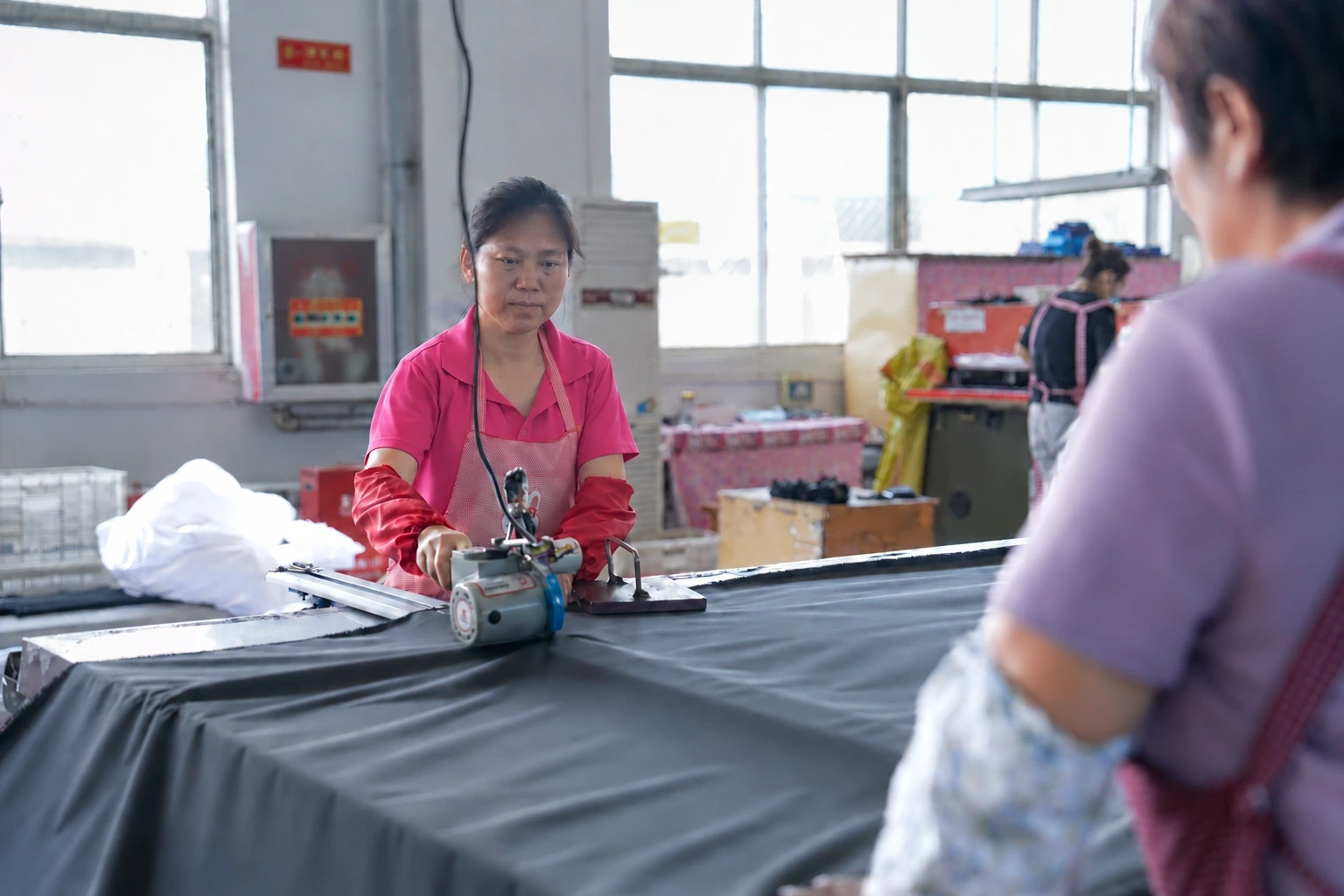
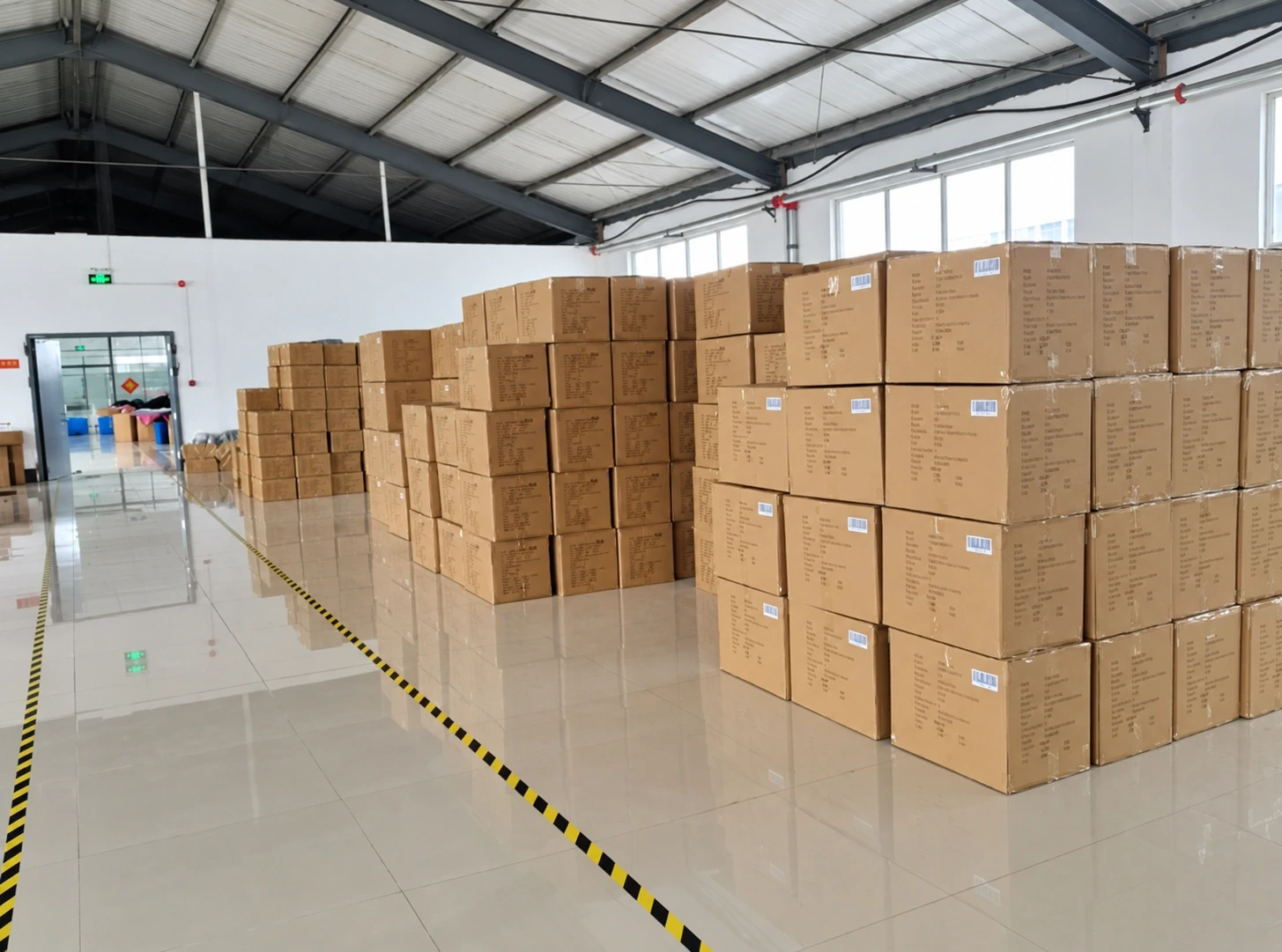
Cut-and-sew production / fabric preparationRetouched factory photograph
From first conversation to first sample
Start with what you know. We’ll define the next step.
A reference image, intended quantity and destination can start the discussion. Tell us which details are fixed and where you need our factory’s input.
Sample development
US$80–100
Including shipping
Agree the construction, materials and exact sample scope before starting.
Allow 7–10 working days from the agreed development start, plus transit.
Keep payment and any revision arrangements with your project quotation.
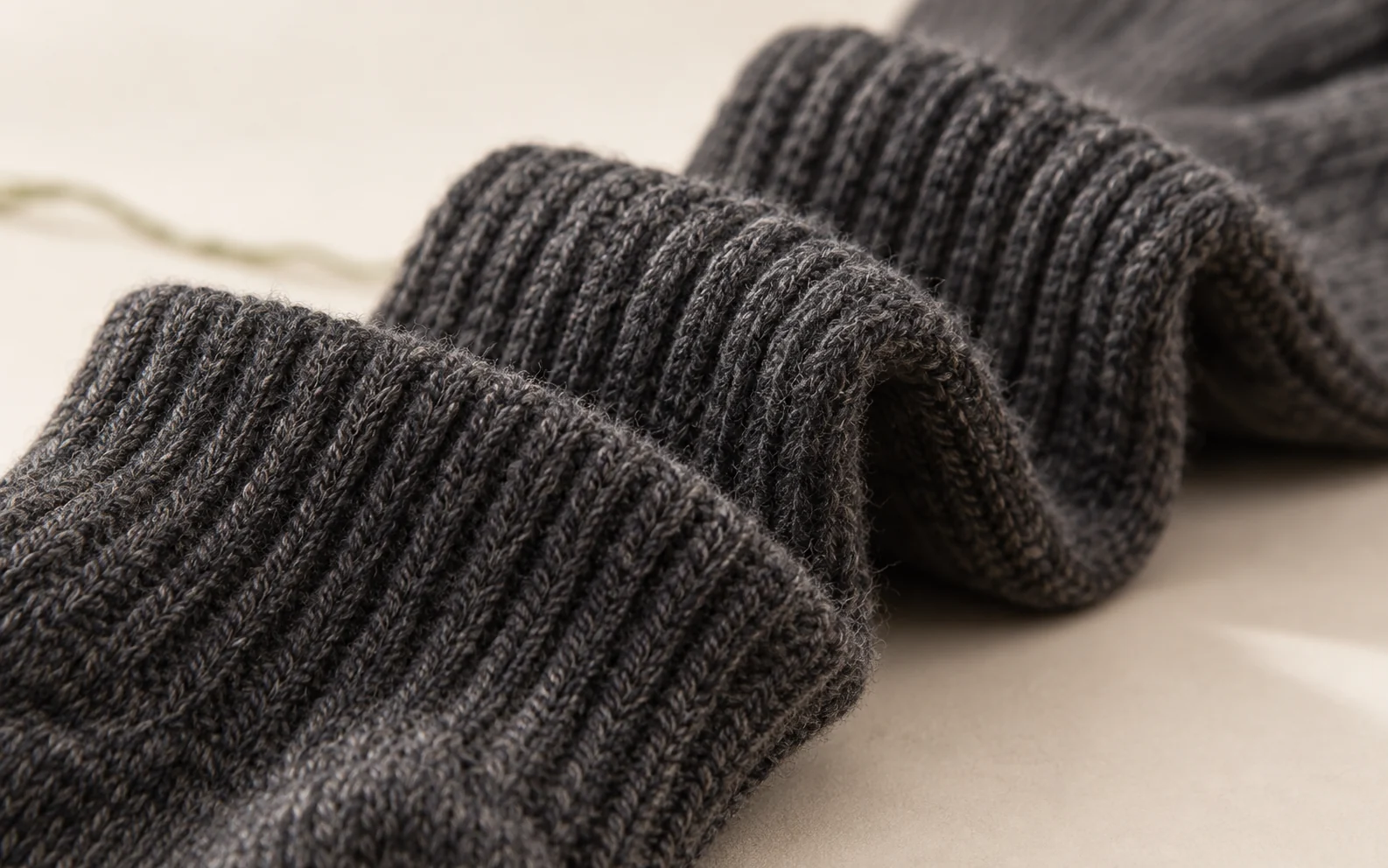
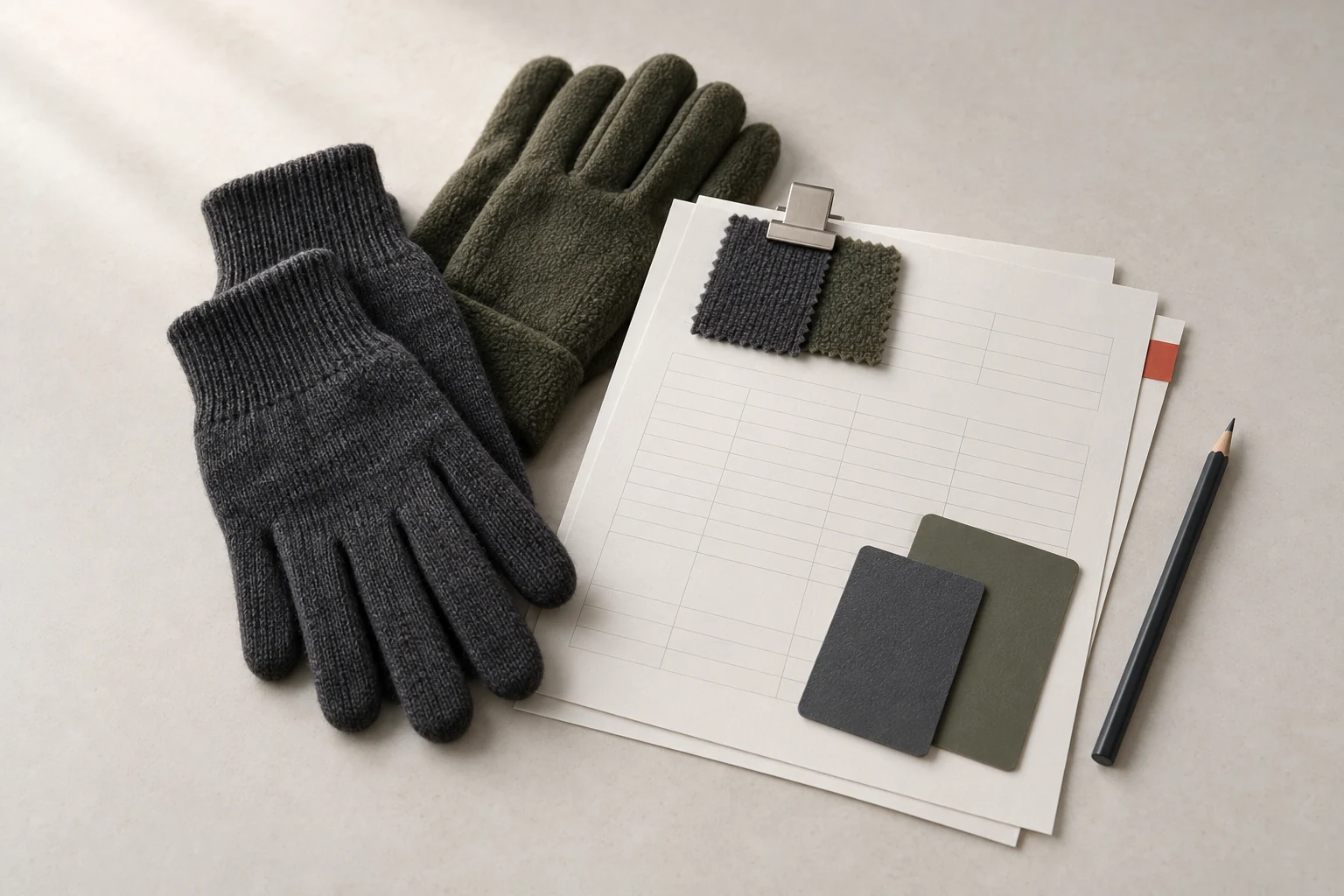
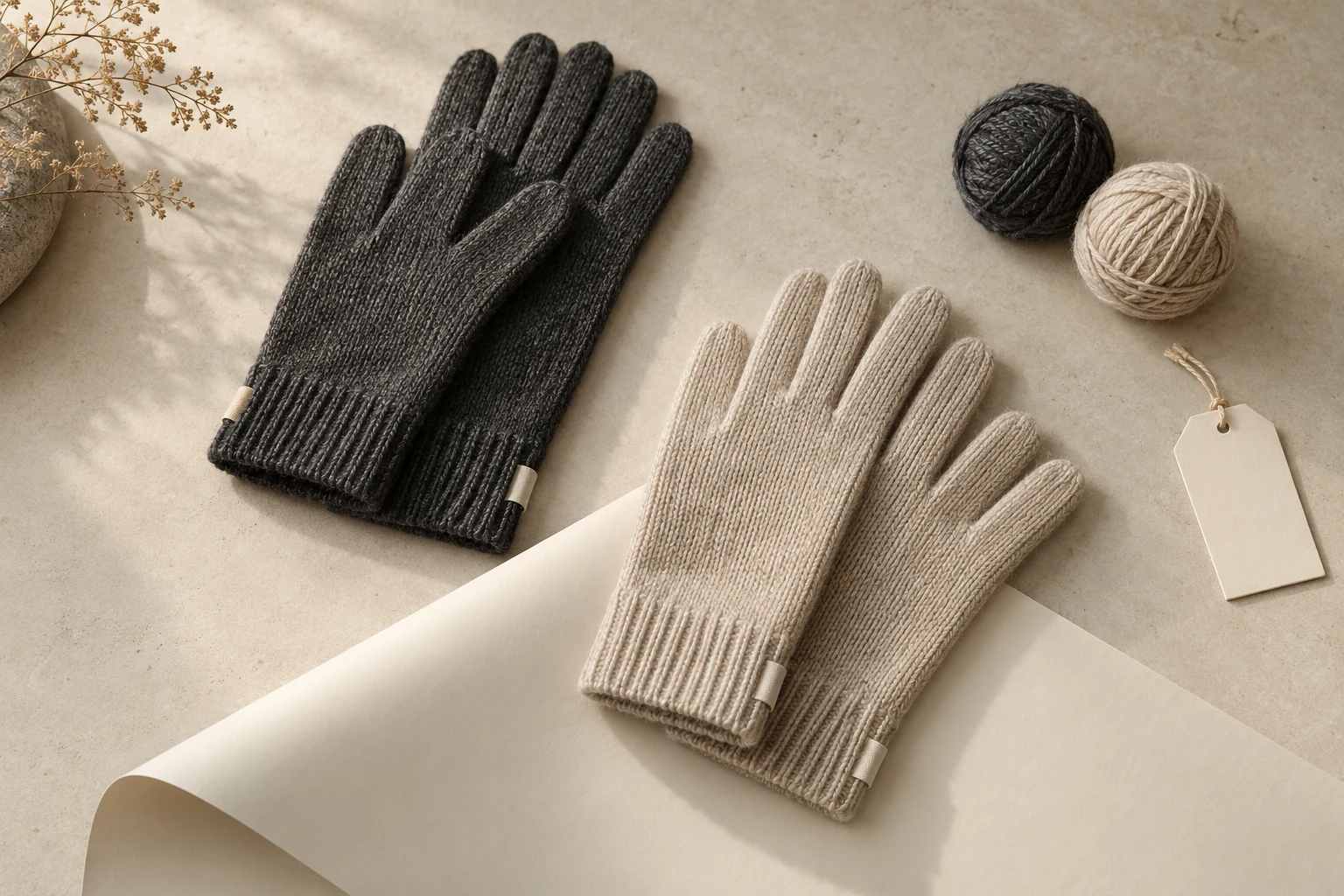
Discuss yarn composition, the knit structure and the relationship between the hand and cuff. Review the texture and recovery on the complete physical sample.
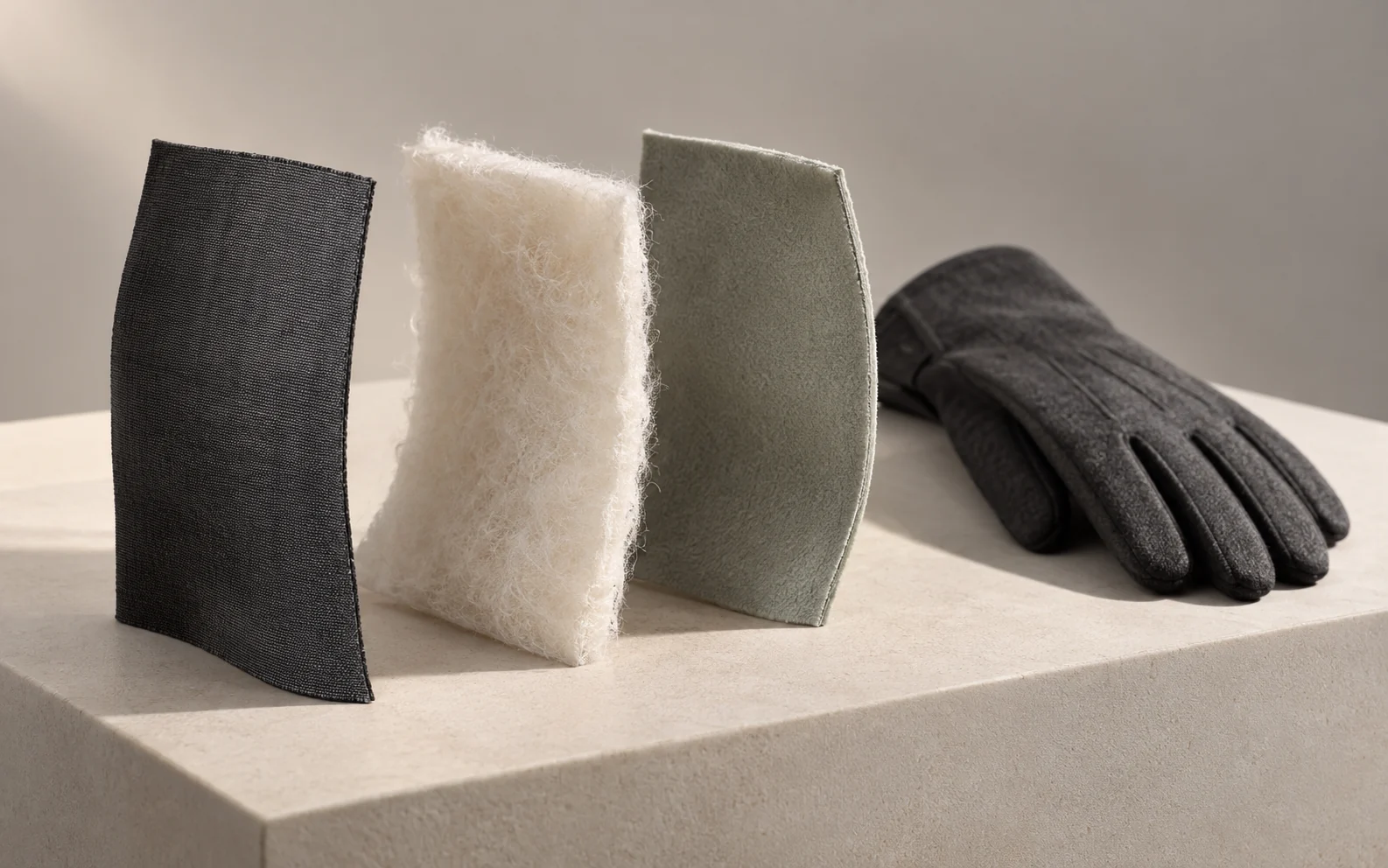
Approved physical swatches define material and color for your order.
03 / 04Fleece
Fleece / material development
Materials, made specific
Develop the textile as a whole.
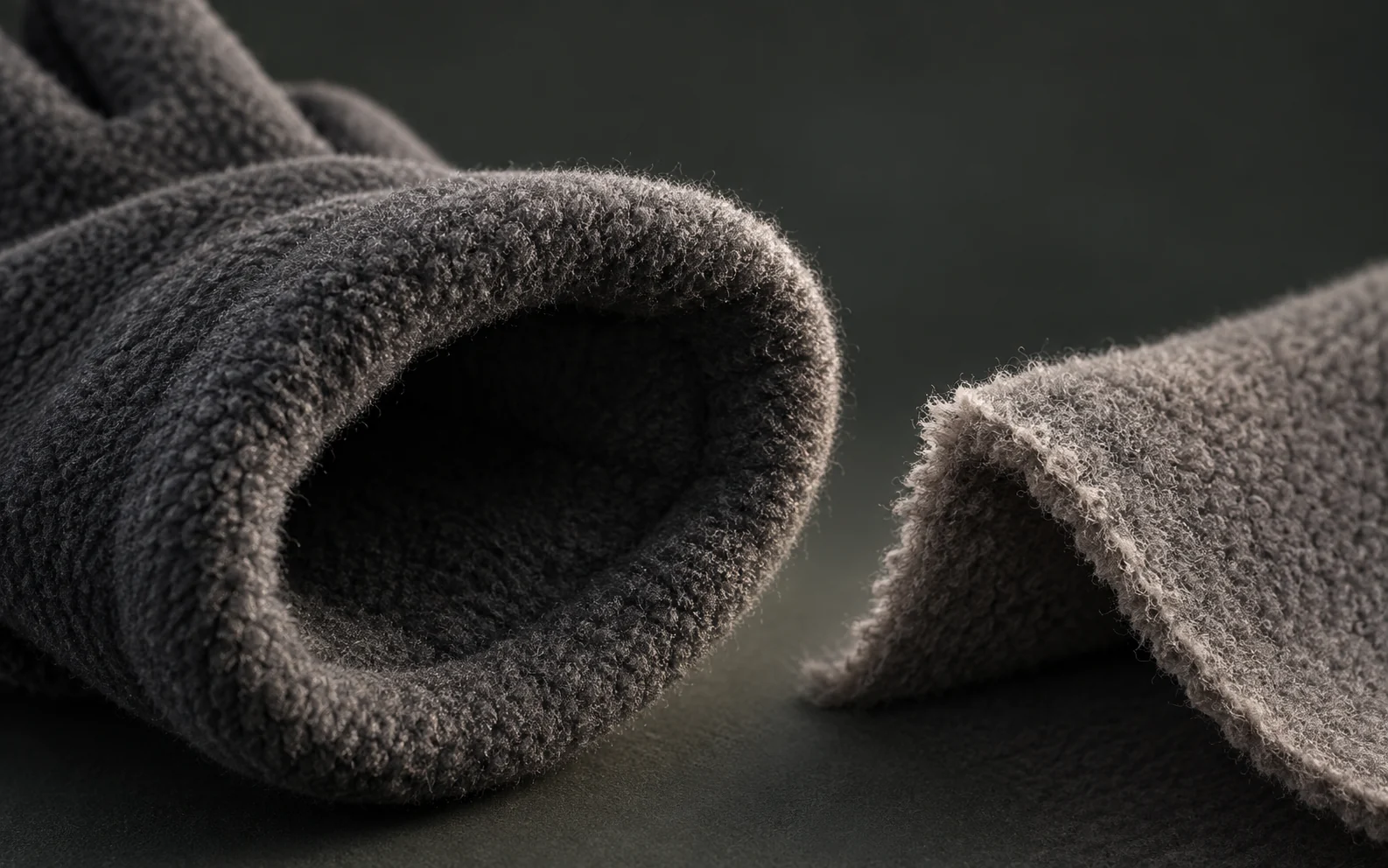
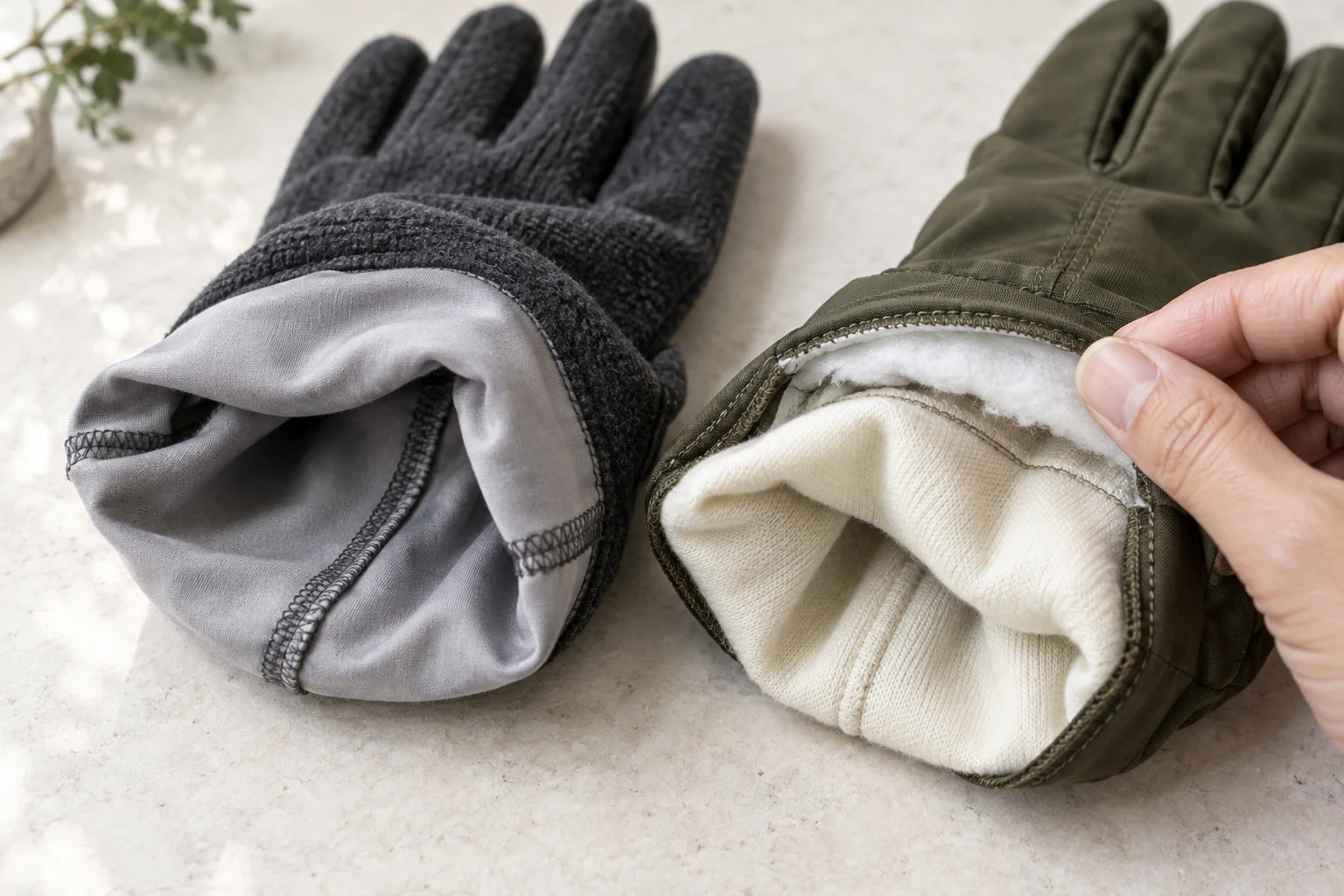
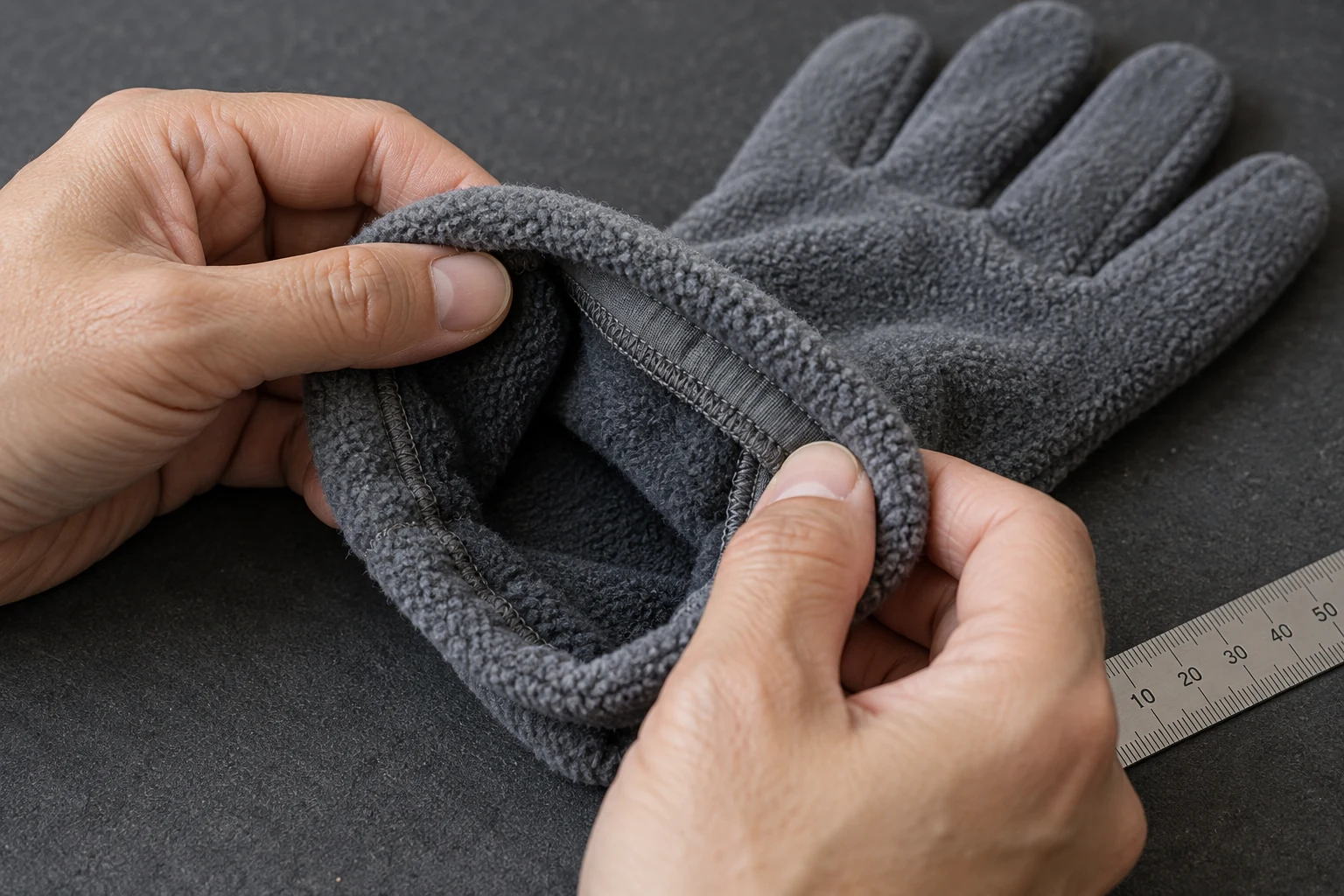
Agree the fleece composition, fabric weight and appearance with the panel layout. Consider the cuff finish and the reverse side of any applied branding.
Approved physical swatches define material and color for your order.
Scroll to explore the next direction ↓
Start with what you have
OEM development. Two starting points.
Both routes lead to a physical sample and a written production reference. The starting point depends on how much of your glove is already defined.
OEM / starting point
OEM
You bring the specification.
Start with a tech pack, measurements, artwork or an authorized reference sample. Identify the decisions that are fixed and where you need material or manufacturing input.
Start with a category, collection brief or one of our development references. Align the structure, material and presentation before moving into sampling.
Our OEM and private label service joins pattern, material, fit and brand application. Knitting, cutting, sewing, finishing, embroidery, printing and leather debossing are carried out in our own factory.
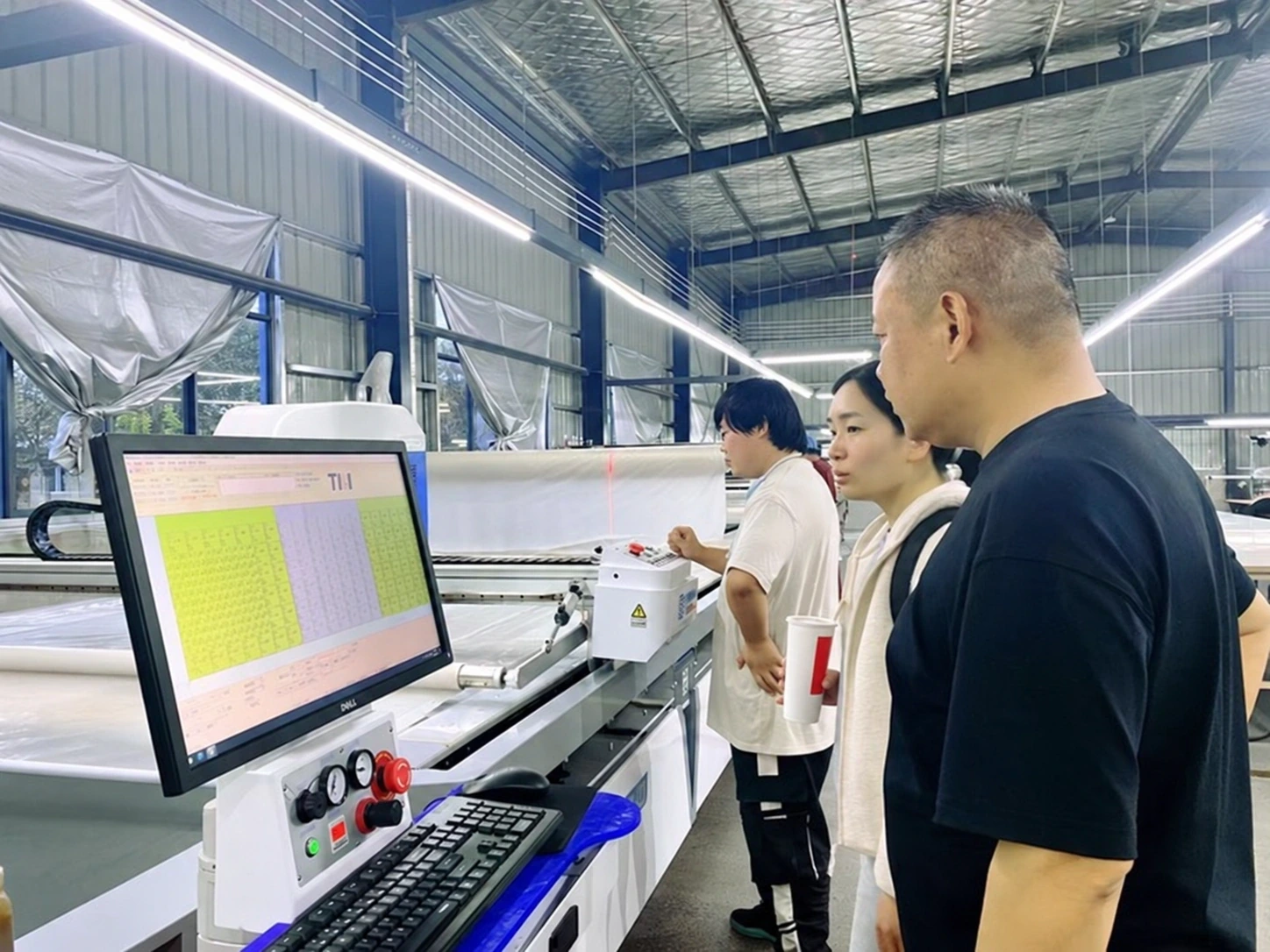
Fabric preparation and cutting in our factory.Retouched factory photograph
01 / Pattern & component planning
Translate the reference into construction.
Identify the body, thumb, finger, cuff and lining components that define the glove. For knit styles, connect the stitch and cuff structure with the selected yarn. For sewn styles, review panel layout and the inside seam finish.
Bring
Your tech pack or authorized reference, the fixed design details and the size range.
Agree
Material references, component arrangement and the measurement method to review on the sample.
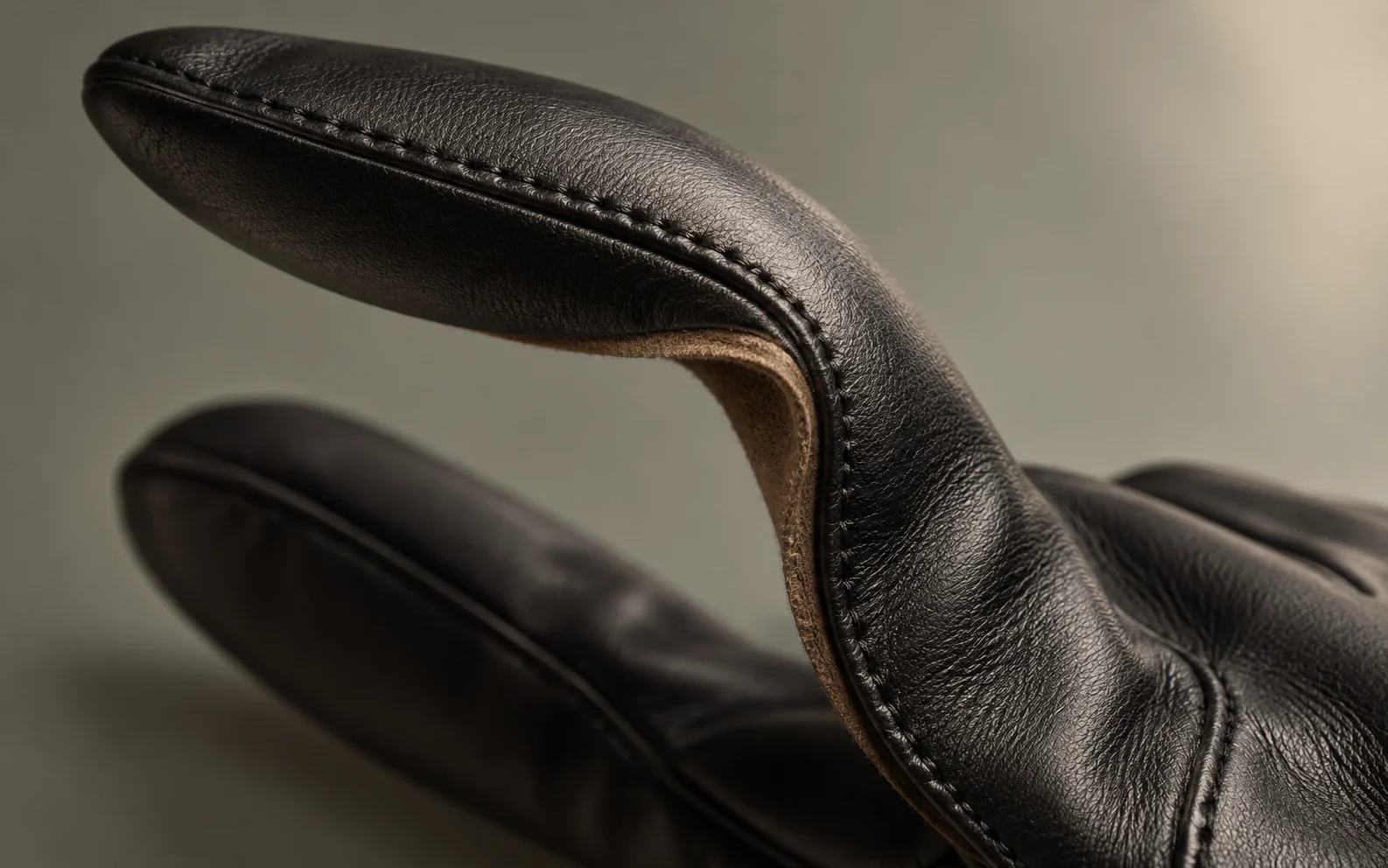
Inside finish / assembled glove review
02 / Fit & revision
Review the change as a complete glove.
Changing the lining, seam or cuff can change internal space and entry. Consolidate comments against one sample version and identify the exact area to revise. Review the updated glove with all proposed layers assembled.
Bring
Location-specific comments, your size chart and any required measurement conditions.
Agree
The revised construction and the checks needed before that version replaces the previous approval.
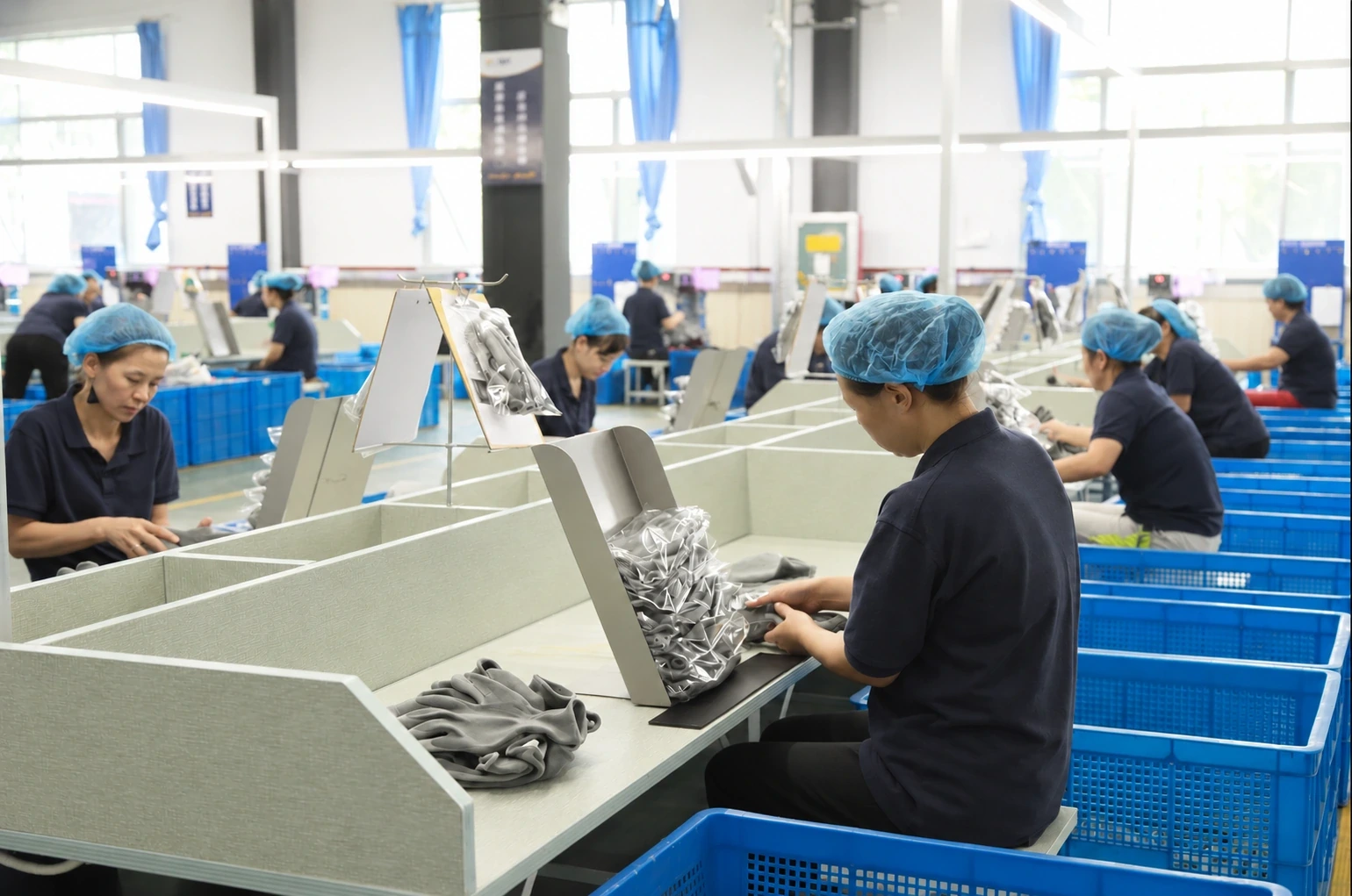
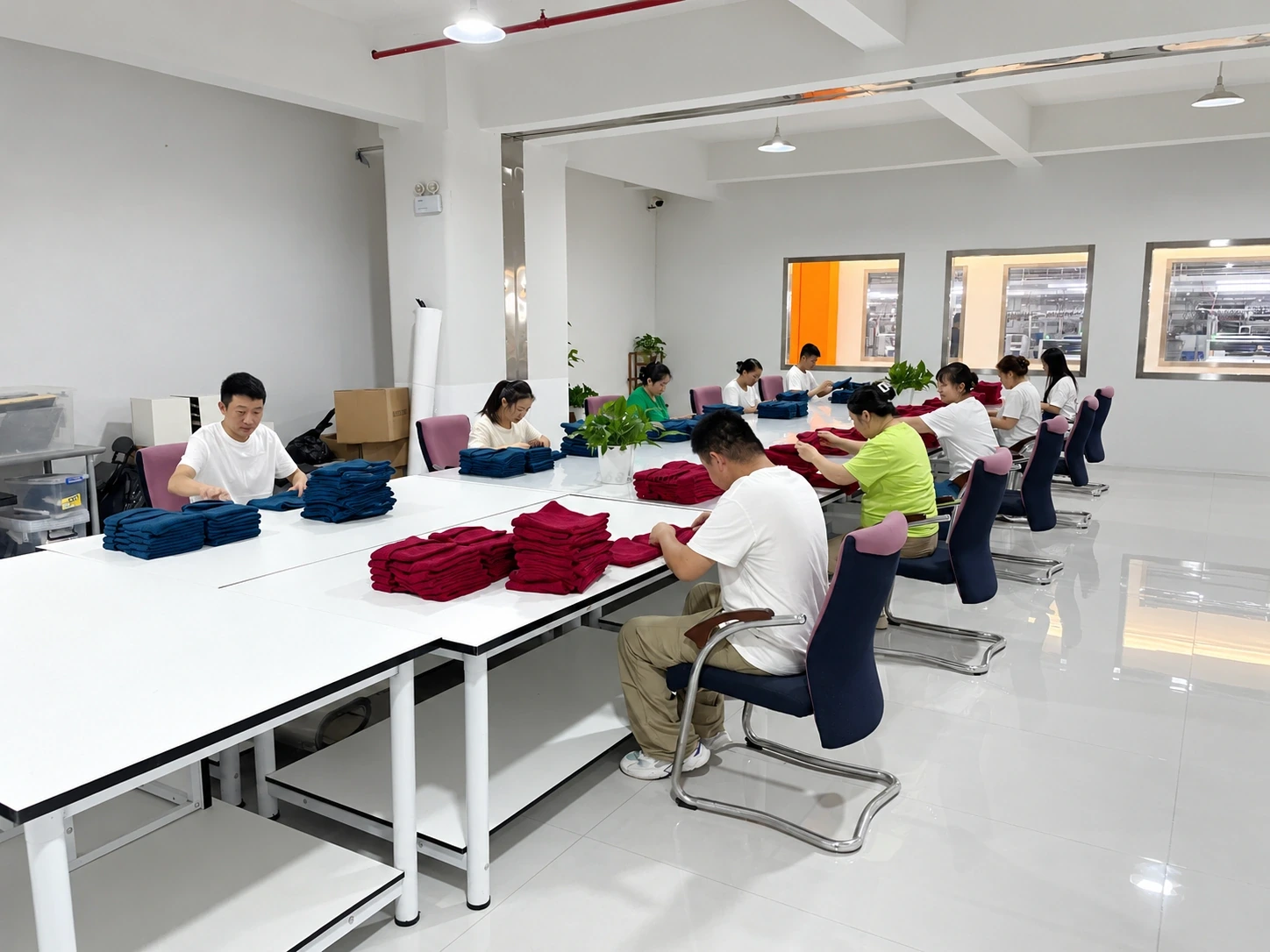
Glove sorting and bagging at factory workstations.Retouched factory photograph
03 / Assortment & presentation
Develop the order around the pair.
Connect size identification, brand placement and unit presentation with the style and color matrix. Distinguish the glove label, unit pack and carton instructions so one artwork revision does not leave different versions in the order.
Bring
Artwork, wording, the size/color breakdown, pack quantities and destination requirements.
Agree
The approved label and packing versions for each assortment, plus the release instructions.
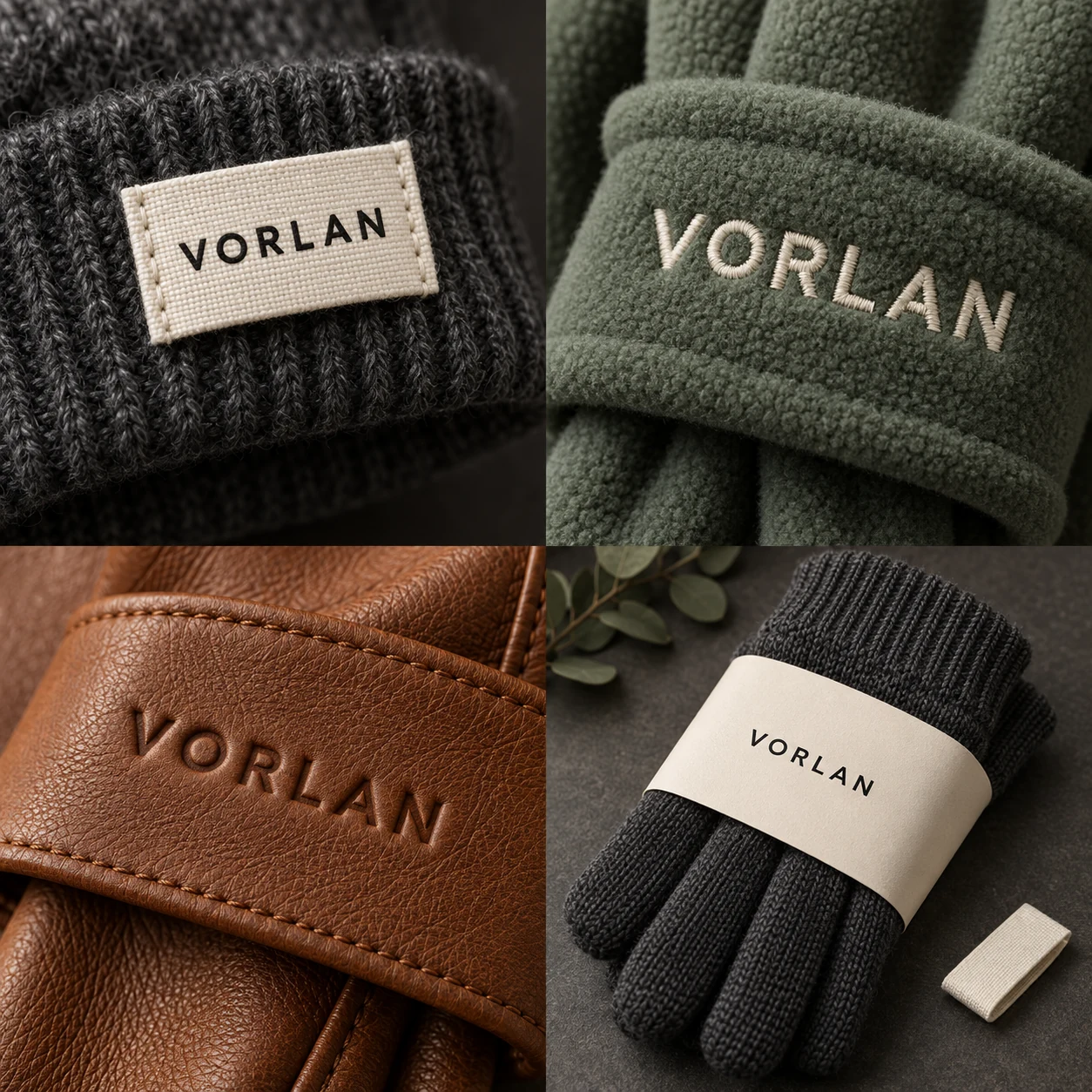
Brand application in our own factory
Build the identity into the glove.
Give the brand detail the same attention as the construction. The artwork file, material and application result need to be approved together.
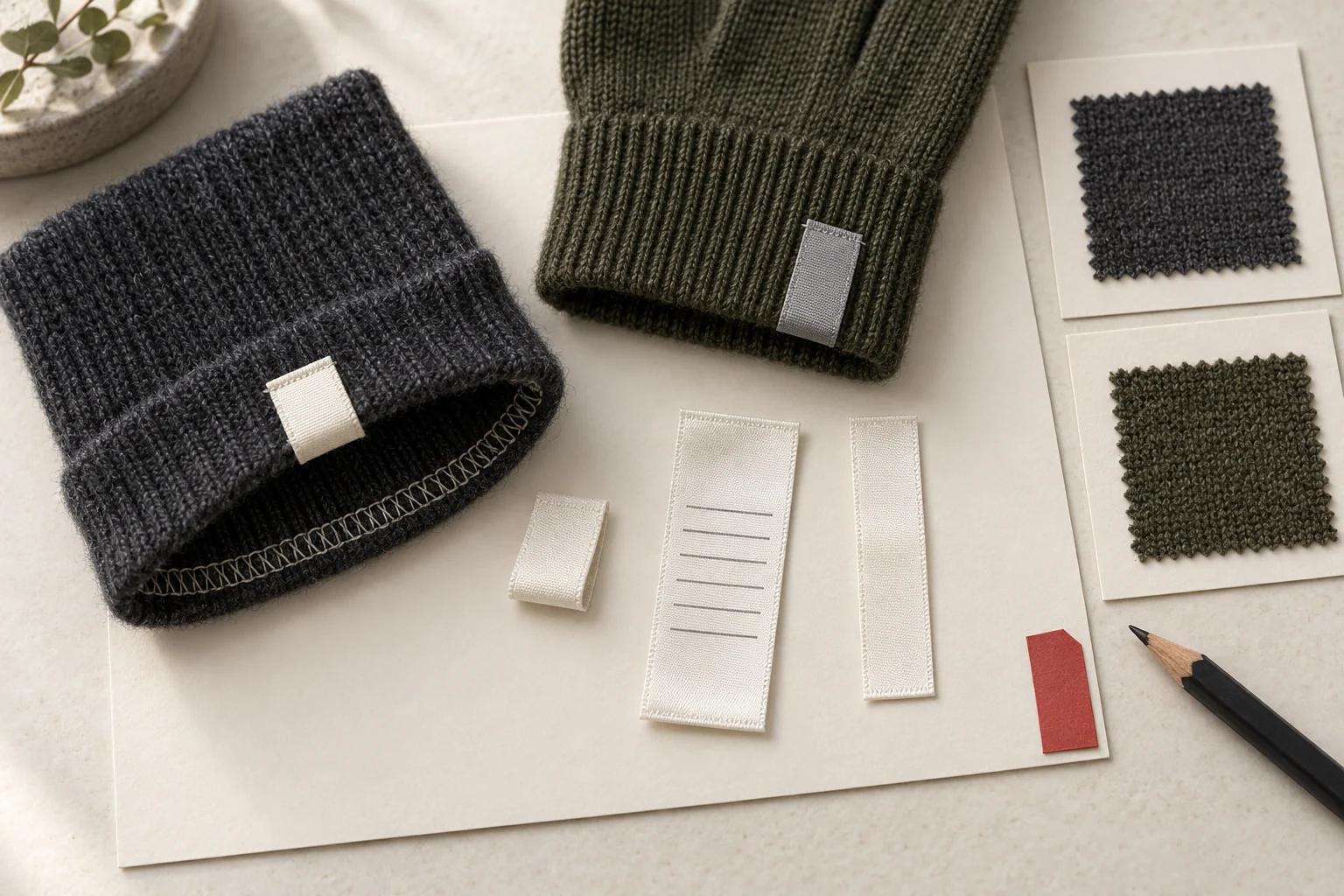
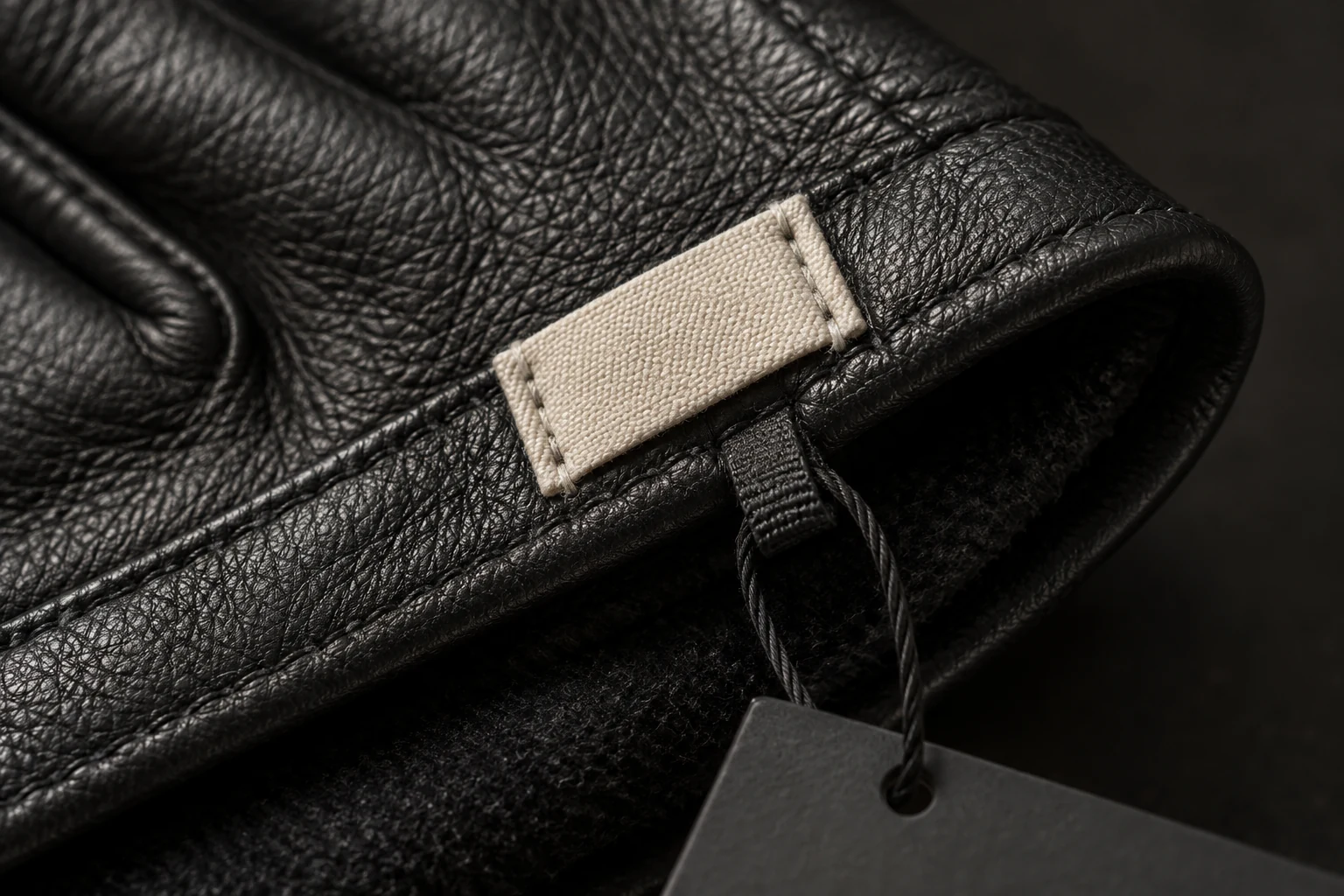
Woven label attachment
Choose the label format and its location on the finished glove. Review the fold, seam attachment, legibility and reverse-side finish, including how a folded cuff changes the visible position.
Approve together
Label file, dimensions, orientation and attachment reference.
In-house embroidery
Match artwork scale and stitch coverage to the actual knit or textile. Review the surface response and inside finish on the assembled glove, especially where an application crosses a curved or stretch area.
Approve together
Artwork version, thread colors, placement and the sewn result.
In-house leather debossing
Review the mark on the selected leather and finish. Agree its scale, location and definition alongside the panel seam and cuff; a surface change requires the mark to be reviewed again.
Approve together
Leather reference, tooling/artwork version and the applied mark.
Brand files / material and placement references
Printing, also in-house
Review the artwork on its intended surface.
Our own factory also carries out printing. Send the artwork, requested colors, placement and selected glove material. Agree the application method and review edge definition, coverage, hand feel and the effect of stretch on the physical result.
Keep any requested durability assessment with the brief. The final wording, placement and application need approval for the actual material and glove version.
Connect the chosen material and construction with the work that follows. Our own factory carries out production, brand application, dimensional inspection and packing around your approved construction.
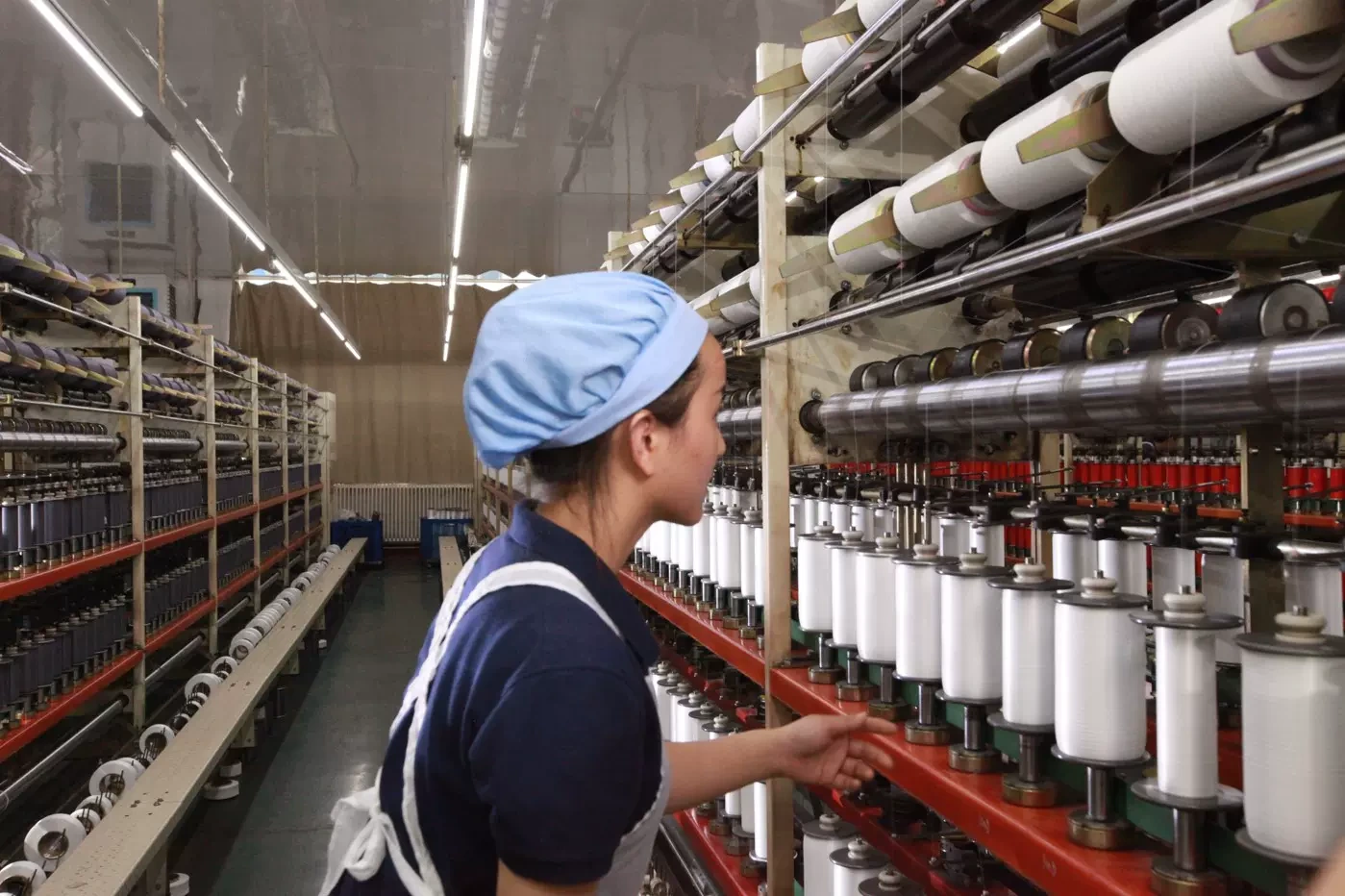
Yarn preparation at the factory.Factory photograph01 / Prepare
Resolve the material direction.
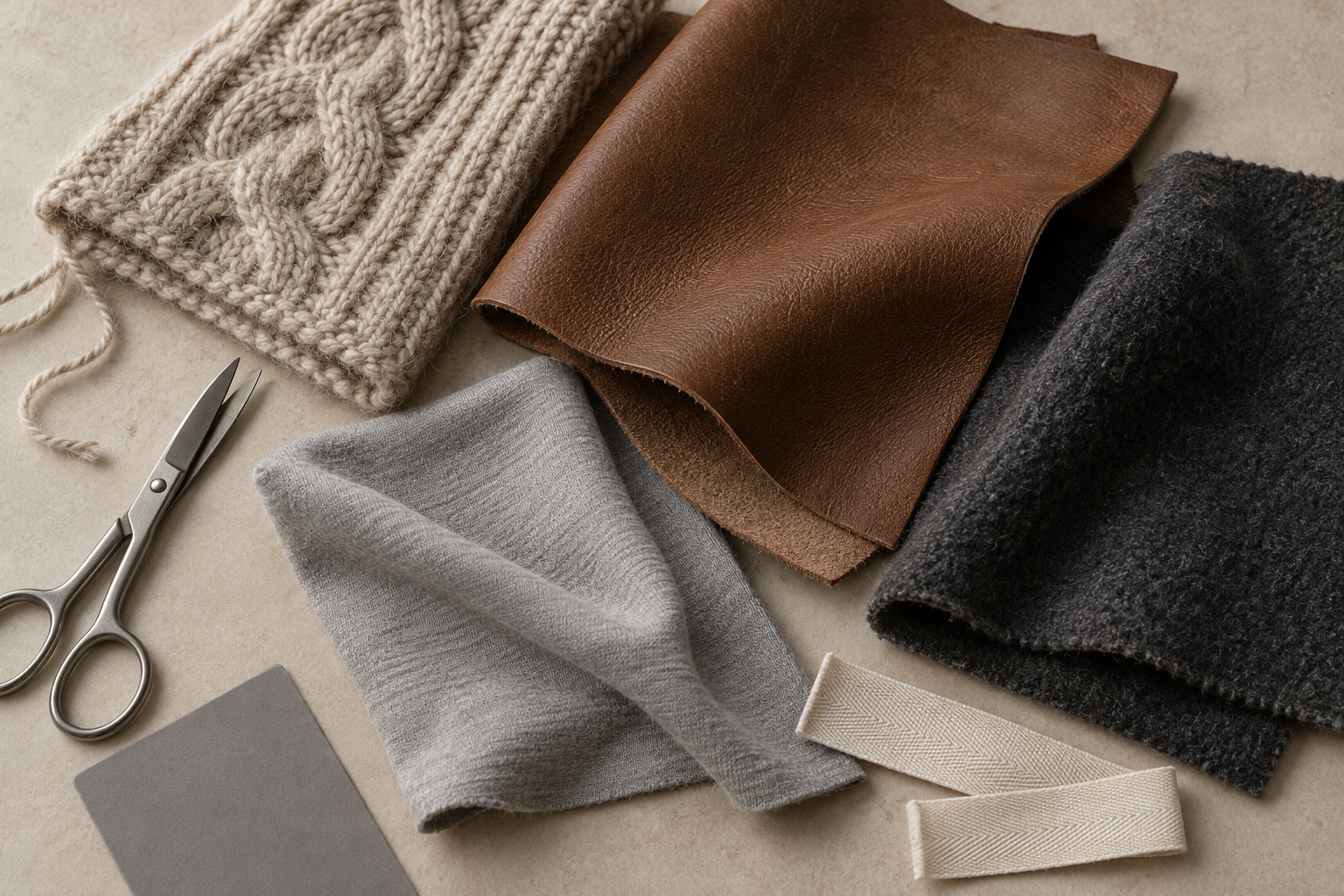
Identify the main material, lining, cuff and trims. Select physical references for the combinations proposed in your collection.
Your approval checkpoint
Keep the material versions with the construction and sample brief.
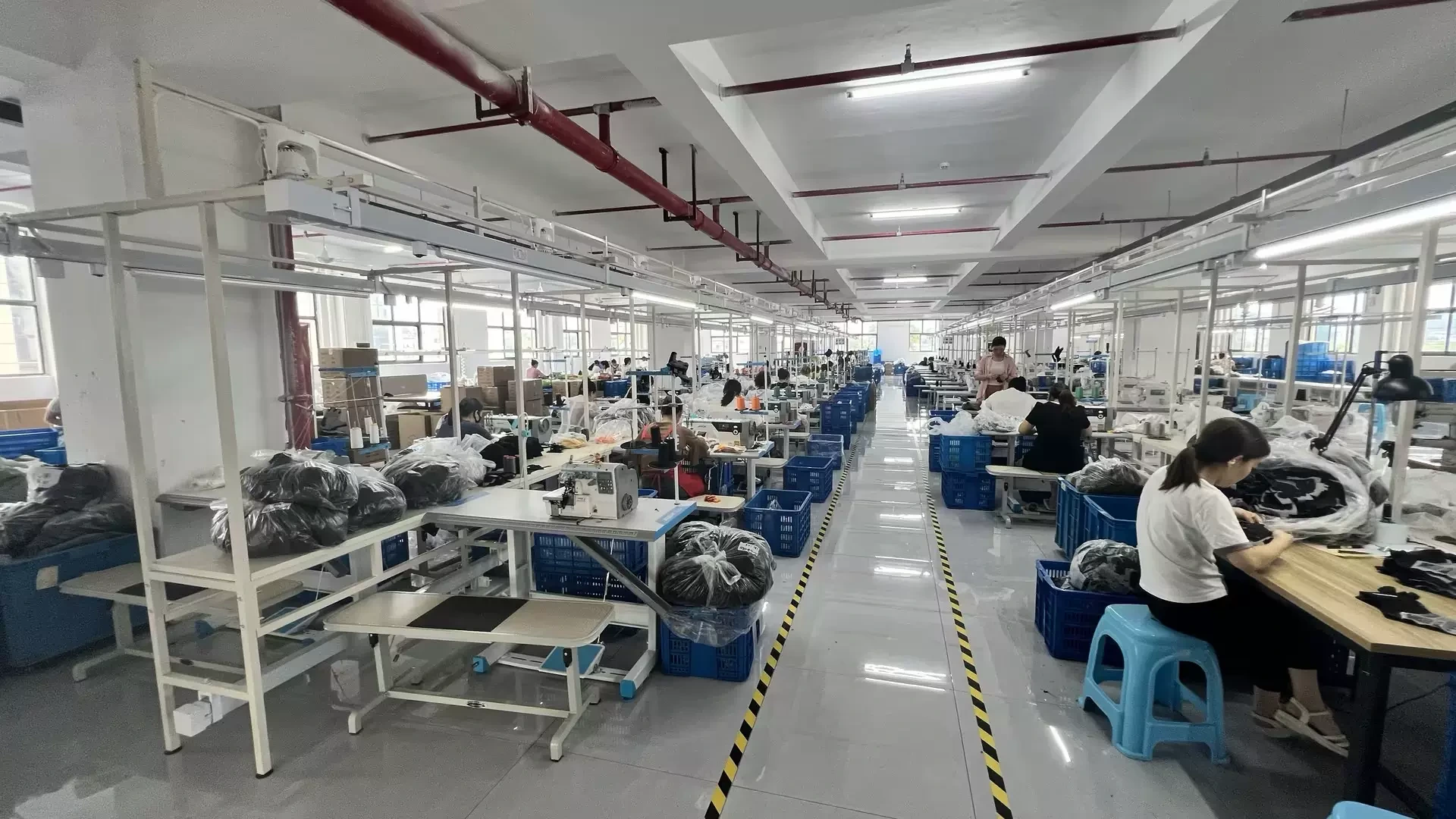
The factory sewing workshop.Factory photograph02 / Make
Approve the complete construction.
Use sample revisions to close questions about shape, inside finish and branding. Specify which route applies to each style.
Your approval checkpoint
Retain one approved sample version and matching production instructions.
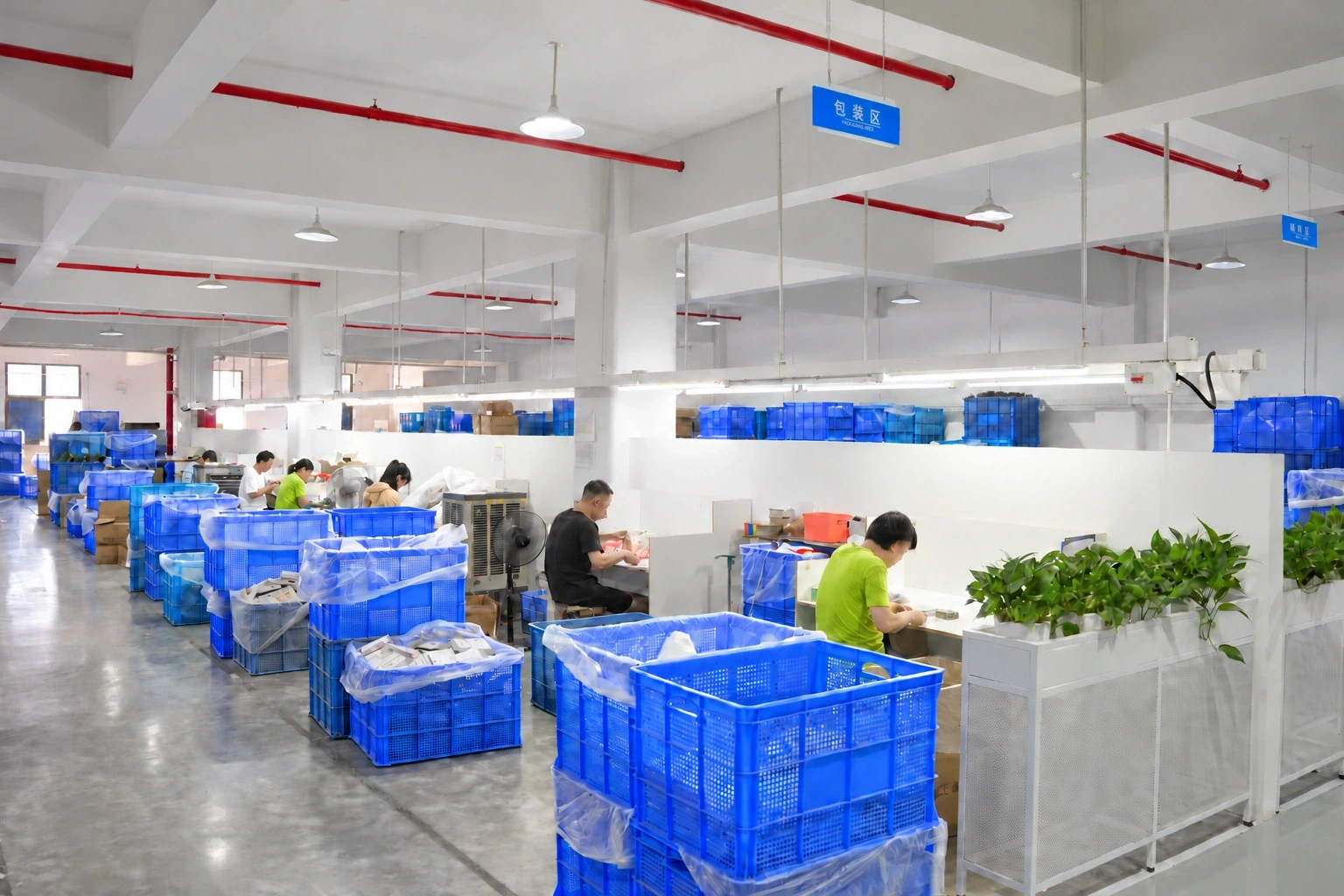
Glove sorting and packing in the factory.Retouched factory photograph03 / Inspect & pack
Inspect every pair. Confirm the assortment.
We carry out full inspection of finished pairs. Keep the approved workmanship, measurements, labels and packing instructions together when preparing the order.
Your approval checkpoint
Confirm style, color, size, pairs per pack and carton identification before release.
Every pair is inspected, including dimensions. Nonconforming gloves are isolated, reworked and reinspected in our factory.
Move from collection choices to a clearly defined OEM or private label order. The cooperation process keeps buyer decisions and factory work connected.
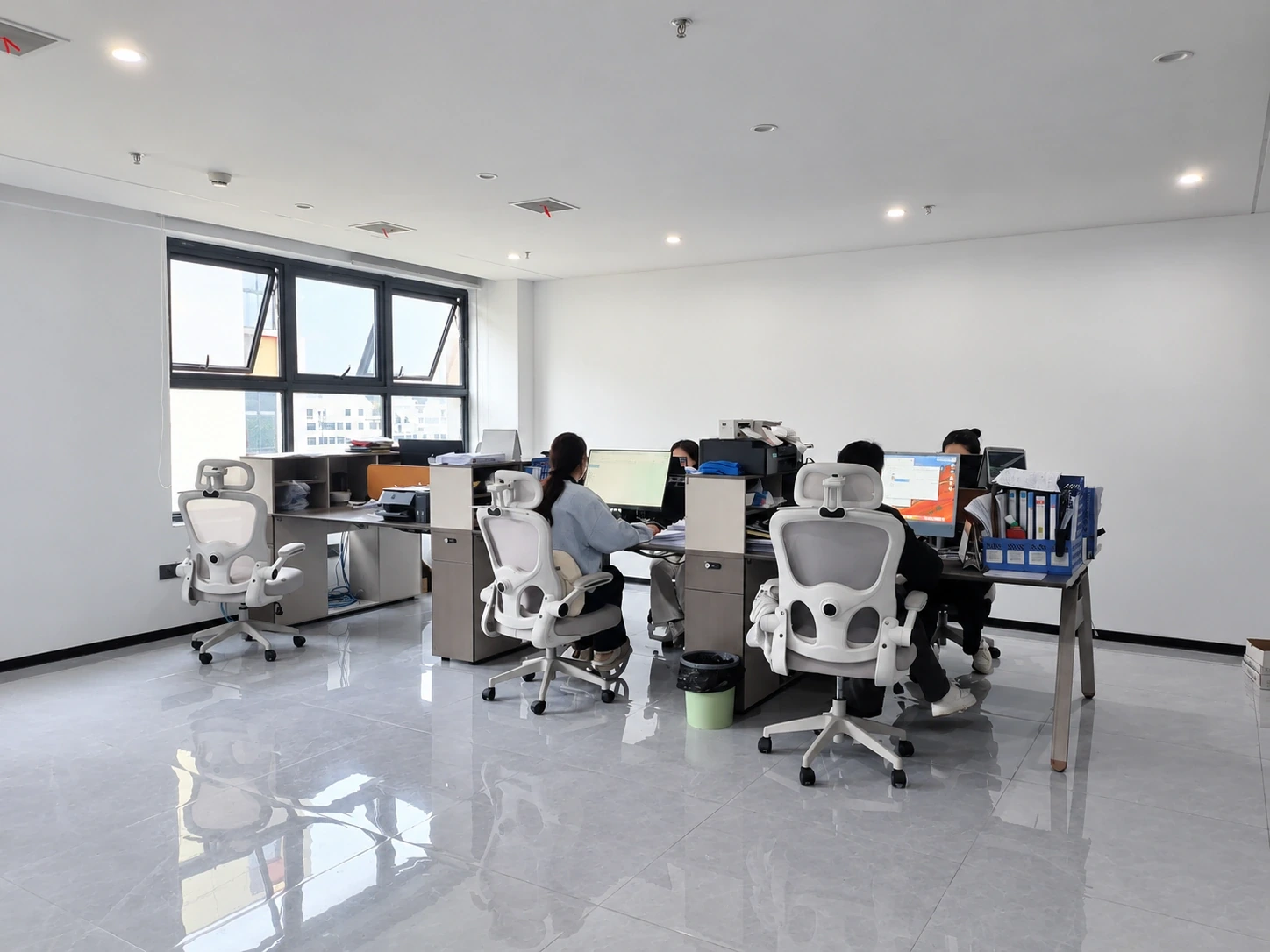
01Project coordination / factory office
Send the buying brief.
Your buying team
Your category, authorized reference, material direction and the details that need development.
Our factory
We review the brief against the relevant operations in our own factory and identify the decisions needed for quotation.
A defined development scope.
02Yarn references / material and quotation scope
Align the quotation basis.
Your buying team
Give quantities in pairs by style, color and size, plus artwork, packing, destination and target timing.
Our factory
Confirm the proposed material route, sample scope, order minimum and timing against those requirements. Resolve open cost items before comparing offers.
A quotation tied to one specification.
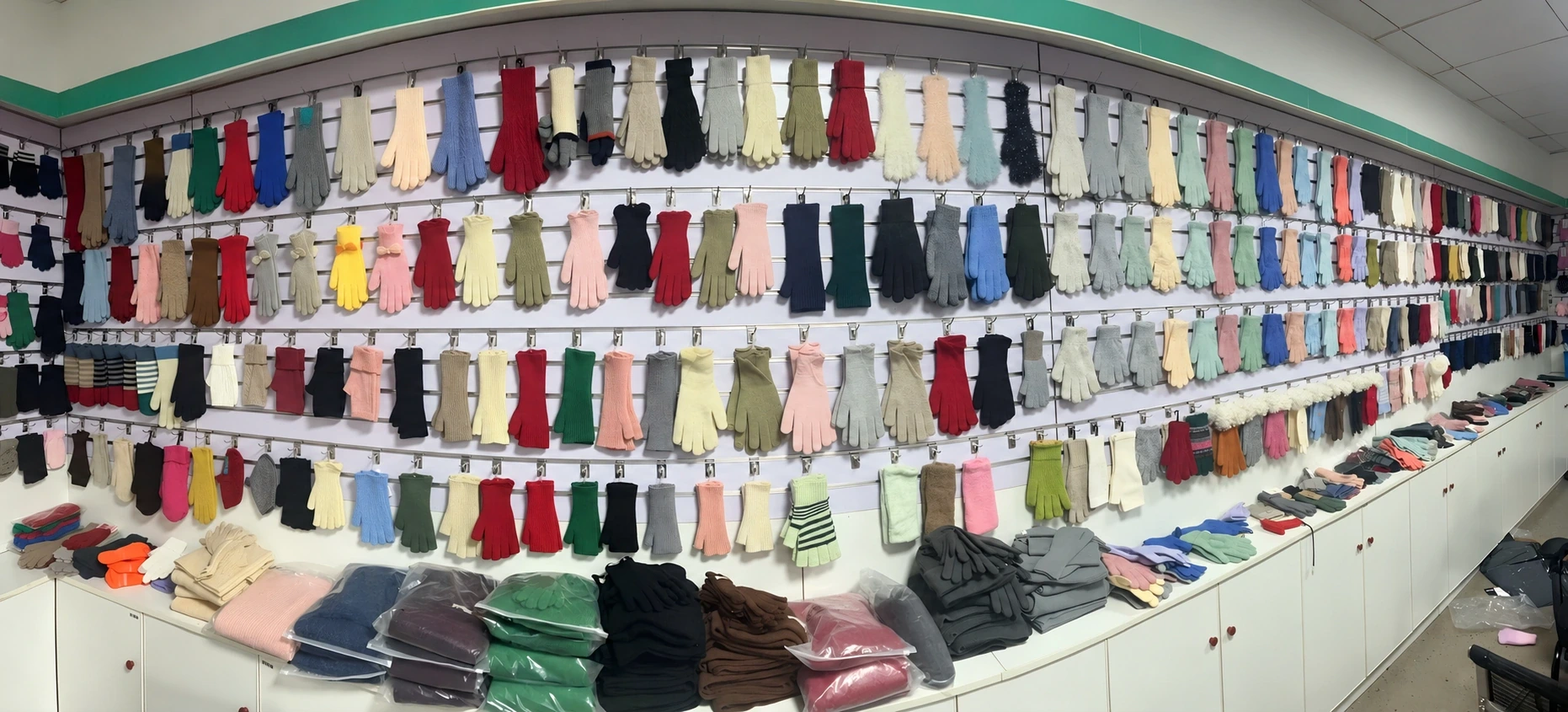
03Development references / factory sample display
Develop and review the sample.
Your buying team
Review materials, construction, graded fit and the brand application on the complete physical sample.
Our factory
We develop the physical glove and work through your consolidated comments. Sampling is 7–10 working days from the agreed start.
A complete glove with resolved revisions.
04Workshop coordination / production setup
Approve the order reference.
Your buying team
Confirm the sample version, measurements and tolerances, material references, artwork and assortment. Nominate the person who approves changes.
Our factory
Connect the approved file with the workshop requirements. Agree the production start and the scope for the order.
Written approval for the production version.
05Manual review / factory worktables
Make, inspect and resolve.
Your buying team
Agree acceptance criteria and the inspection information your team needs. Keep additional testing requirements explicit.
Our factory
Our factory produces and inspects every pair, including dimensions. Nonconforming goods are isolated, reworked and reinspected. Bulk production is 30–45 working days from the agreed start.
Accepted pairs for the agreed assortment.
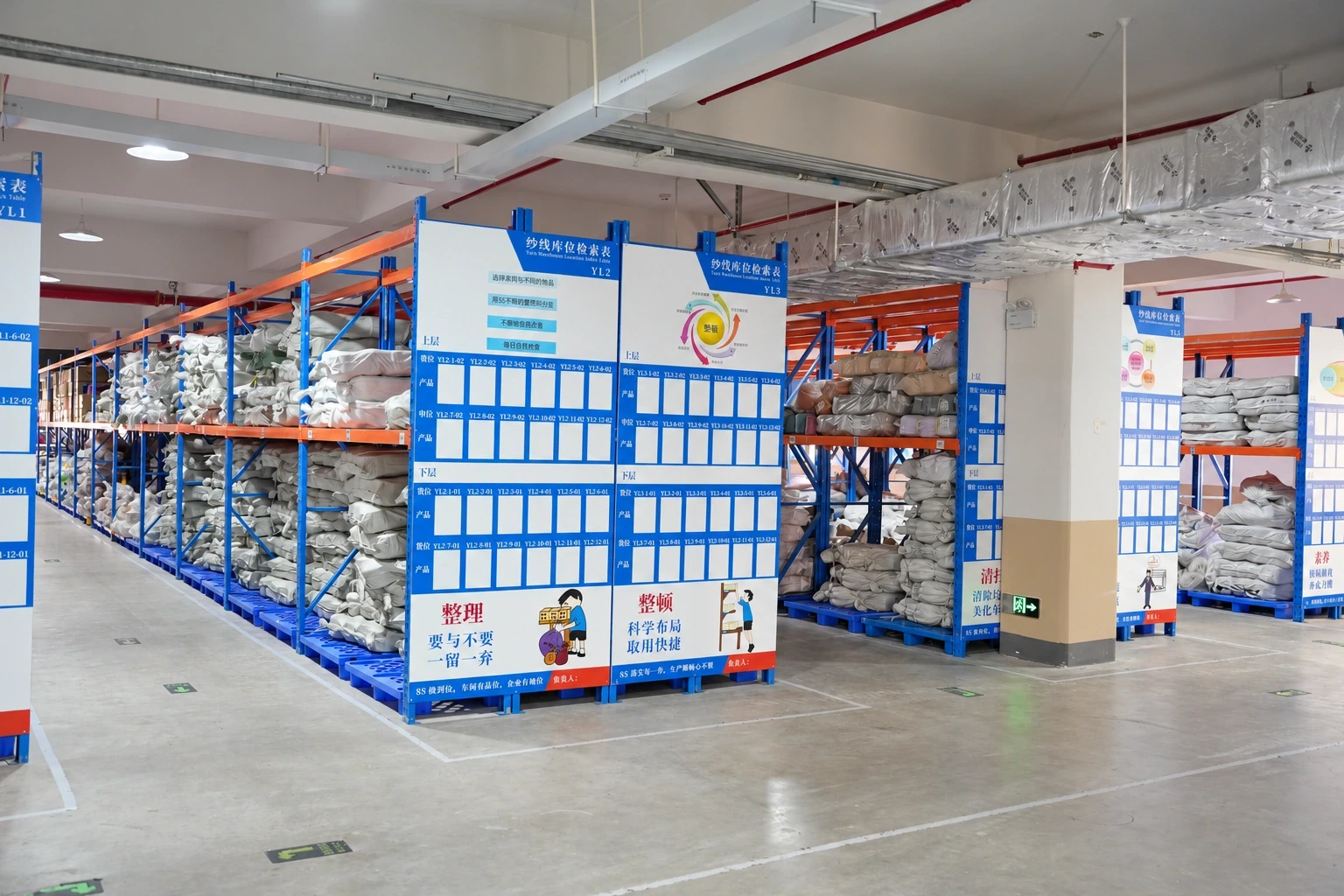
06Cartons / factory storage
Confirm packing and dispatch.
Your buying team
Approve pack quantities, labels, carton marks and delivery instructions. For repeat orders, identify the retained version and any changes.
Our factory
Prepare the agreed style, color and size assortment and its packing. Coordinate the dispatch scope and documents required for the order.
A defined handoff and reorder reference.
Inside a collaboration
What the brief becomes.
Follow the decisions behind a private label glove program: the starting requirement, the development work and the reference to agree.
01
For apparel brand projects
Knit capsule
In the brief
Develop gloves to sit naturally alongside your knitwear, with a consistent identity across colorways.
Development focus
Bring yarn references, the rib cuff, graded sizes and label placement into the same sample review. Compare the complete glove with the collection direction.
Reference to agree
A proposed material and color matrix, sample comments, graded specification and label-placement reference for joint approval.
Development priority
Review yarn, cuff and label together so the collection has one coordinated development direction.
Turn your visual direction into one specification for the leather, lining and inside finish.
Development focus
Review the selected leather and lining on the assembled sample. Record fit, pair matching, seams and the position of the brand application against its version.
Reference to agree
Identified material references, a consolidated sample revision record and application details to resolve before production approval.
Development priority
Keep comments with the sample version so design and sourcing work from the same approved reference.
Define a consistent way to review fit across the proposed sizes in your fleece assortment.
Development focus
Agree measurement points and conditions, assess the cuff and internal seams, and separate dimensional readings from fit comments for each reviewed sample.
Reference to agree
An agreed review method, a record of open fit decisions and a size-set comment log to carry into the next sample revision.
Development priority
Record open fit decisions and the changes to address in the next sample revision.
A tech pack, a reference image or a clear material direction can start the discussion. Mark the requirements you know and the decisions that still need development.
The sample fee is US$80–100 including shipping. Agree the exact sample construction, materials and scope before starting. Payment and any revision arrangements are confirmed with the project quotation.
Which private label operations are carried out in your own factory?
Knitting, cutting, sewing, finishing, inspection and packing are completed in our own factory. Embroidery, printing and leather debossing are also in-house. Define the application, material and placement for your glove so the physical result can be reviewed together with the construction.
Should our project start as OEM or ODM?
Use an OEM starting point when you have a defined specification or authorized reference. Use a development brief when material, construction or collection decisions remain open. Agree the actual work and approval responsibilities for your project rather than relying on the label alone.
What can we supply before the first sample?
Send your tech pack or reference, material direction, size range, quantity per style and color, artwork, packing requirements and target date. Mark what is fixed and what needs a proposal; a completed technical file is not required for the first discussion.
Does private label development cover more than the logo?
Yes. It connects glove materials, construction, fit and color with brand application, labels and packing. Review the applied identity on the actual material, then approve its placement and inside finish with the complete glove.
What is the MOQ for a private label order?
The MOQ is 300 pairs per style per color. Provide the size split within each group and identify separate artwork or packing versions. Packing quantities and carton configuration are agreed in the order instructions.
How do we plan sample and bulk-production dates?
Allow 7–10 working days for sampling and 30–45 working days for bulk production from the agreed start. Material confirmation, sample revisions, buyer approvals and transport are planned separately. Confirm the schedule against the actual project scope.
What must a sample approval include?
Identify the physical sample, construction and material references, size specification, artwork and packing versions. Consolidate comments through the approval contact and resolve changes before releasing the final production reference.
Can we set our own measurement and inspection requirements?
Yes. Include measurement points, methods, targets, tolerances and workmanship criteria in the brief. We inspect every finished pair, including dimensions, and isolate, rework and reinspect nonconforming goods; specialist testing, reporting and any separate buyer inspection arrangements are agreed for the specific order.
How should several label or destination versions be managed?
Create a version list tied to the style, color and size assortment. Identify the wording, artwork, attachment, barcode if applicable, and packing configuration for each destination. Approve the current files before production and packing.
What happens if materials or artwork change after sampling?
Identify the requested change against the approved version. Review its effect on the sample, fit, manufacturing route, quotation and timing before releasing updated instructions. Agree whether a revised sample or applied brand review is required.
What information makes a repeat private label order easier?
Keep the approved sample, material identifiers, size chart, artwork and packing instructions in one versioned file. Send the new assortment and required date, flag changes and reconfirm material availability and order terms.
A project for your brand
Let’s develop something that is yours.
Share your category, brand direction and first collection requirements. We’ll use them to define a useful sampling conversation.