Our own glove factory checks every finished pair, including dimensions. Inspection connects incoming materials, production, finished gloves and packing to your approved OEM specification.
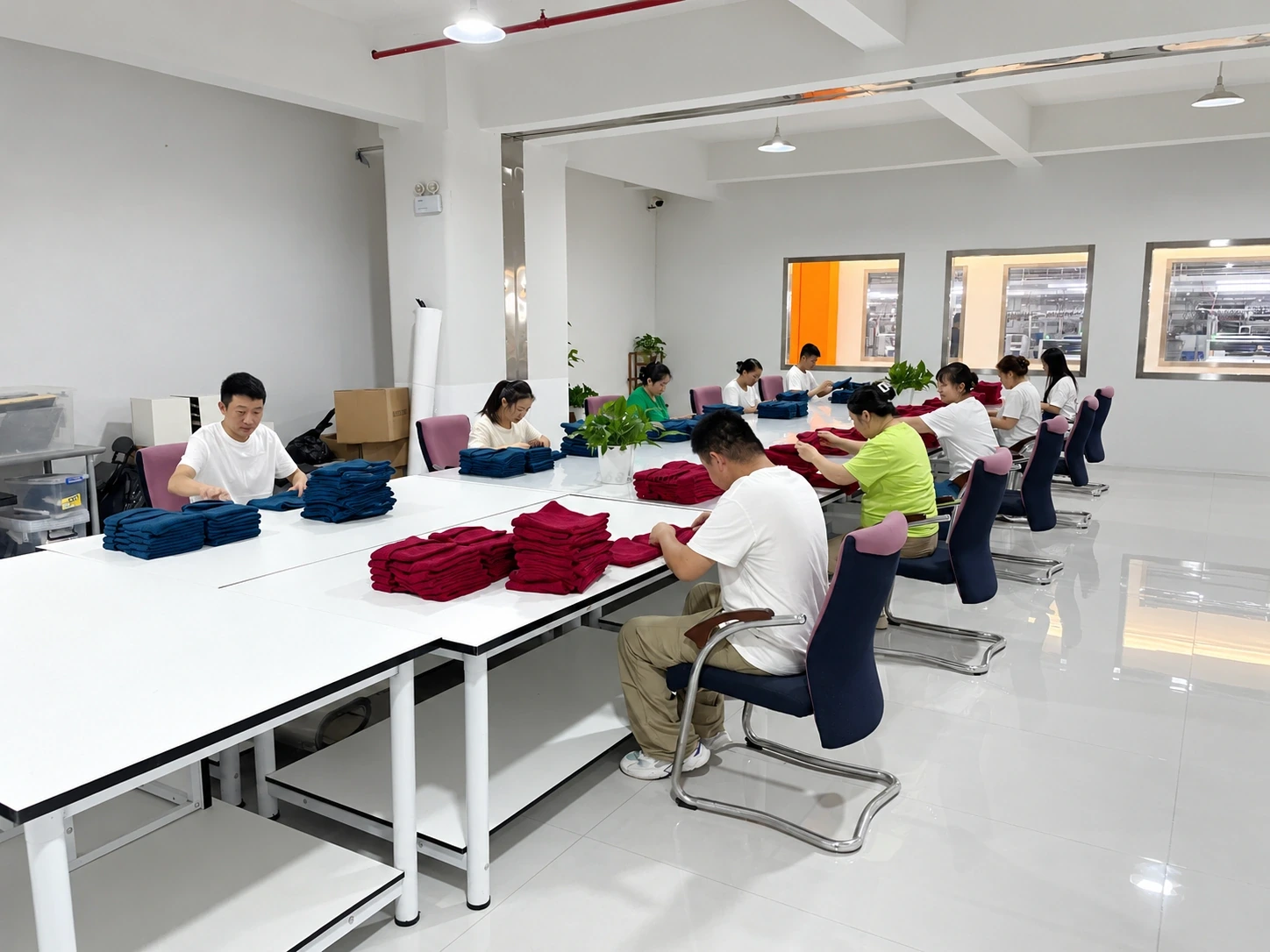
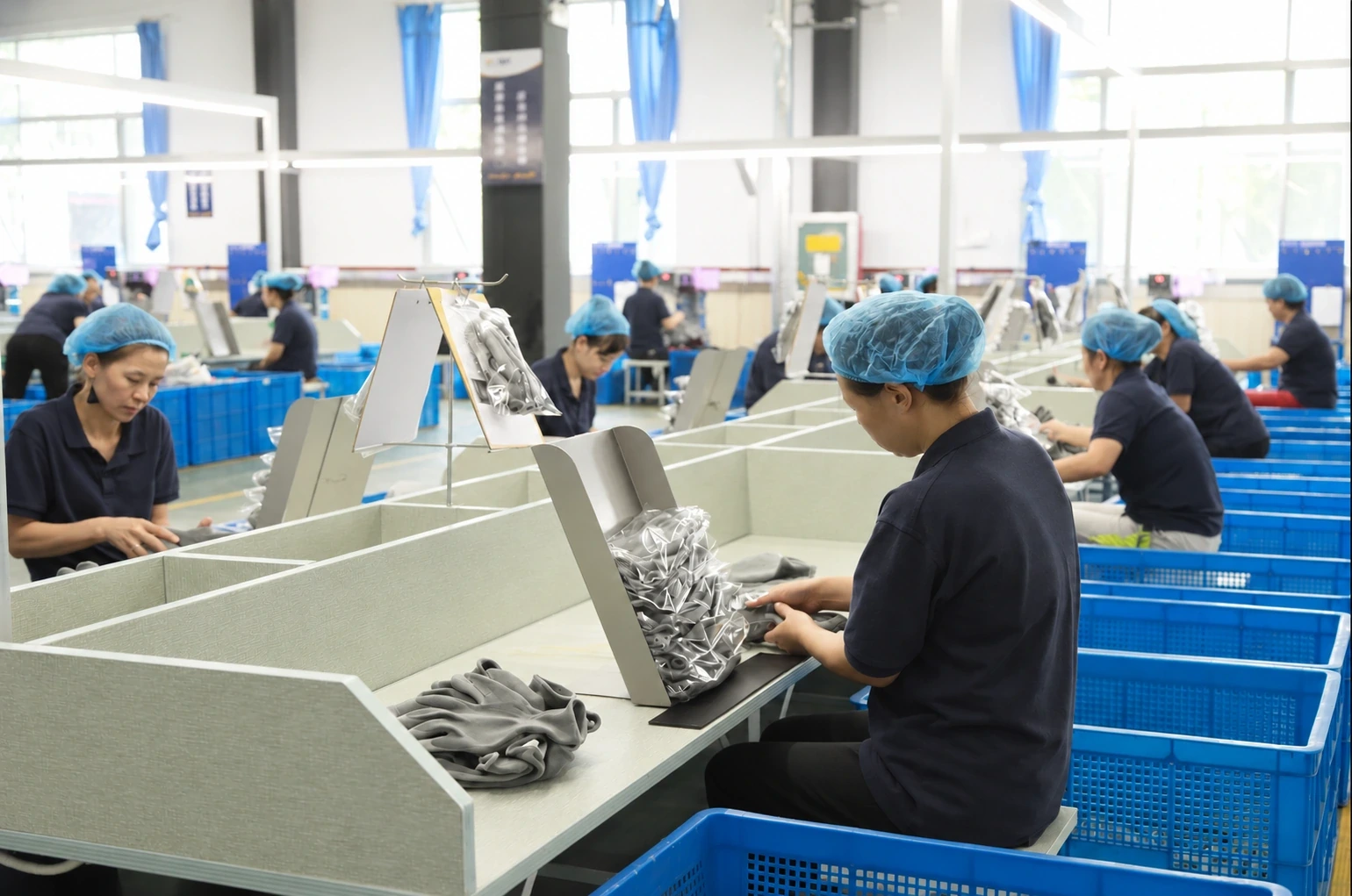
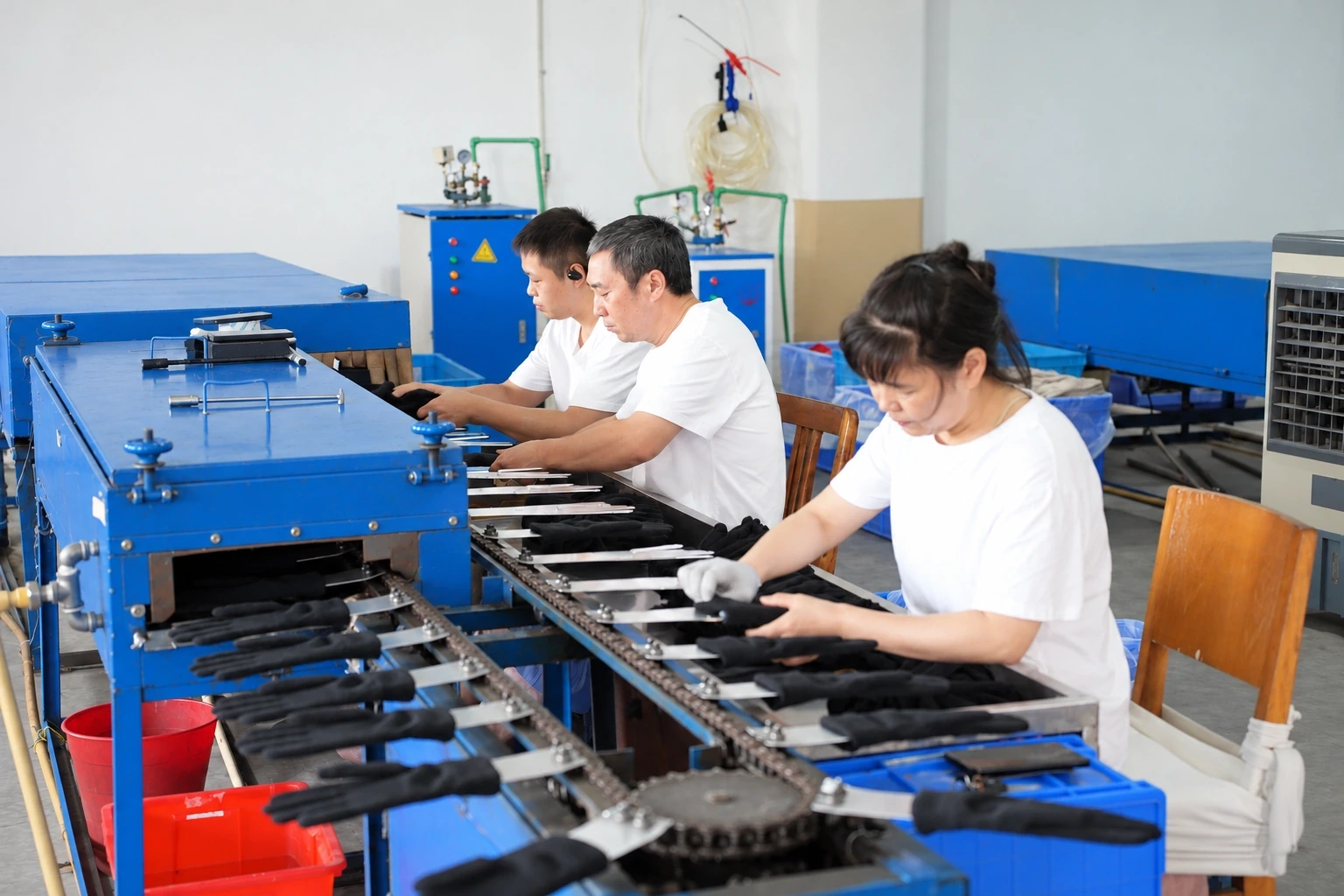
Manual inspection work at the factory’s knitted-goods tables.Retouched factory photograph
100%
Finished pairs inspected.
Every pair receives dimensional and workmanship inspection in our factory. Nonconforming gloves are isolated, reworked and reinspected against the agreed requirements.
From receipt to packing
Glove inspection. Four connected stages.
Each stage answers a different question. The material must match the brief, the construction must match the sample, and the packed assortment must match the order.
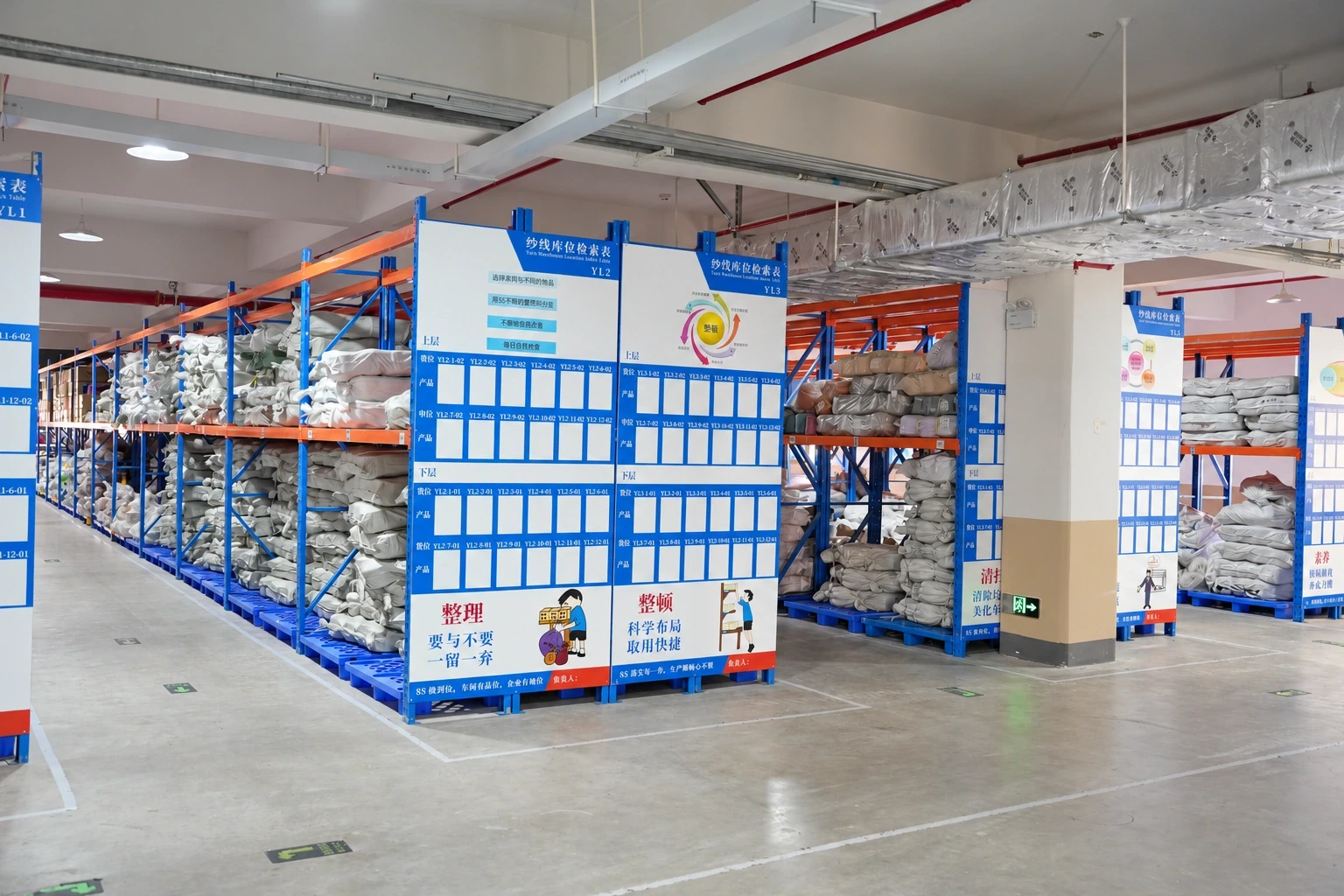
Yarn storage and material organization before production.Retouched factory photograph
01 / Incoming materials
Start with the right material.
Our full-inspection approach begins with incoming materials. Bring the approved yarn, fabric or leather reference together with the lining, cuff and trims before the production route is released.
What is checked
Material identity, visible condition, color against the agreed reference, and the correspondence between supplied materials and the order specification.
The reference to keep
Material description, color reference and any agreed supporting documentation. Composition or performance testing has a separate, product-specific scope.
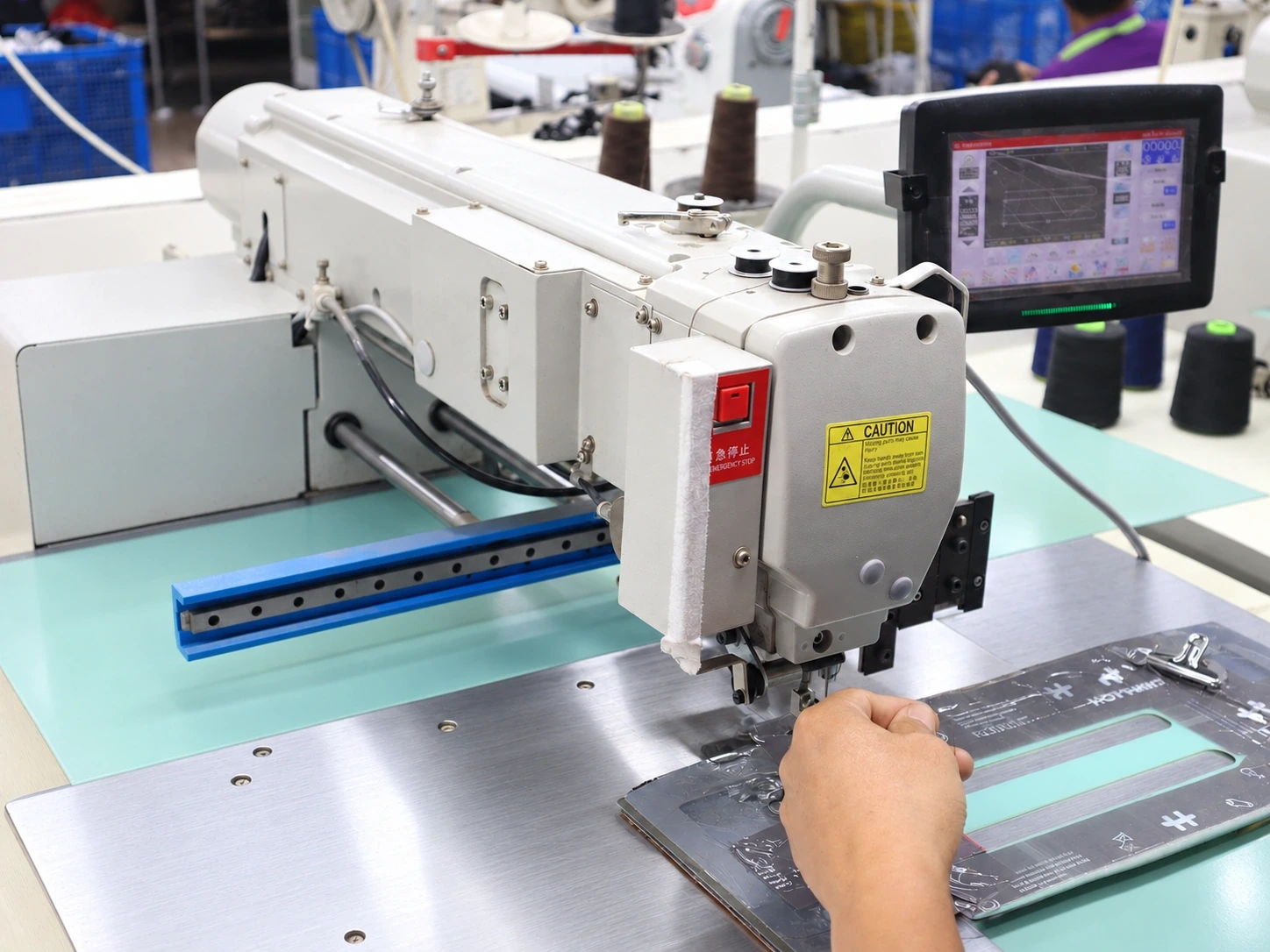
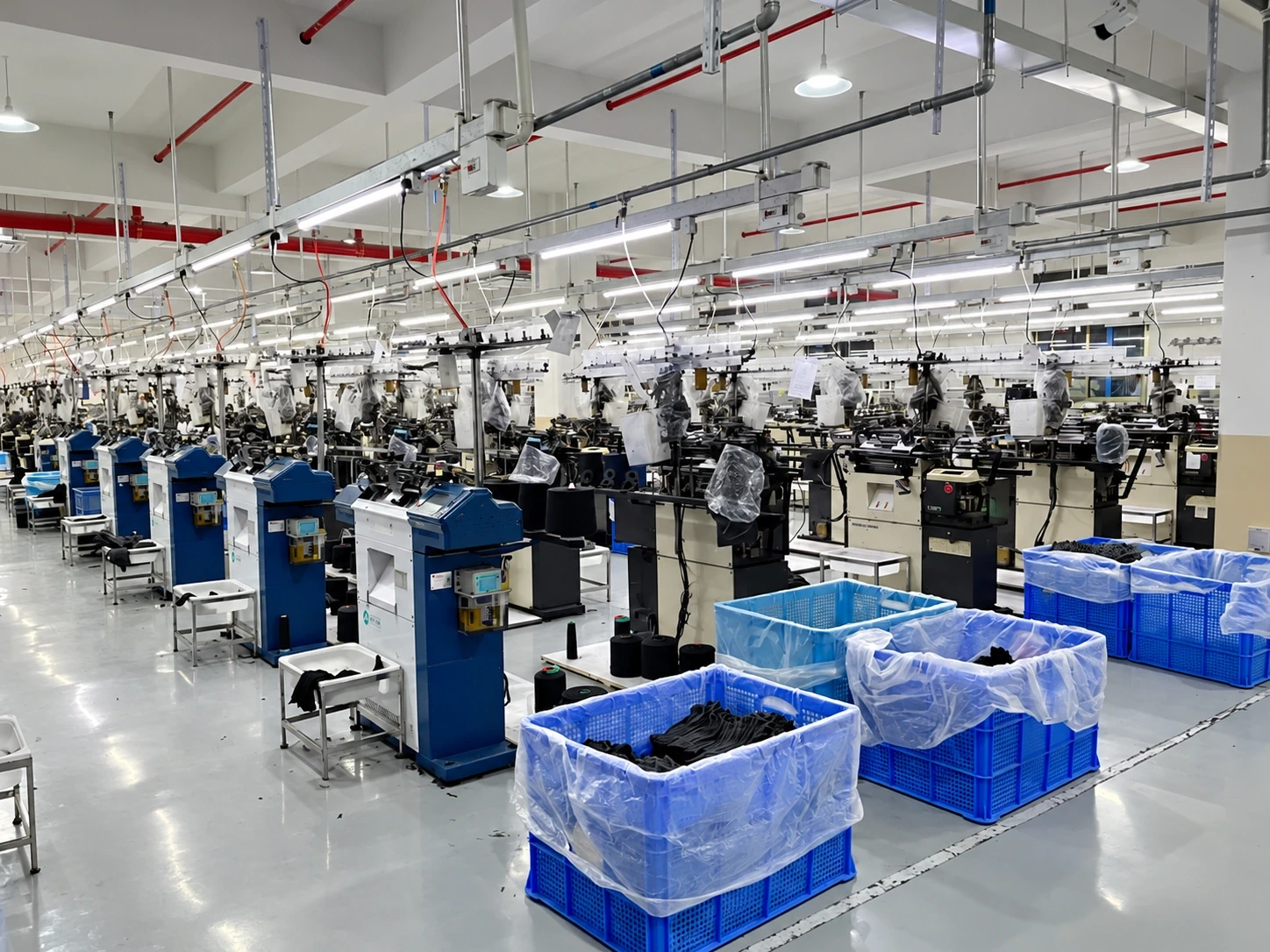
A programmable sewing operation on the production floor.Retouched factory photograph
02 / Production checks
Check the work as it takes shape.
Inspection continues through production. Checking the work at the relevant operation makes the location of an issue clearer: a panel join, finger seam, lining attachment or cuff should be reviewed in its construction context.
What is checked
The agreed knit or panel structure, seam formation, component alignment, inside finish and application of the current specification.
The reference to keep
The approved sample and construction version. Record an observation by style, operation and location so the required correction is specific.
Gloves handled individually at the sorting and bagging workstations.Retouched factory photograph
03 / Every finished pair
Full inspection of finished gloves.
We check every finished pair, including dimensions against the approved size specification. The complete review includes left/right consistency, workmanship and identification, using the measurement points and method agreed for the order.
What is checked
Appearance, workmanship, pair consistency, the agreed dimensional requirements, lining and cuff finish, and the correct brand and size identification.
The reference to keep
The approved physical sample, written size specification, measurement method and agreed acceptance criteria. Specialist testing is defined separately from our every-pair inspection.
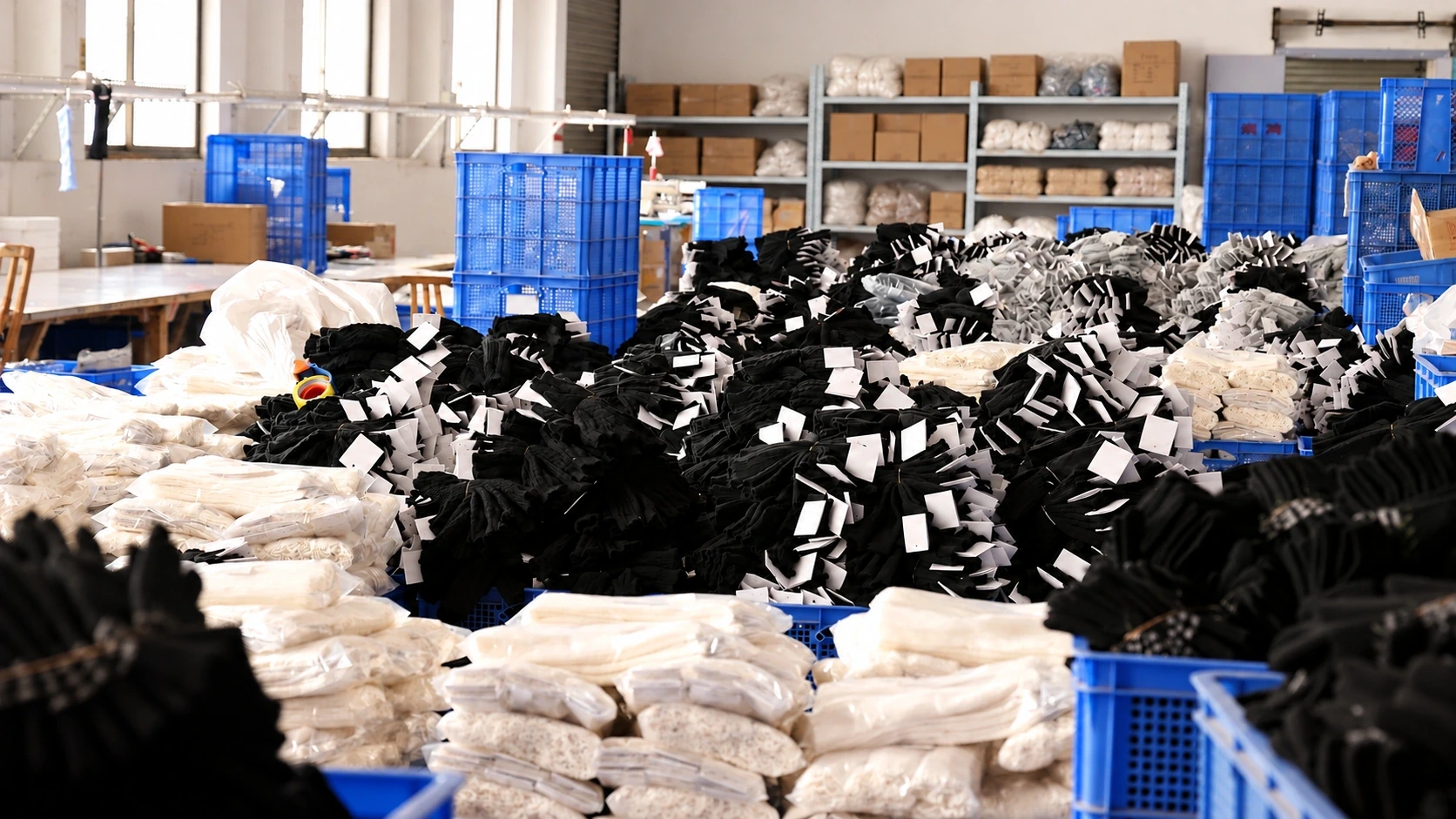
Tagged glove groups organized for assortment and packing.Retouched factory photograph
04 / Packing & cartons
Keep the assortment correct.
Full inspection also covers packing and carton checks. The style, color, size and pair quantities must remain consistent as the order moves from individual gloves to unit packs and shipping cartons.
What is checked
Pairing and assortment, label and artwork version, unit packing, quantities and the carton information required by the order.
The reference to keep
The packing instruction, assortment matrix and carton-mark version. Confirm pairs per pack and packs per carton separately from the production quantity.
Define the acceptance points
Make the requirement specific enough to check.
“Good quality” needs a shared meaning. Set the material, measurement, workmanship and presentation criteria before the finished order is reviewed.
Review area
What the order needs to define
Approval reference
Material & color
Identify outer material, lining, cuff and trims. Compare color, texture and hand feel against the agreed physical reference; define acceptable appearance variation where relevant.
Retained swatches and material identifiers.
Measurements & fit
Define the measurement points, glove position and method, the target for each agreed size and the allowed variation. Keep left/right observations tied to the same method.
Approved size specification and sample version.
Workmanship
Review seams, finger joins, panel alignment, loose threads, edge finish, lining position and cuff attachment. Describe issues by location and the required result.
Approved construction and annotated sample comments.
Pair consistency
Check that the two gloves belong together in style, size and color, with corresponding proportions and finishes. Include any permitted natural leather variation in the reference.
Pairing criteria and physical reference pair.
Brand & label
Check wording, orientation, placement, attachment and inside finish. The latest artwork must correspond to the intended size, color and destination version.
Approved artwork and label files.
Packing & assortment
Keep the size/color breakdown, unit packaging and carton marks consistent. Specify the pack configuration so pair quantities cannot be confused with cartons or individual pieces.
Packing instruction and assortment matrix.
Dimensions, tolerances, sampling for specialist tests and pass/fail limits are agreed for the project. No universal glove size or laboratory performance claim is implied here.
Our own factory inspects every finished pair, including dimensions. Follow the construction review below to connect each glove with its acceptance requirements.
Review stitch appearance, joins, loose yarn and the placement of cable or contrast details on both gloves.ReferenceApproved knit reference and any size-specific pattern layout.
Cuff & transition
Check the body-to-rib junction, cuff finish and label attachment. Compare both wrists in the same agreed condition.ReferenceRib construction, cuff dimensions and the applied label reference.
Colorway & pairing
Match the left and right glove to the complete body/cuff color combination and size.ReferencePaired yarn references and the style/color/size assortment.
Compare color, grain and finish within the agreed appearance range, including the relationship between the two gloves.ReferenceRetained leather references and agreed limits for natural variation.
Seams & lining
Inspect finger joins, stitch routes, thread ends, lining position and its attachment at the opening.ReferenceApproved construction, lining reference and annotated seam details.
Closure & identity
Check the specified tab, snap or clean-edge finish and the applied label or leather brand detail.ReferenceApproved hardware/edge version, artwork placement and size identification.
Check that the body, side panels and cuff use the specified fabrics and colors, with the agreed surface direction.ReferenceComponent map and retained fleece/panel swatches.
Inside seams
Review alignment and finishing where fingers, thumb and contrast panels meet; identify observations by seam location.ReferenceApproved complete sample and inside-finish requirements.
Cuff finish
Check binding joins, gathering position or the extended-cuff seam according to the style being supplied.ReferenceThe selected cuff construction and its measurement specification.
Keep construction checks and device tests defined.
Base glove
Inspect the underlying knit or sewn glove for dimensions, seams, cuff finish and pairing.ReferenceThe approved base construction and size specification.
Contact areas
Check the named fingers, coverage and material version. For a patch, review edge attachment and the inside finish.ReferenceContact-zone drawing and approved yarn or patch reference.
Functional assessment
Use the agreed device set, interactions, conditions and acceptance criteria. Define coverage separately from every-pair dimensional and workmanship inspection.ReferenceA project-specific assessment plan and results for the assessed version.
Confirm the specified shell, palm, lining and additional layers; check quilt or panel placement where the style requires it.ReferenceComponent list, material references and approved construction version.
Lining & assembly
Review the inside finish, lining attachment, finger arrangement and cuff join on the complete glove.ReferenceApproved lined sample and location-specific assembly requirements.
Presentation & wording
Check matching pairs, size and material labels, and packaging wording against the supplied version.ReferenceApproved label files; any performance claim needs its own supporting assessment.
A failed pair is separated from accepted goods. Our own factory carries out the correction and checks the glove again against the agreed requirements before it returns to the accepted order quantity.
01
Isolate the nonconforming pair
Keep the failed glove out of the accepted assortment
Identify the affected style, size and color
Locate the dimensional or workmanship issue
Compare the item with the current sample and written criteria. Isolation keeps a known problem from being carried into packing.
02
Rework in our own factory
Address the identified fault at the relevant operation
Keep the approved material and construction as the reference
Confirm any proposed specification change with the buyer
The correction must resolve the issue against the agreed requirement. A different material, dimension or finish needs its own approval; it is not an automatic substitute.
03
Reinspect before acceptance
Check the corrected item against the requirement
Review the finished pair, including dimensions
Return only accepted goods to the order assortment
Rework is followed by reinspection. For your reporting needs, agree how observations, correction and the final result should be recorded for the order.
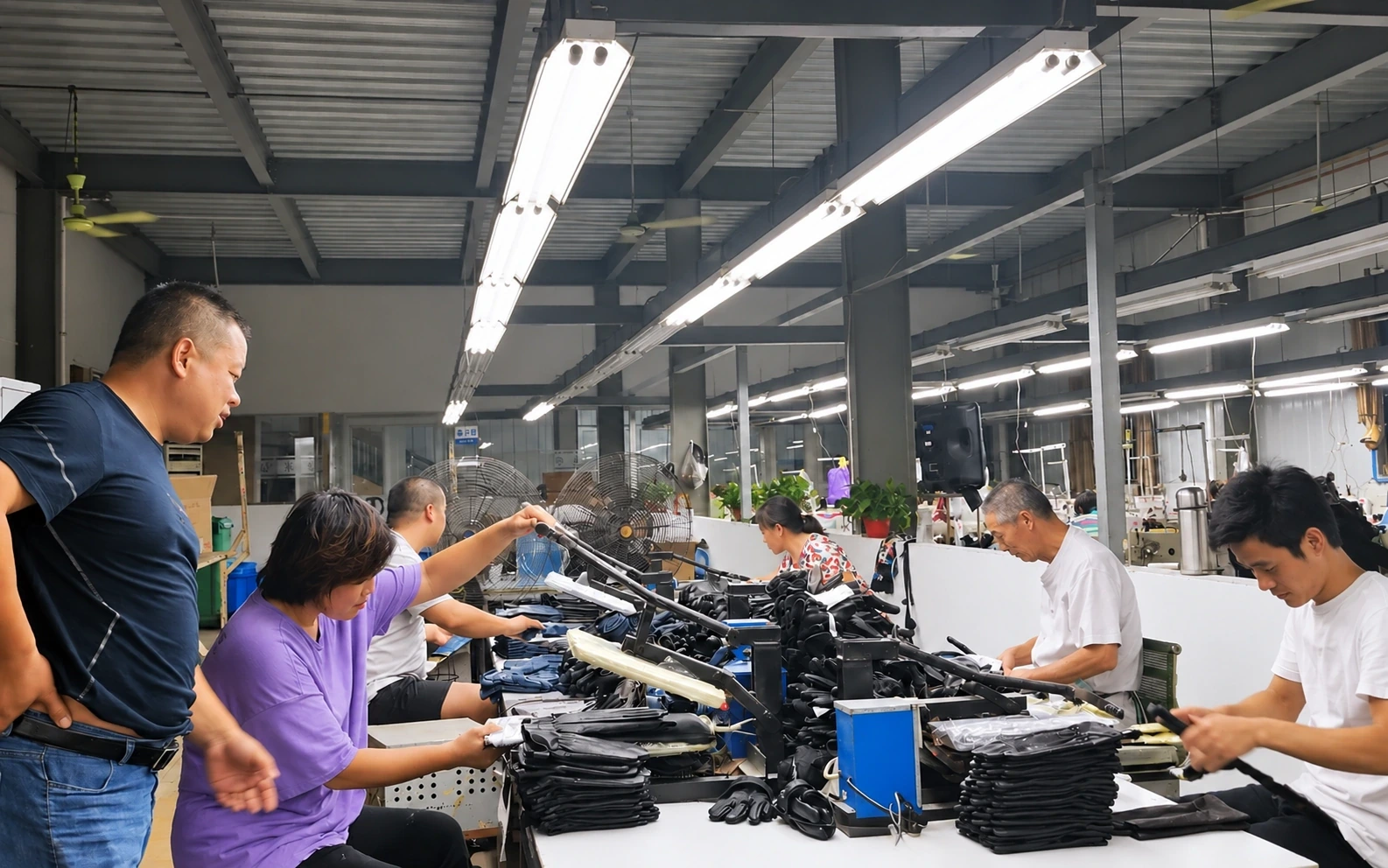
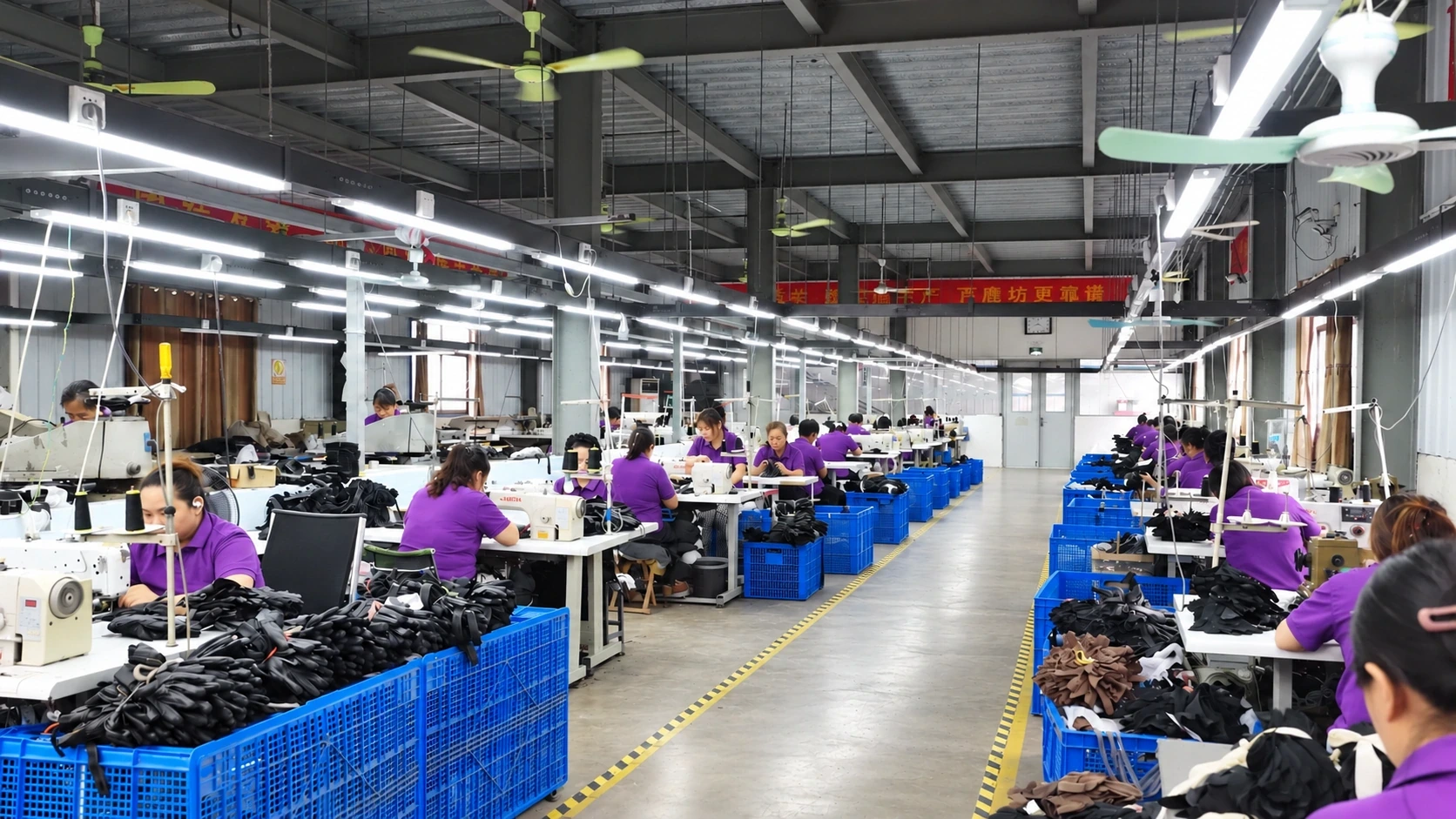
Our sewing workshop, one of the in-house operations available for the relevant construction and correction work.Retouched factory photograph
Keep the acceptance basis unchanged
A correction is not a new specification.
If an issue requires a material, pattern or artwork change, agree that change with the buying team and update the approval reference. Reinspection uses the requirement approved for the order.
Before the order is packed, align the approved unit presentation with the assortment. A correct glove with the wrong size label or the wrong carton identification creates an avoidable receiving problem.
Provide the label copy, artwork files, barcode requirements if applicable, packing configuration and carton marks with their current versions. State whether assortments are grouped by style, color, size or another agreed combination.
Our packing and carton checks follow these order instructions. Any destination-specific documentation or testing requirement should be discussed before production, with the exact product and material scope identified.
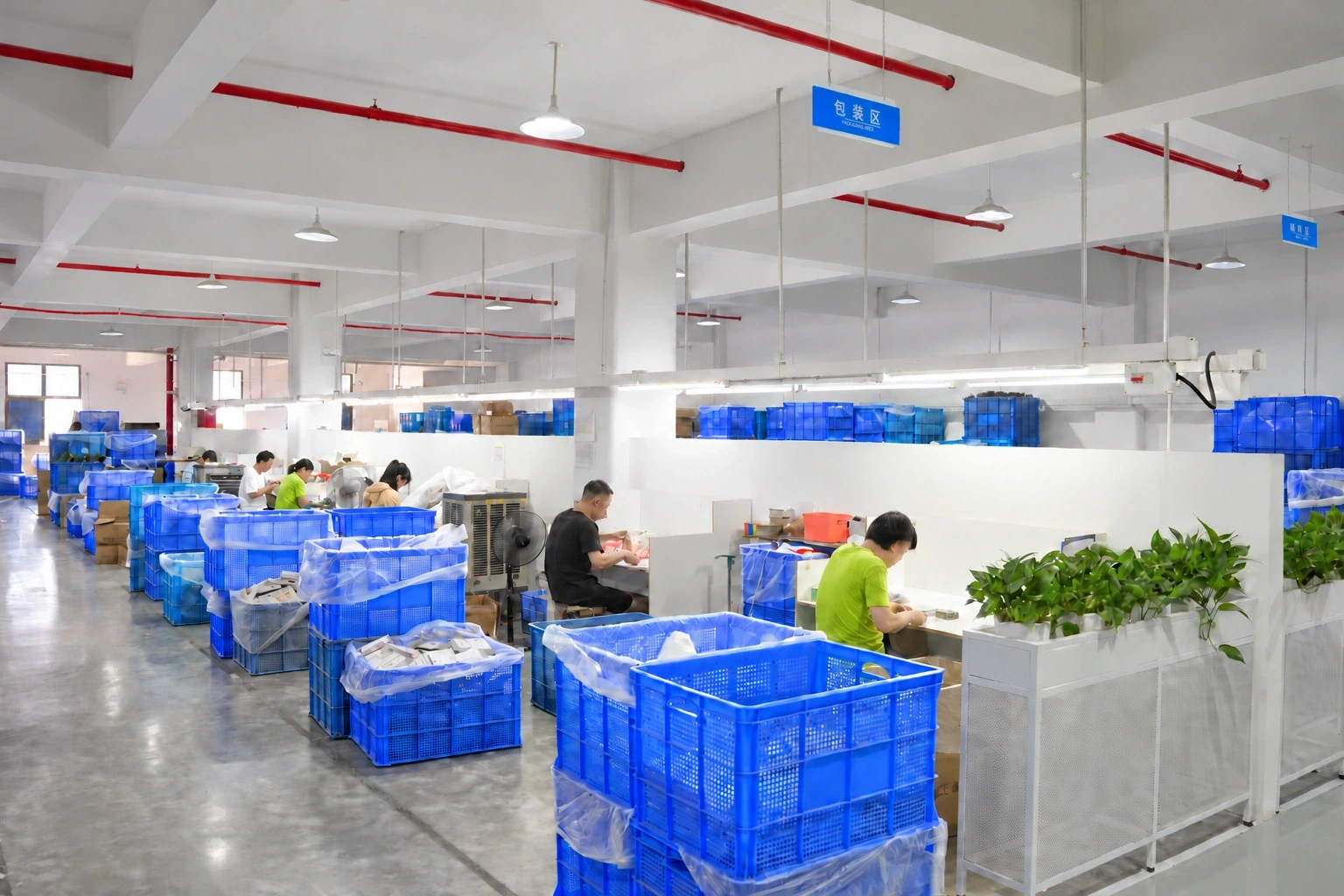
Packing workstations and sorting bins preparing the order handoff.Retouched factory photograph
Inspection questions
Clear answers before production.
Do you inspect every pair or only a sample of the order?
We carry out full inspection, including every finished pair, with checks across incoming materials, production, finished goods and packing. The agreed product specification defines what is accepted. Any specialist or laboratory testing is specified separately for the relevant material or product.
Does full inspection mean every glove receives every laboratory test?
No. Full inspection of the production order and a laboratory test program have different scopes. Agree the required test, method, product or material coverage and supporting report before production. We do not apply one test result or performance rating to every glove in the collection.
Are dimensions checked on every pair, and how are tolerances set?
Yes. Our own factory checks dimensions on every finished pair. Define the measurement points, method, condition and size range with the buying team, then record the target and allowed variation for each required point. We use the approved specification and physical sample together; values are agreed for the order.
What happens if a finished pair fails inspection?
The nonconforming goods are isolated, reworked in our own factory and reinspected against the agreed requirements. Only accepted goods return to the order assortment. If correction requires a specification change, agree it with the buyer and update the approval reference.
Can we include our own inspection or testing requirements?
Yes. Share the requirements, acceptance criteria, reporting needs and intended inspection arrangements with the brief. Confirm the scope, responsibilities and any effect on cost or timing before the order starts.
Which packing details should be approved?
Confirm the style, color and size identification, artwork and label versions, pairs per pack, carton configuration, assortment and carton marks. Include any destination-specific wording or documentation in the order file.
How do we define acceptable material or color variation?
Use agreed physical references and written criteria for the selected material. Identify the color and finish, and review the two gloves as a pair where appearance matters. Keep the accepted references with the sample so the decision does not depend only on a screen image.
What should a useful inspection record contain?
Agree the record needed for your order before production. Identify the style, color, size, sample and specification versions, the points checked, actual observations and the acceptance decision. Record any required correction and the follow-up review clearly.
Does a later artwork change need another approval?
Yes. Identify the new file and review the changed wording, dimensions, placement or application against the intended glove and packing. Confirm which styles and destinations use it, and update the production instructions so earlier versions are not treated as current.
Can a previous approval cover a changed material on a reorder?
Do not assume that it does. Identify the proposed substitution and review its effect on appearance, construction, fit, function and labeling as applicable. Agree the revised sample or assessment needed and update the approval file before production.
A project for your brand
Define the quality requirements for your order.
Work with our own factory on your acceptance brief: every-pair dimensions, workmanship, private label identification and packing. Include any separate testing or reporting requirements.